Saudi Arabia smelled blood and is attacking Putin. The oil power is stealing Russia's most important customers. A huge loss for the Kremlin


“Saudi Arabia's price cut is a clear invitation to Indian refineries to buy Saudi oil to replace Russian barrels,” an Indian oil industry source told The Economic Times.
The discounts apply to deliveries in December – and in addition, this is the month when US sanctions against Russian oil giants Rosneft and Lukoil will come into full force. Everything indicates that dark clouds are gathering over Putin's oil empire – and this is only the beginning of the Kremlin's problems.
The US Treasury Department demanded that transactions with major Russian companies be completed by November 21. Otherwise, the Americans threaten to impose sanctions on entities purchasing Russian energy resources. The most important players on the market decided to take advantage of the situation.
Reuters reports on the reduction of oil prices for Asian customers by the Saudis, citing the monthly price list of the state-owned Saudi oil company, Saudi Aramco.
The price of the Saudi brand Arab Light for delivery in December will be reduced by $1.2. per barrel: it will now be sold at a premium of $1. compared to the Oman/Dubai benchmark. Same discounts – $1.2. per barrel – established for the Arab Extra Light and Arab Super Light grades. Prices of Arab Medium Arab Heavy crude oil will fall by $1.4. per barrel.
Reliance Industries, in the past the largest importer of oil from Russia to India, increased its purchases of raw material from Saudi Arabia by 87% in October to reduce dependence on Russian suppliers.. According to The Economic Times, discounts from the Saudis may encourage Reliance and state-owned refineries in India to purchase even more raw material from the Saudis.
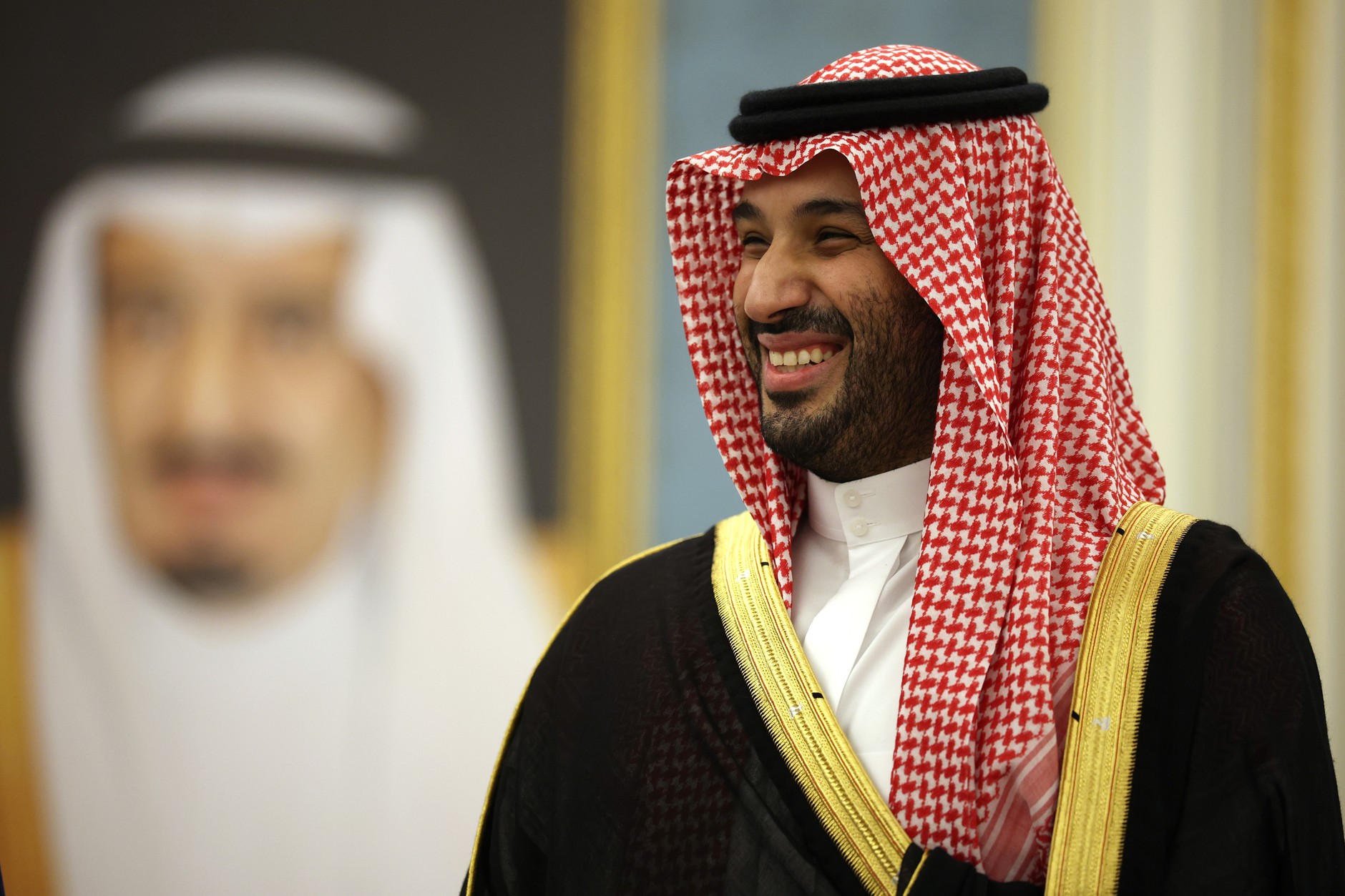
Crown Prince and Crown Prince of Saudi Arabia Mohammed Bin Salman (illustrative photo)Win McNamee/Staff/Getty Images
Russia is in trouble
According to Reuters data, five Indian oil producers have already suspended purchases of Russian oil in December: apart from Reliance Industries, these include Hindustan Petroleum, Bharat Petroleum, Mangalore Refinery and Petrochemicals and HPCL-Mittal Energy. In total, they imported 65 percent. oil that went from Russia to the Indian market – over 1 million barrels a day.
Chinese state-owned enterprises also announced a “boycott” of direct purchases from Lukoil and Rosneft. State-owned Sinopec and PetroChina have already canceled a number of purchases of raw materials from Russia and continue to refrain from purchasing raw materials from Russia.
They have been joined by small private refineries that fear sanctions, as was already the case with Shandong Yulong Petrochemical, which has been blacklisted by Great Britain and the European Union. According to estimates by the Norwegian think tank Rystad Energy, the suspension of purchases affects almost 45 percent. Russian oil exports to China.
Alexei Gromov, director of energy affairs at the Russian Foundation Institute of Energy and Finance, believes that China will most likely resume oil purchases from Russia. “We have long been making all settlements with Chinese companies in national currencies, yuan and rubles. Therefore, American sanctions prohibiting settlements in dollars will not affect Russian oil exports to China.”
“However, problems may arise with India,” continues Gromov. According to the expert, exports will most likely decline, and the switch from settlements in dollars to national currencies will result in additional costs and, consequently, a decline in margins and export income.
Meanwhile, the internal situation on the fuel market in Russia cannot fill Russians with optimism.
Russian refineries will be allowed to add alcohol to gasoline
Russian authorities are preparing to allow the use of alcohol in gasoline production to increase supplies to the fuel market, which is struggling with a deficit after Ukrainian drone attacks on refineries.
According to the Interfax agency, the Russian Ministry of Finance has prepared amendments to the tax code that will abolish excise tax on denatured ethyl alcohol in the production of AI-92 gasoline. This measure aims to make the production of petrol using alcohol profitable and is necessary in case the supply of petrol on the market is insufficient.
According to data from the Russian newspaper “Kommersant”, oil refineries will be able to increase the share of alcohol in gasoline to 10 percent. (currently it is no more than 1.5%). According to calculations by the Russian Ministry of Energy, this will increase fuel supplies to the domestic market by 100,000. tons per month.
In addition to ethyl alcohol, the Russian Ministry of Energy may lift the ban on refineries using N-methylaniline, an additive that increases the octane number and allows for increased production. Due to its high toxicity and cancer risk, it is banned in most countries of the world.
Since the beginning of August, Ukrainian drones have attacked 22 Russian oil refineries, some of which were forced to suspend production. As a result, crude oil processing volumes in Russia decreased by 10 percent in July-September. up to 4.86 million barrels per day – lowest level in at least 5 years.
As a result, there was a gasoline shortage that affected regions from Kamchatka to central Russia. In some areas of the country, the authorities were forced to introduce fuel sales limits. To ease the crisis, the government banned the export of gasoline and diesel fuel abroad and waived import tariffs to allow gasoline to be purchased from China, Singapore and South Korea.