PSD's risky bet: Motion of censure or anticipated? Why Nicușor Dan could block the plan of the social democrats

PSD decided: if Ilie Bolojan does not resign, the social democratic ministers will resign. The Liberal prime minister will remain at the head of a minority government until he is dismissed, most likely by a motion of no confidence, in which case the way is opened for early elections. The specialists consulted by “Adevărul” analyze how likely this scenario is and what results it could have.
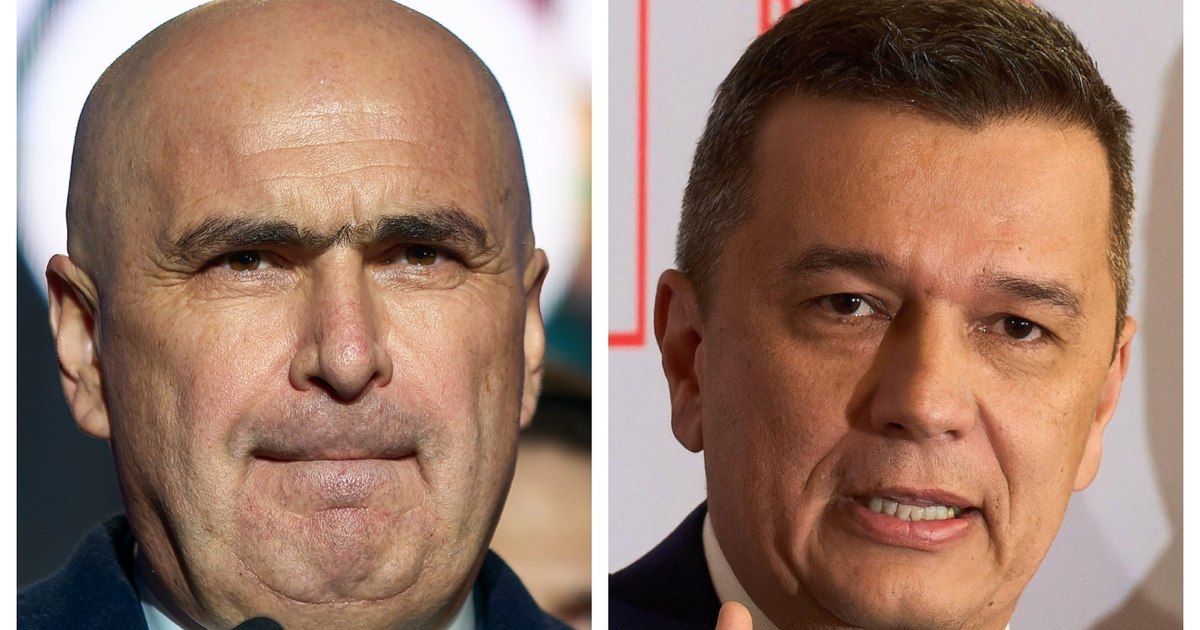
Bolojan and Grindeanu began the fight for political survival. PHOTO: InquamPhotos
PSD has decided: it will leave the government if Prime Minister Bolojan does not resign in three days. The decision, which had been prepared for a long time, was taken with almost a majority in the social democratic branches in the country.
Prime Minister Ilie Bolojan announced that he will continue to govern considering the need to complete the reforms undertaken to obtain funds from the PNRR. In addition to the departure of ministers and secretaries of state, the prime minister announced that the heads of public institutions in the second echelon of the administration will be dismissed.
Either after 45 days, as long as the interim period can last according to the Constitution, or after a censure motion voted in Parliament, the Bolojan Government will cease its activity. Negotiations will follow with President Nicușor Dan to find a new prime minister. If the government proposed by the Prime Minister appointed by the President of Romania will not be voted in the Parliament twice, the President can start the procedure of early elections.
The latest poll on the outcome of potential elections, carried out by INSCOP Research in March, shows that AUR would have been voted by 38% of voters, followed by PSD – 16.9%, PNL – 13.9%, USR – 13.4% and UDMR – 4.4%.
What are the chances that this scenario of early elections will become a reality and to what extent the percentages obtained now in party polls will be preserved in the case of an early election, we tried to clarify with the political scientist George Jiglău and the sociologist Ioan Hosu.
George Jiglău: “Little chance to have anticipated”
Political scientist George Jijlău, teaching staff at the Department of Political Sciences at UBB Cluj, claims that the chances of having early elections “they are still quite small, not coincidentally we have never had early elections. I think that the many prerequisites that have to happen to get to early elections would have had a better chance maybe in the past than now, if we think about when it was discussed before.”
Jiglău claims that we will not reach the anticipated because, first of all, none of the four parties that are now in the coalition has any interest in reaching the anticipated. “Even the PSD, which could live with the illusion that the anticipated ones would suit them, I don't think it's rational to want something like that. I think there are better chances to reach a variant in the context of the current Parliament, than to enter into that series of events that must happen with two governments that are formed, but fail in the Parliament.”
Another argument for which he does not believe that the anticipated results will be reached is the fact that even President Nicușor Dan does not want to get here, preferring the path of negotiation, even if this means weeks, months or however long it will take until a government option is reached in the current context of Parliament.
Crisis scenarios at the peak of power: how the Bolojan Government can resist and why the abandonment of the prime minister would mean the “death” of the PNL
“He will prefer negotiation than mechanically accepting a variant in which he appoints some sacrificial prime ministers and they fail in Parliament and we arrive at anticipated“, explains the political scientist.
“At the other end of the anticipated is GOLD”
On the other side of the forecast tunnel, if we rely on the current polls, a GOLD victory awaits us: “Not necessarily an AUR government, but a parliament with an even stronger AUR. I much believe what the current polls are telling us. Let's take these from last week, which show that the AUR is down quite a bit.” Why? Because in the context of early elections, Jiglău believes, the frustration of the voters of the other parties will be so great that the turnout may be quite low. In this context, automatically the percentage of AUR supporters who will vote will probably reach over 40%.
Jiglău's conclusion is that, however, the chances of reaching the anticipated are quite small, even if this is also a scenario to put on the table.
Ioan Hosu: “Climate of mistrust in the state and politicians”
Sociologist Ioan Hosu, professor at the Faculty of Administrative and Communication Political Sciences (FSPAC), within the Babeș-Bolyai University, explained to “Adevărul” to what extent the figures from the polls now will be reflected in the possible early elections.
“The figures we are talking about and which we see in the polls show in short a distrust of the state and everything that means state institutions and politicians. Do not forget the high degree of distrust in the judiciary, given the scandal with pensions and with the appointments of chief prosecutors“, explains the sociologist.
He claims that we are witnessing a war of labels at home: traitors, Putinists, minions of Brussels and, more recently, rats. “Between the two poles is a large part of the population that feels unrepresented”he points out. Above all comes the distrust in the mass media, the controversial decision of the CNA and discussions about freedom of expression and the increasing impact of some influencers.
“The 4-5 elements that I have mentioned go in the direction of behaviors that seek new representation structures that inspire trust. And here comes the question: in a scenario of early elections, who will be the ones who, in such a scenario, will succeed in inspiring more trust, prove that they represent segments of 40-50% of the population, communicate better and have the ability to convince them that they are telling the truth”Hosu points out.
“We will not return to classic mainstream formulas”
In other words, he says, in this scenario, we will not go back to the classic mainstream political formulas, because new formulas have emerged in the last few years. “Here I am referring to USR and AUR. I have also seen others, but for now they do not really matter. It is not excluded that we will see other appearances. It is not only a Romanian phenomenon, it is a phenomenon that is also happening at the European level – new political forces eroding from the mainstream”. Hosu explained.
The trends we see and have seen in the last 2-3-4 years in public space will continue at least at the same level, if not more significantly. “In conclusion, yes, it is possible to see in the case of early elections exactly the same formulas that we see in the polls, maybe even higher, because we have a climate of distrust and frustration.”