INTERVIEW The less visible detail of the Metallica concert poster in Bucharest: “It's a warning of history”

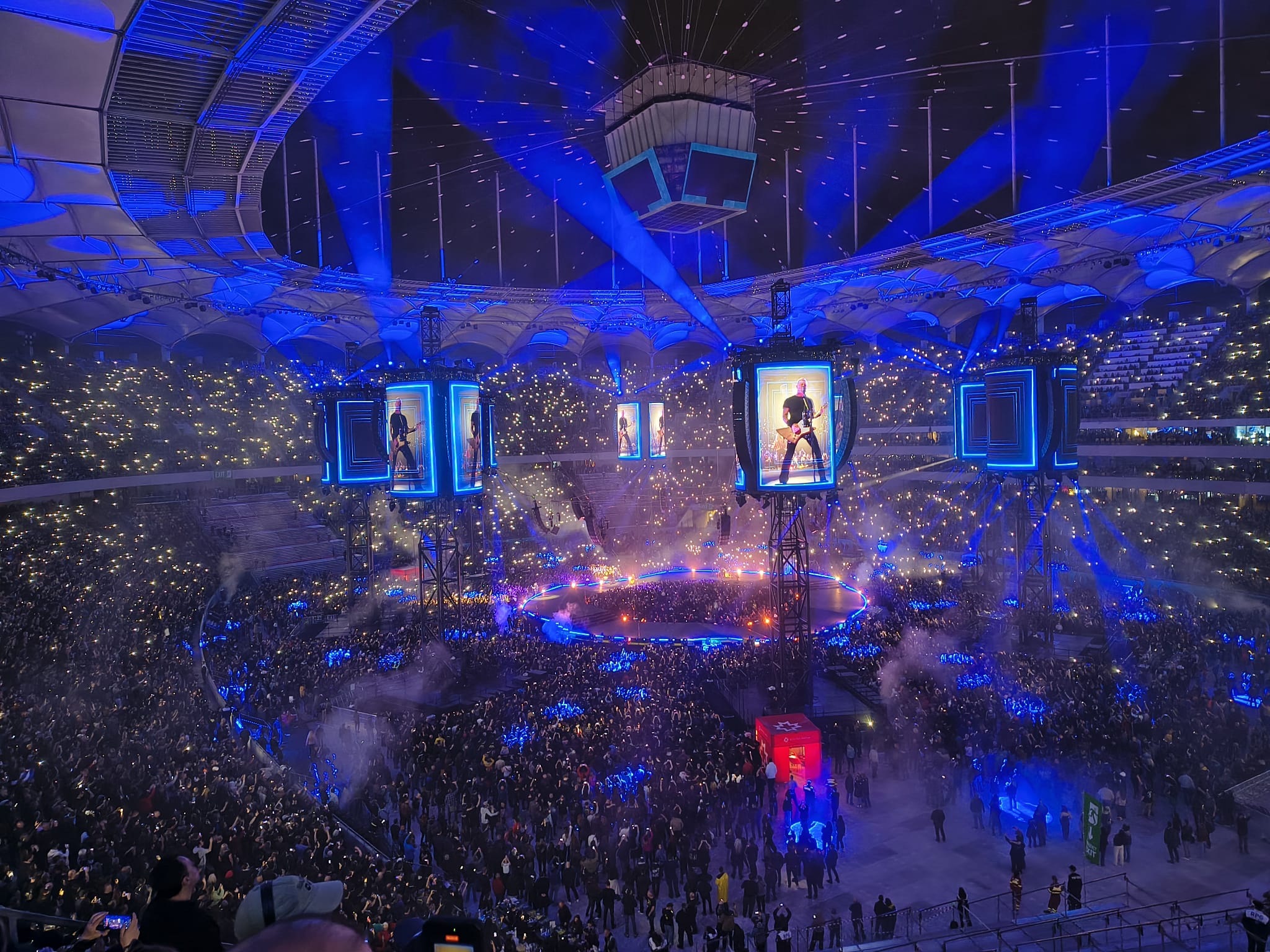
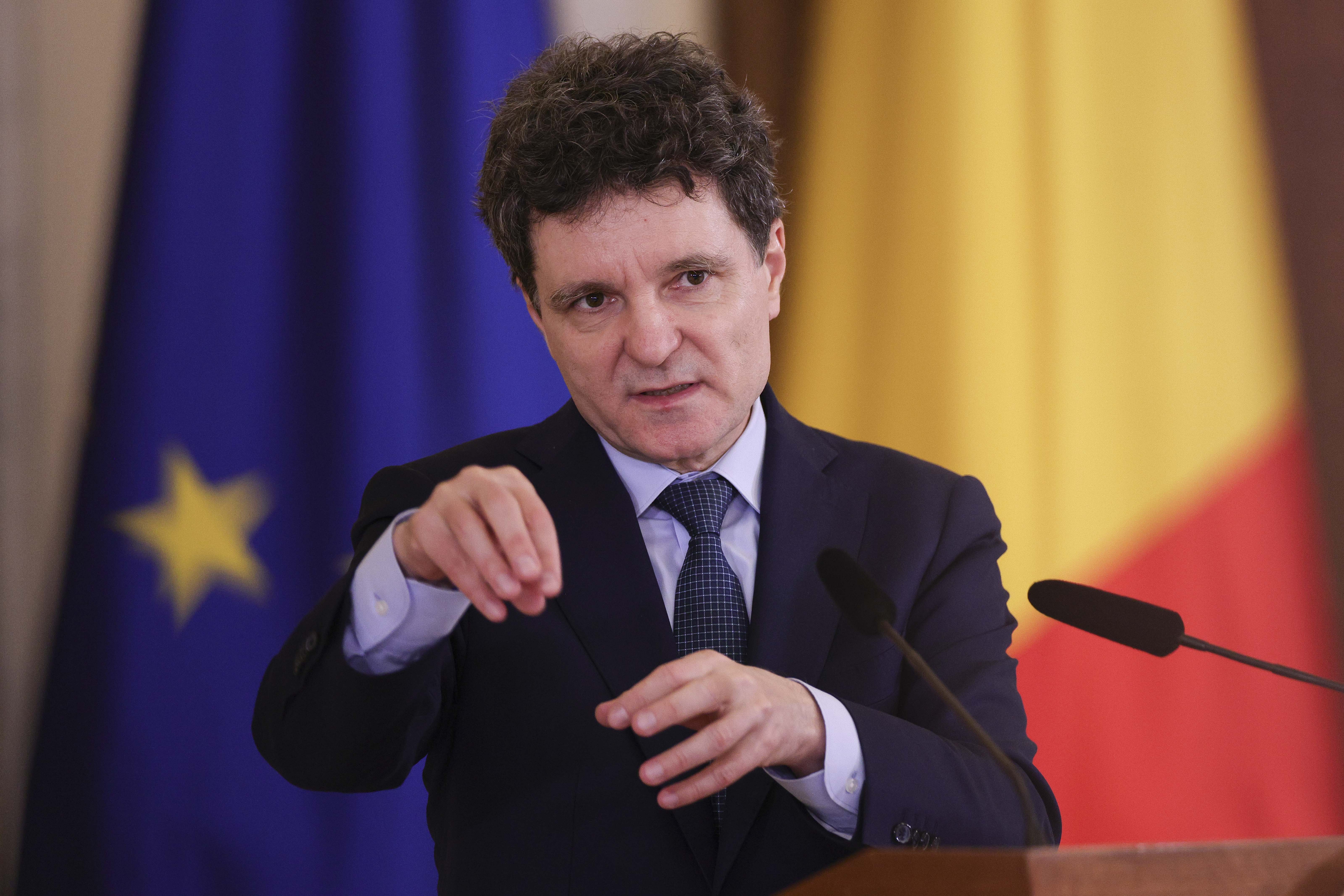
Projected on the National Arena in front of 65,000 people and seen by fans of the band from all over the world, the poster of the Metallica concert in Bucharest was created by a Romanian artist. In an interview for HotNews, Matei Apostolescu, 42, explains what he wanted to convey through the image he created.
- For each city on the M72 tour, Metallica wanted to have a visual identity and poster specially created by a local artist that would capture the spirit of both the place and the band.
- In our country, the poster was created by a Romanian, who slipped the number “89” into the drawing. Why did he do that, explains the creator who worked for Metallica.
“Among the first drawings I ever made were the Metallica band logo and rudimentary skulls, somewhere in the sixth grade,” recalls Matei Apostolescu, a visual artist and graphic designer originally from Bucharest.
His work, a fusion of different mediums – drawing, vector, photography, digital manipulation – has consistently attracted attention and appreciation over the years and has been exhibited in the US, Canada, Japan, Germany and the UK.
This is how Matei Apostolescu came to develop that image with a strong impact, with a skull from which the House of the People emerges, which was projected on the screens at the National Arena during the concert in front of over 65,000 people.
Also, at the concert at the National Arena, posters with the image created by Matei Apostolescu were available exclusively, in limited numbers (you could not buy more than one per person). An object that has now entered the collections of Metallica fans all over the world.
“The People's House is an ossified symbol, it really looks like it's made of bone”
“I confess that I was quite overwhelmed with the task and I had a lot of ideas fighting in me. I simply remembered the song 'King Nothing', one of my favorites from Metallica, and I saw him staring at me with those empty eyes, wearing the House of the People like a crown.”
“The People's House is for me an ossified symbol of the totalitarian system – I don't know if you've noticed, but it really looks like it's made of bone. For me it's a warning of history, a precedent that young generations should take very seriously,” said the artist.
During the discussion, the artist requested not to defend his image, but that of his works. Apostolescu also described the less visible detail of the poster: “The monster in the work is supported by a mechanism and I mentioned the year `89 on the lapel, a gesture of respect for the Revolution that overthrew the native King Nothing”.
“They gave me total creative freedom”
HotNews: – Mr. Apostolescu, tell us, please, how you came to collaborate with Metallica?
Matei Apostolescu: – I don't know how they got to me, but I guess they did some research and liked my creations. I worked with their team at Probity Merch (n Music merchandising company owned by Sony Music that provides worldwide touring, retail and e-commerce services).
– Did you ever imagine, when you were doing graffiti or the first digital experiments, that you would end up making the visual identity for a Metallica concert?
– I really did not dare to dream of a collaboration with Metallica. The beautiful coincidence for me is that I have been a fan of the band since I was young. As a rule, my works are full of color, rarely have I explored the “metal zone”. It was all the more surprising that I was selected for this project.
The brief and the whole relationship was extremely open to creativity. I was not constrained at all by their team and they gave me total creative freedom. Incidentally, it can be seen that the posters chosen for each country in Metallica's M72 World Tour are very diverse.
“The House of the People, 4 million tons of totalitarian architecture. It's the heaviest building in the world!”
– Were there mandatory elements that the band or management requested?
– The main requirements were to be heavy metal and to represent Romania. From here on the idea and the execution are entirely my own. It didn't take me very long. I listened to a lot of metal when I was young and have a strong connection to Metallica. Among the first drawings I made were the band logo and rudimentary skulls, sometime in the sixth grade.
– Did you have several poster versions?
– No. We've featured a single basic sketch along with the concept, which is inspired by their song “King Nothing”. They really liked the idea and the approach and we went ahead with the execution.
I tried to stay away from traditional folk elements etc. and we chose one of the heaviest (literally and figuratively) symbols we have: the House of the People, 4 million tons of totalitarian architecture. It's the heaviest building in the world!
– What was the most surprising thing about how such a big music brand works?
– I have to say I was pleasantly surprised and appreciated the incredible professionalism and efficiency of their team, but more than anything, the creative freedom I was given.
“The monster is supported by a mechanism”
– Was there any detail from the poster that the audience may not have noticed, but which is important to you?
– Yes, the fact that the monster in the work is supported by a mechanism and I mentioned the year `89 on the lapel, a gesture of respect for the Revolution that overthrew the native King Nothing.
– How did you try to translate Metallica's sound and energy into a still image? In other words, how was the creative process?
– I tried to stay as honest and loyal to my style as possible. I could have chosen a more elaborate touch, but I wanted it to be rough and heavy in my own way. I had a lot of free time, something very rare in this business.
That's what allowed me to sit back and take it into a metal zone, especially chromatically. I think I had a challenge here, I'm very used to working with a lot of colors and I had to refine it to get something that remains strong and vivid from a color perspective, but heavy enough to be identified with Metallica.
– But how did the idea of combining the skull with the People's House come about?
– It was more of a sudden vision, I confess that I was quite overwhelmed by the task and I had a lot of ideas fighting in me. I just remembered the song “King Nothing”, one of my all-time favorites from Metallica, and I saw him staring at me with those empty eyes, wearing the House of the People like a crown.
Congratulations from fellow guild members
– How did the international community react after the poster appeared?
– I think my work was appreciated, especially if I am guided by the many positive comments and congratulations I received from colleagues in the guild.
– Would you like to continue in this area of collaborations with musical artists or do you see it as a singular experience? I'm also thinking here of the fan made video you made for the band Boards of Canada.
– Yes, of course I would like it, although I don't know if it will always be that pleasant and easy. Artists have strong visions and ideas and maybe the process will be more difficult. But the challenge remains.
It started from graffiti
– In the beginning you were also active in street art, in the graffiti area. What did the graffiti scene in Bucharest mean when you started?
– For me, graffiti has more to do with font design. I was fascinated by how ornate the written word can become and how that can change both the mood of people and the way a space looks. I was not a prolific grapher. I experimented more with lettering and integrating graffiti elements into my drawings. I learned a lot from it.
But I think we need more color, Bucharest is extremely dark. Graffiti wall artists are in a unique position to change that. I have seen incredible works of perfect skill in Bucharest. I was really impressed and inspired by some of them.
– What do you think an artist loses when he enters the commercial area and what can he gain?
– I haven't been very active commercially, I'm not made for agency work, for example. I've seen it work in others and I think the thing that many have lost is the time they could have evolved as artists and the opportunity to develop an authentic style.
– Your works have been exhibited in USA, Canada, Japan, Germany, UK. How difficult is it for a Romanian visual artist to reach an international circuit?
– I was extremely lucky to catch an extraordinary period in the history of the Internet and digital art, the period 2003-2013, just before the onset of the algorithmic nightmare of social networks.
It was a world where people looked at details, everything happened on computer screens and people zoomed in. In a way I think you have a lot more options now, but you have to create for an audience that is deeply tired of constant visual bombardment and has infinitely less appetite for extreme stuff that lies outside the visual clichés heavily propagated by aggressive marketing.
– What is the image or work of yours that you are most emotionally attached to?
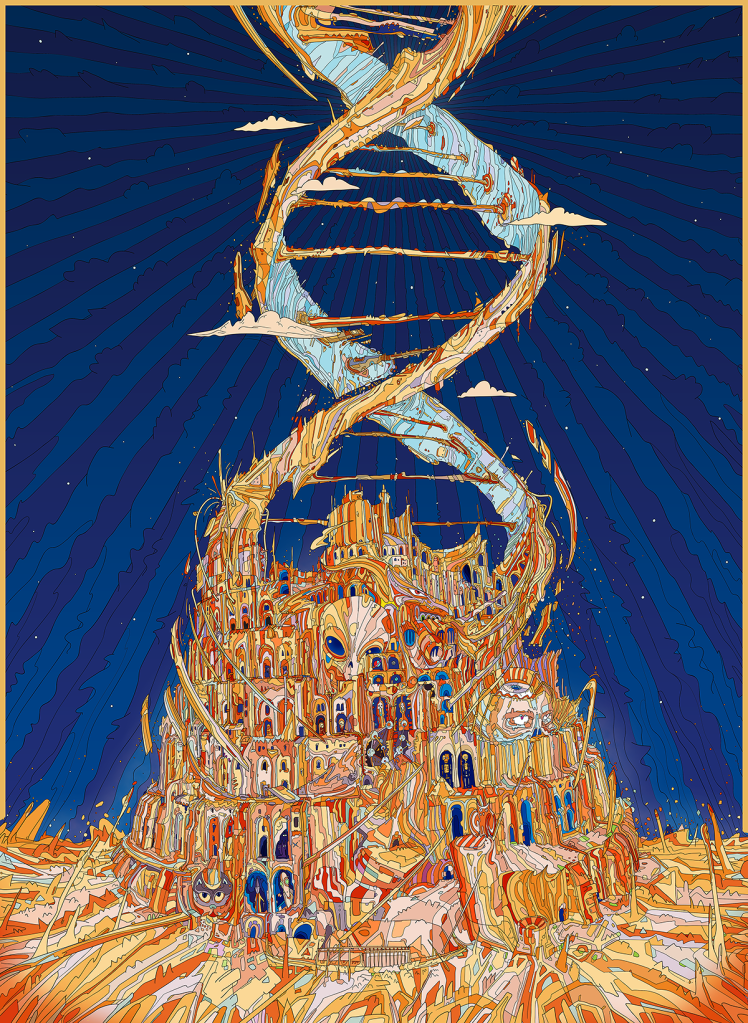
– “Ordo ab Babel”, a play about metaphysics, genetic engineering and the history of our race.