We should make nursing homes for wealthy clients in Europe. Let the Germans come to us, instead of going to Thailand, believes the chief economist of the BNR

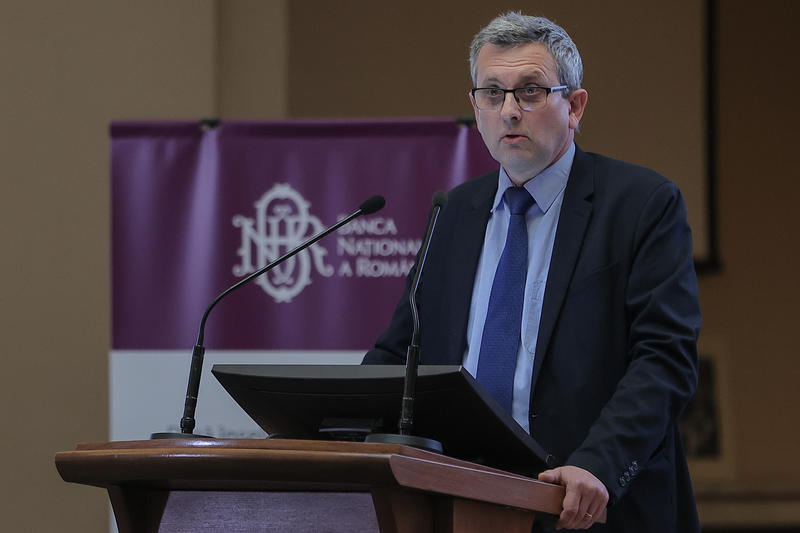
“I, personally, do not think we have what it takes to become a high-tech economy, because we have not laid the foundations to have such, both in terms of the education system and the research-innovation system. As long as we have the PISA scores in the education system that we have and 40% functionally illiterate, we cannot hope for a knowledge-based economy. And the first step that must be taken now because, possibly in 15-20 years, to be able to aspire to an economy of knowledge, is a system of incentives and penalties for teachers to go to the countryside”, said Lazea at the “Smart Development, European Competitiveness” summit, specifying that he was speaking on his own behalf.
He emphasized that, for 12 years, he has been coming up with a proposal, which nobody seems to hear, namely to grant state scholarships to the best high school students from rural areas, under their signature that, once they finish their studies, they will return and serve at least three to five years, on account of the scholarship they received, in their hometown, and if they do not return, they will bear the full cost of the scholarship, possibly with interest, with penalties.
“A market mechanism must be found, I emphasize the market, through which you can help the most brilliant of the rural students (…) and, by helping them, you can also help the other children. So this must be done in education, if we want, in 15 years, to hope for a knowledge economy,” said the BNR official.
And regarding the research-innovation system, he claims that there is not the slightest connection between the four actors who are part of this system, i.e. between the innovator, respectively the engineer who comes up with the idea, the manufacturer, the trader and the intellectual property specialist.
“The innovator, being an engineer, has nothing to do with intellectual property, legal, economic matters. He invented the broom that flies through the air. He needs an ecosystem in which, by pressing a key, a list of all the intellectual property specialists in the county and in the country will be displayed to him. Press another key and all the manufacturers in the country or abroad who produce from the specific product range, and where he to present his invention once it has been patented. And, finally, a list of merchants where the same invention can be… This is a simple matter, an ecosystem in which all these four parties can come together. In Romania, they do not know about each other, or, if they do, they know about it by chance,” explained Valentin Lazea.
On the other hand, the economist indicated that, in his opinion, Romania, and Europe in general, are moving towards a service economy, having the same constraints: they lack certain strategic resources for industrial production, such as rare earths, labor is more expensive than in other continents, namely Asia, Africa, Latin America, and the climate requirements are more stringent in European countries than in other states.
“Given these constraints, we and the Europeans will turn, willy-nilly, towards services,” Lazea pointed out.
He mentioned that Romania already has a surplus, i.e. exports greater than imports, in three branches – international transport, computer and informational services and goods processing services, but it has a deficit “that it should not have” in terms of international tourism, construction services and personal, cultural and recreational services.
“For example, in terms of international tourism, we should promote much more assiduously not only the coast and the mountains, but also cultural, religious, historical, sports tourism, etc., all those things in which we are competitive, but we don't know how to promote them. In terms of construction services, we register a deficit when we have so many Romanian workers working abroad. Couldn't we make some teams that start from design, planning, architecture, not only brute force? And, finally, in terms of personal and cultural and recreational services, we have the advantage that in Romania we have a very good knowledge of foreign languages, which should make us leaders in this field. For example, care homes for the elderly in Europe. So, instead of going to Thailand or I don't know where they are offered services, they should come to smaller towns in Romania where they can be taken care of for a lot of money our infrastructure. So, we will turn to services,” said the economist.
Valentin Lazea participated on Friday in the 'Smart development, European competitiveness' summit, organized by the Concordia Employers' Confederation. (Agerpress)