Reporting the real state of the research institutes that upset the deputy. “To us a single researcher exceeds the average net salary in Bucharest, which is 6,500 net lei per month. And we work for NATO”

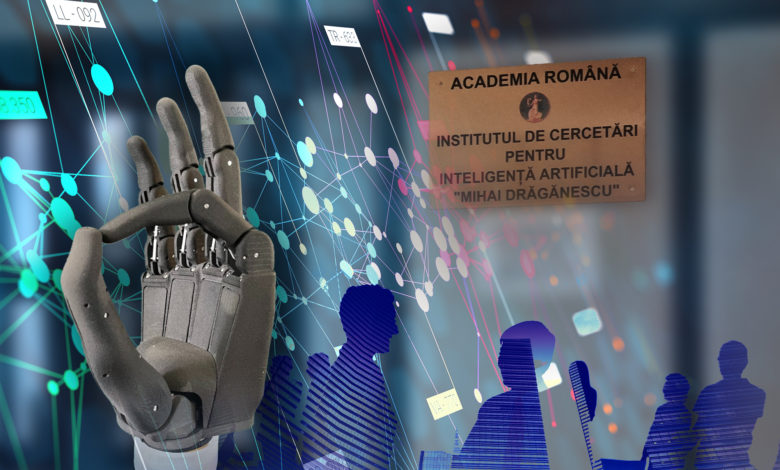
The Institute of Research for artificial intelligence “Mihai Drăgănescu” had an unexpected advertising in the middle of public discussions about the causes of the budget deficit. USR deputy Claudiu Năsui wrote on Facebook that he had received a financing of 105 million lei only for a building and that, “obviously, no research will be done here.” The post has generated thousands of comments on the Internet, many negatives to the Institute. Hotnews went to his headquarters, to see what the Romanian researchers in artificial intelligence are in charge of.
- The projects of the Institute include an algorithm for the operation of a robotic hand or a Deep Fake detection application in Romanian, commanded by NATO.
- The annual budget is about 2 million lei and 24 researchers work here.
When I met the director of the Institute, Andrei Păun, he wanted to make an important clarification. He told me that the deputy Claudiu Năsui “wrong Adrisant”, when he wrote about the building of 105 million lei in which the institute would work.
That is another institute, located in Cluj, and which is subordinated to the Technical University of this city. The financing for the building of the respective headquarters is from PNRR, that is, from European money.
“There are two institutes with almost similar names. We have not obtained any leu for any building,” says Andrei Păun, who also says that the Institute of Research for artificial intelligence “Mihai Drăgănescu”, from Bucharest is subordinated to the Romanian Academy.
“A single researcher exceeds the average net salary on the economy in Bucharest”
The headquarters of the Institute of Research for artificial intelligence “Mihai Drăgănescu” It is on the third floor of the building of the Romanian Academy on Calea 13 September, across the road from the Senate entrance. The institution divides the corridor with the Institute of History of Religions.
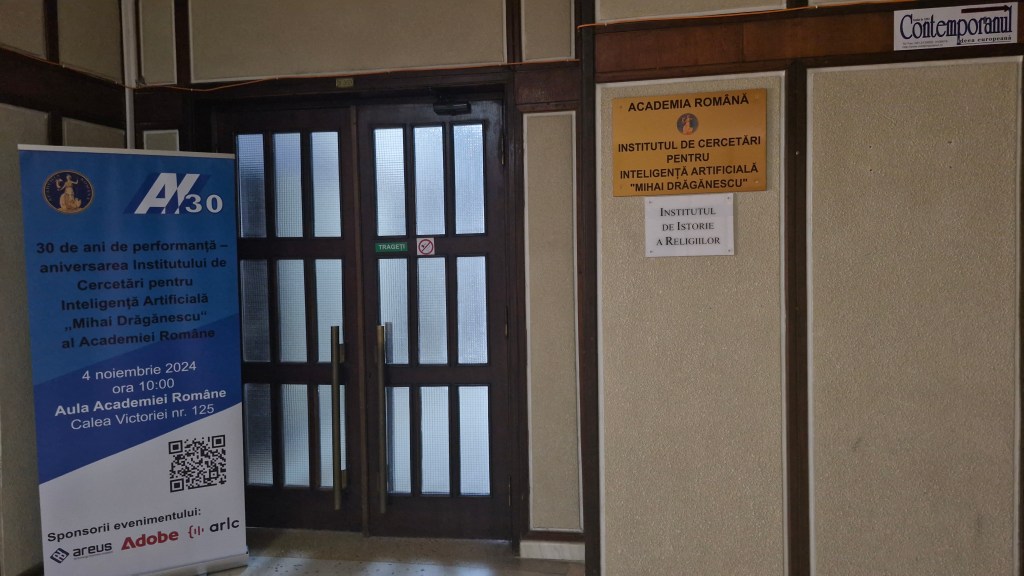
As you enter, on the left, you will find, near the servers room, the council room. Where I met the director and four of the employees of the Institute.
In total, there are 24 people who work in a “flexible program”, which starts around 9 o'clock in the morning, as the director said.
The oldest employee is the academic Dan Tfiș, honorary director of the Institute.
The director of Andrei Păun says that the last employment was made in November 2024. According to him, the annual budget of the Institute is below 2 million lei. As for employee wages, it prefers to be quite evasive:
“The average net salary in Bucharest is 6500 lei. I can tell you that a single researcher in this institute exceeds this amount.”
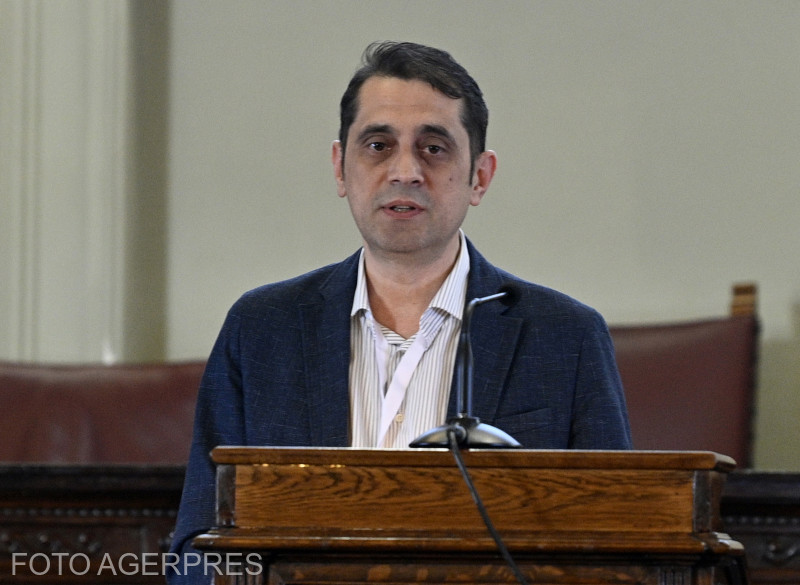
The Institute has four departments: artificial intelligence, natural language technology, new computer architectures and the management and maintenance of the Internet node. I was explained that each department has several projects that work at the same time. I asked them to detail some of the most important ones.
A robotic hand for those who suffered arm amputations
One of the research projects of the “New Computer Architects” department is the contribution to designing a robotic hand for those with amputated arms. There are four researchers from the Institute who work on this project, the director of Andrei Păun said.
What exactly do they do? It deals with the writing of algorithms that allow a variety of movements of the robotic arm.
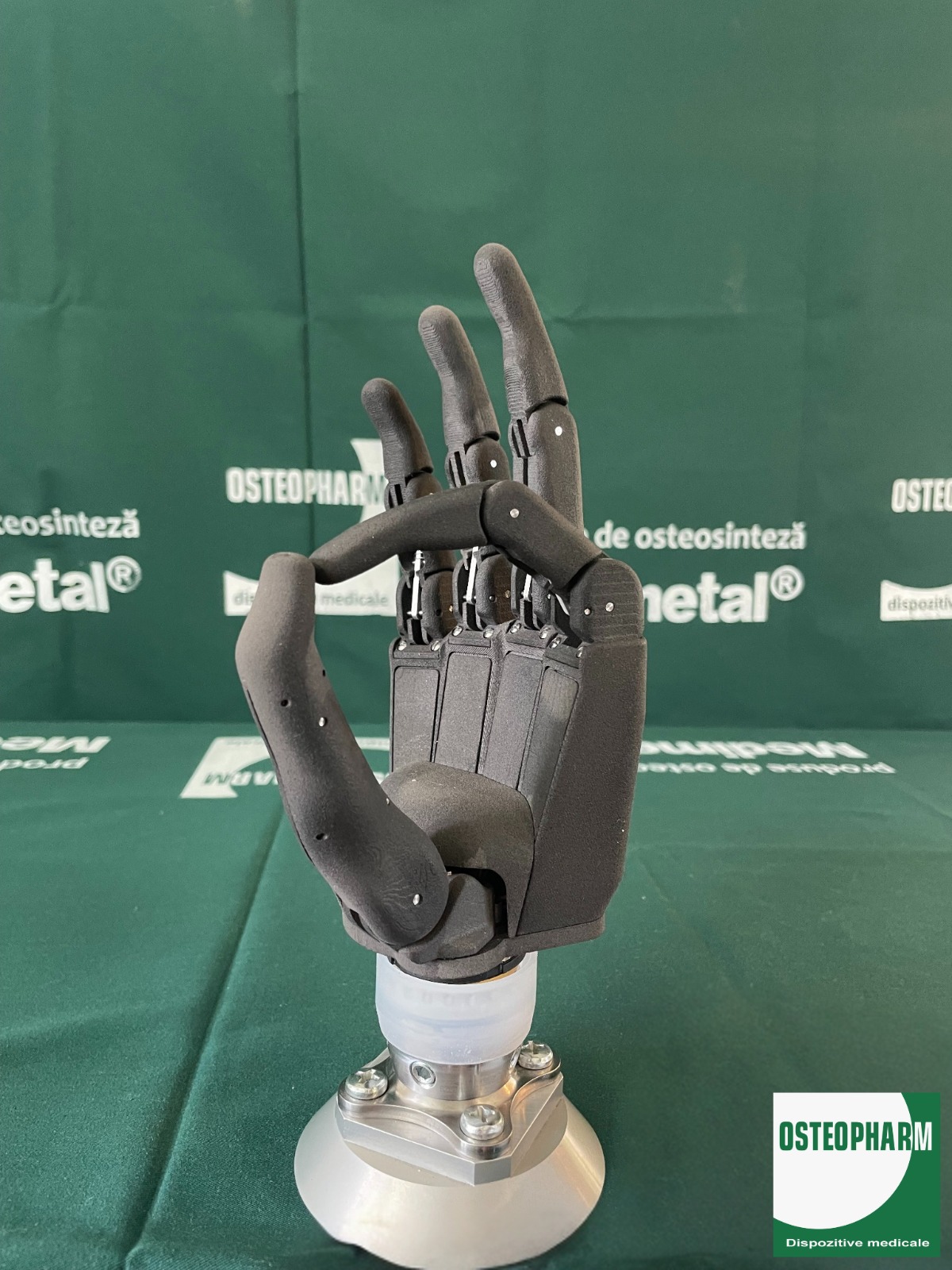
“The prosthesis is designed and created together with several partners from Romania, including Osteopharm, a prosthetic company in Târgu-Mureș. What this product has is the neural interface. All the prostheses that exist on the market are connected with signals collected from muscles.
After the patient is amputated, he receives a prosthesis that is connected to the muscles that remain on the amputation bont. After the intervention, of the 22 muscles that provide the finger movement, eight or ten muscles usually remain.
The signals that are collected are not sufficient to ensure the functions of a prosthesis that can equal a natural hand. The prosthesis in this project will be ordered with a neuronal interface that will be connected directly to the nerves in the amputation abutment.
The patient will be able to make a much wider range of movements, compared to the prostheses that now exist on the international market ”, explained the researcher Eduard France, who is directly involved in the achievement of the robotic hand.
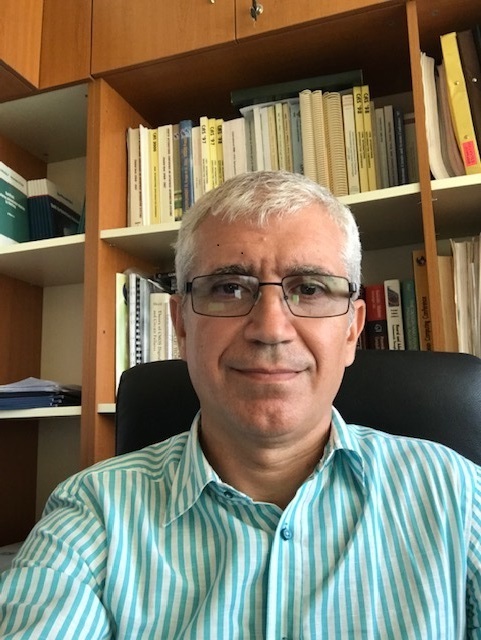
The expert also explained to me that the Ministry of Foreign Affairs selected this project to be presented, from Romania, at the Osaka fair, in July. There will be a businessmen in the field of prostheses and a Nobel laureate, says France.
“The next step will be the patient operation, which will be done in Romania the following year. It will be carried out by a collective of doctors from the University of Medicine and Pharmacy” Carol Davila “, coordinated by Professor Ana Maria Oproiu, head of the Plastic Surgery Section from the University Emergency Hospital Bucharest,” added the researcher.
“The study that will help the commission of doctors to evaluate patients with suicide attempt”
Another young researcher from the Institute gave me details about the project he works for, this is the e-vox.io application. The researcher is called Andrei Brătan and is a PhD student and research assistant.
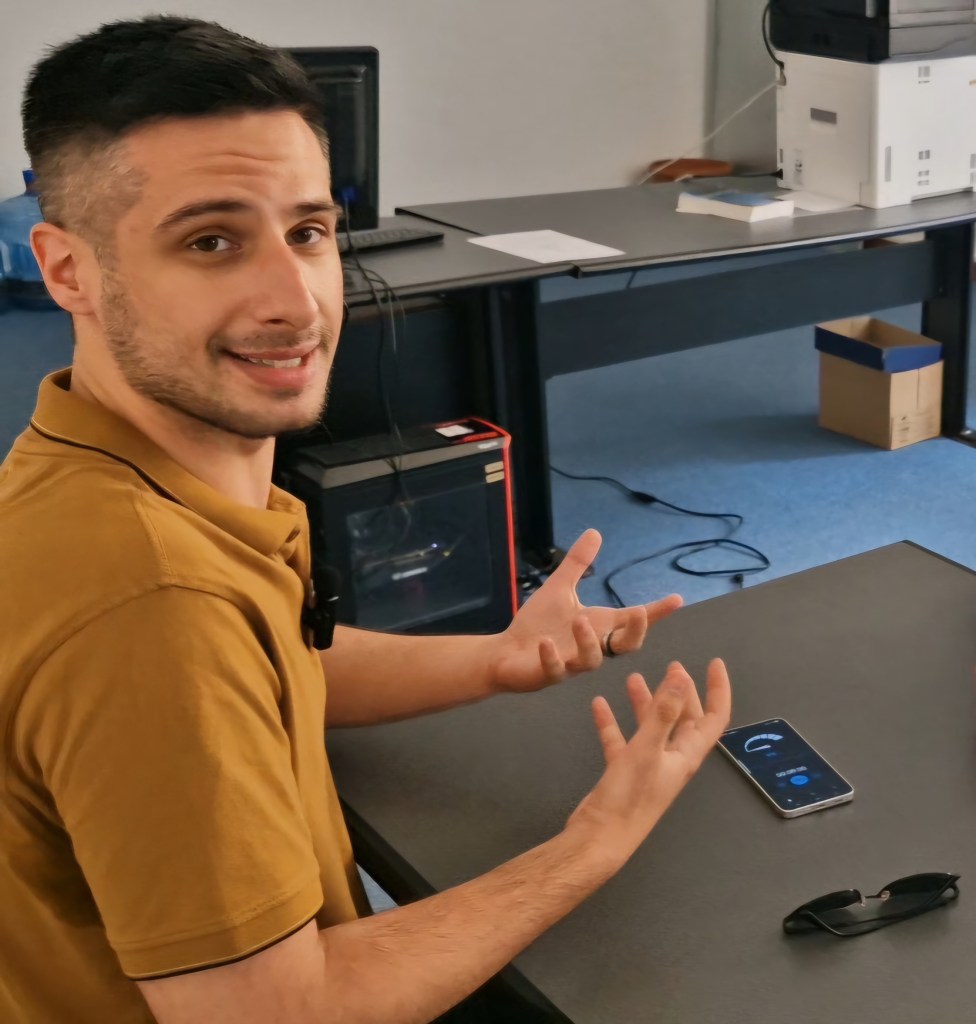
“I study for the doctorate the recognition of the intensity of the emotions in the voice signal. Based on this research, I managed to remove an application that I launched in the US, at a conference where I participated from the Institute of Research for Artificial Intelligence” Mihai Drăgănescu “. It is now on Google Play. What does the application do? Voice, ”Andrei Brătan told me.
I was also subjected to the test conducted by the researcher. As a result, it resulted that I had an intensity of 3.78 out of 5.
What is this application good?
“We have a study with 49 patients from two psychiatry hospitals in Romania who tried to commit suicide. They were later admitted with a judicial order and subjected to a psychiatric counseling. In the interviews taken by the doctors, they were asked what they wanted to resort to such a gesture.
Among the questions, besides those related to the gesture itself, were also questions of the type “which is your favorite food”, “how is the weather outside” and so on. The audio answers were evaluated and was able to detect that the emotion connected with the survival instinct was present. When the patient told the story that determined to resort to that gesture, what he felt, he was present as when he was talking about his favorite food, because intense emotions are remnant.
Andrei found the pattern of these intense emotions. Andrei's study will help the doctors' commission to evaluate the patient at the end of the treatment period to understand if there is a risk that the patient will try again, ”explained the researcher Eduard France what the application consisted of.
I was also told that there is an interest from Motorola for this project. But no other details were given.
NATO project for Deep Fake detection in Romanian
Another project carried out by the Institute of Research for Artificial Intelligence “Mihai Drăgănescu” is related to the identification of Deep Fake materials (digital handling of some images and sounds, made with artificial intelligence – n. Red.).
Romanian researchers develop an application that would identify with an accuracy of 95% Deep Fake Video materials in Romanian, as explained by Andrei Păun.
The project was launched within the NATO program “Science for Peace and Security” in several member countries.
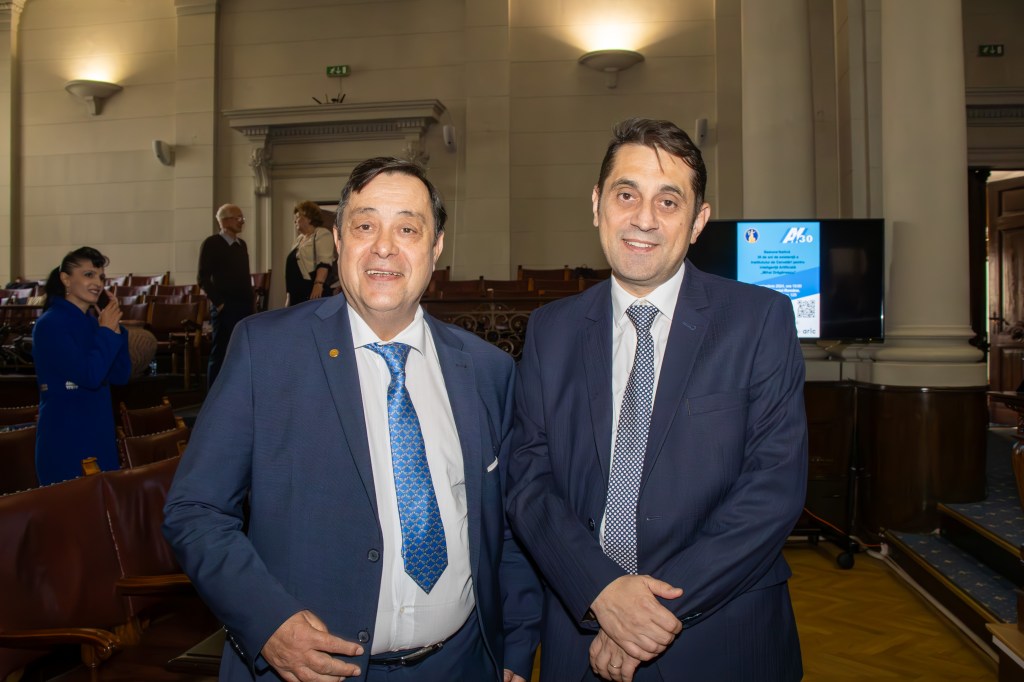
“It is known that the best in detecting fakes that involve the use of a certain language, customs, traditions are the natives in the respective countries,” says Dan Tufiș.
How will this program work?
“For example, I saw two videos in which Nicușor Dan who recommended an investment platform appeared, I was careful about details and I was amazed by the quality of the fake, the way the voice was synchronized with the image,” says Tufiș. He recounts that this program could point out that the respective videos were made with the help of Deep Fake technology.
Andrei Păun says that, for the moment, a decision has not been made if the program will be available for the general public.
Why did a Spanish come to work at the Institute for Artificial Intelligence in Romania
Andrei Brătan is not the only young man in the institute. Two months ago a student came to post-doctoral studies through a European project, a “Marie Skłodowska Curie” scholarship.
“There are few institutions in Romania that have obtained these scholarships. We are more visible and appreciated internationally than at national level,” says Andrei Păun, the director of the Institute.
Antonio Ramirez by Arellano Marrero studied in Mathematics Spain at the license and Master, in Sevilla, then made a doctorate in the science of computers. After completing the project here he wants to become a teacher in the same city.
“I chose to come to Romania because I knew Andrei (Andrei Păun, the director of the Institute – n. Red.).
“I would like to be more funds and we can change the very old servers.”
I was interested in finding out what the needs that researchers have at this time and which cannot be covered from the annual budget of the institution.
Sorin Tache system engineer told me about an area whose importance I did not know so far. Namely the servers on which all the work of the researchers are practically.
“All data plus backup are on these servers. They contain between 10-40 Earth each. They are specific to each program or each branch of research.
The equipment is replaced within the limits of the possibilities with newer ones. We try to keep the operating systems as new as possible to have as few vulnerabilities as possible when we expose ourselves to the Internet, ”said the system engineer.
“A personal desire: I would like to be more funds and we can change the very old servers at a more alert rate than we can do now because of the budget restrictions,” added Sorin Tache.
As soon as you leave the Institute of Research for Artificial Intelligence “Mihai Drăgănescu” you arrive in the hall with the two lifts. From here, several corridors are leaving for other entities of the Academy. Near the entrance I noticed a door on which the magazine “Contemporanul” writes. This publication is led by Nicolae Breban, 91 years old, one of those who opposed Cărtărescu's admission to the Academy.