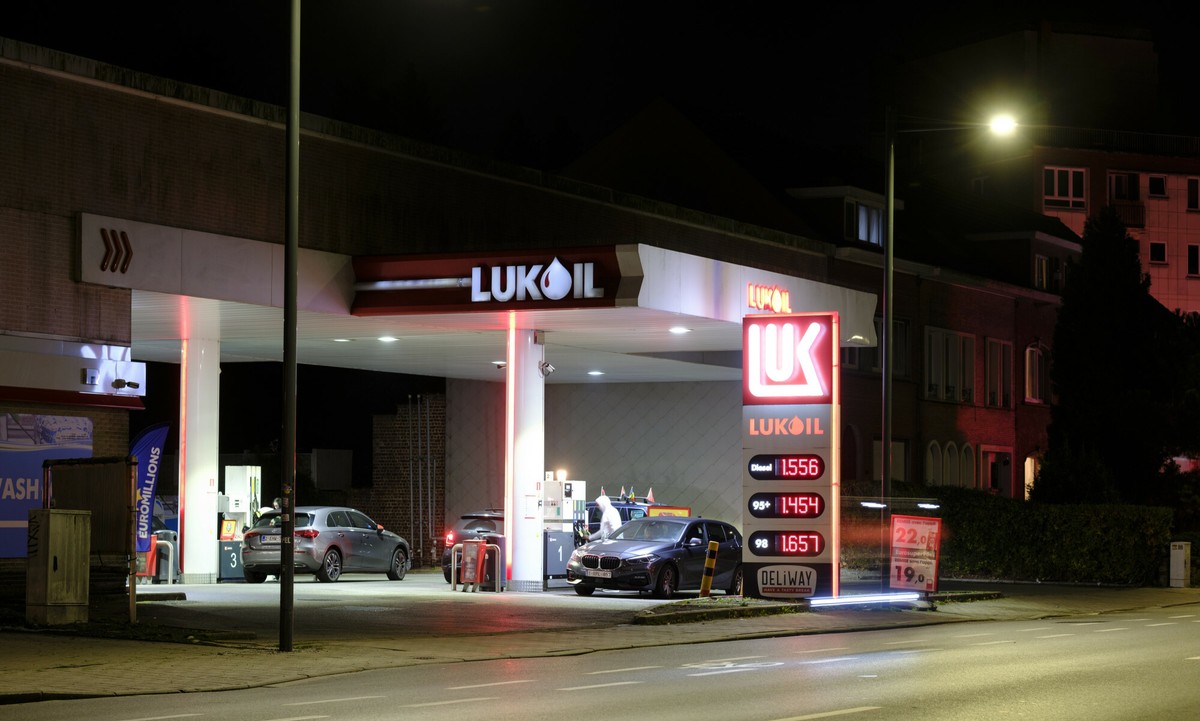
As Junghietu explained, it was the United States sanctions against Lukoil and other Russian oil companies that forced the company to leave the Moldovan market. The minister, quoted by Reuters, emphasized that the Moldovan government had asked the US to temporarily allow Lukoil to continue its operations in order to avoid disruptions in the country's fuel supply. At the same time, Moldova rejected the company's proposal to sell the airport infrastructure to an alternative company.
Read also: Return regarding Lukoil's assets. The willing person withdrew
Lukoil withdraws from Moldova
Lukoil, as the owner of a network of gas stations in Moldova, a supplier of aviation fuel and the operator of the only fuel warehouse at the airport in the country, played an important role in the Moldovan energy sector. Despite concerns about possible supply problems, Junghietu reassured on October 23 that Moldova should not struggle with fuel shortages due to the sanctions imposed on Russian companies.
However, Lukoil's problems are not limited to Moldova. According to reports from the Finnish portal Helsingin Sanomat, the Teboil gas station chain, owned by a Russian concern, is also struggling with fuel shortages in Finland. US sanctions also affected Lukoil's assets in other countries, such as Iraq and Switzerland.
Read also: Drastic decline in tax revenues from oil companies. Russia is losing billions
New US sanctions package against Russia
On October 22, the US Department of the Treasury announced the introduction of a new package of sanctions against Russian oil giants, including Lukoil and Rosneft, and their 34 subsidiaries. These restrictions cut off companies from access to American technologies and expose their trading partners to secondary sanctions.
In response to these actions, Lukoil announced the sale of its foreign assets to Gunvor, an oil trading company. However, according to Gunvor spokesman Seth Pietras, the company withdrew its purchase offer. This decision was made after the US Office of Foreign Assets Control (OFAC) announced that the transaction would not be approved by it.