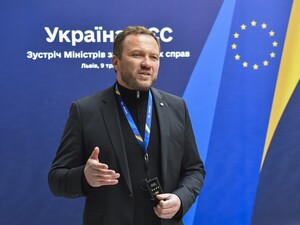
“This is an important step towards ensuring that the tribunal begins its work,” the head of the department, Margus Tsahkna, wrote in X. “Russia’s international crimes should not remain unpunished. The special tribunal should begin its work without delay.”
Today, @EstonianGovt passed a bill for Estonia to join the management committee of the @coe special tribunal for the crime of aggression against Ukraine 🇺🇦.
This marks a major step forward in getting the tribunal up and running, and Estonia is ready to contribute in every way we…
— Margus Tsahkna (@Tsahkna) November 6, 2025
According to the minister, Estonia is also ready to provide financial support to the tribunal, which will operate under the auspices of the Council of Europe.
The decision of the Estonian authorities was welcomed by Ukrainian Foreign Minister Andrei Sibiga.
“This decision is a clear signal: the crime of aggression committed by Russia will not go unpunished. Justice must prevail. Those who are responsible for starting and waging this war must answer before the law and history,” the Ukrainian minister wrote after a conversation with Tsahkna.
I spoke with @Tsahkna and thanked Estonia for its principled decision to join the Enlarged Partial Agreement on the Steering Committee of the Special Tribunal for the Crime of Aggression against Ukraine.
This decision sends a strong message: Russia's crime of aggression will not…
— Andrii Sybiha 🇺🇦 (@andrii_sybiha) November 6, 2025
Context
Ukraine insisted on the creation of a special tribunal regarding the crime of Russian aggression against Ukraine, since the International Criminal Court and other similar institutions at this stage cannot consider cases of such crimes.
In May, a meeting of EU foreign ministers took place in Lvov, during which the creation of a special tribunal for the Russian Federation was approved.
In June, Ukraine and the Council of Europe signed an agreement on the creation of a special tribunal for the crime of Russian aggression.
The full version of the statute of the special tribunal regarding the crime of aggression against Ukraine was published on June 24 on the website of the Council of Europe. In particular, it provides for the following theses: no immunities for aggressors; completely international jurisdiction; cooperation with the ICC rather than competition; full correspondence trials; legal establishment of truth.
The first €10 million has already been allocated for the creation of a special tribunal to investigate the crimes of Russian aggression against Ukraine, head of EU diplomacy Kaja Kallas announced on October 13 in Kyiv. On October 20, she reported that 25 EU member states had pledged to become participants in this tribunal.
The Office of the President of Ukraine admitted that the special tribunal could begin work in 2026.