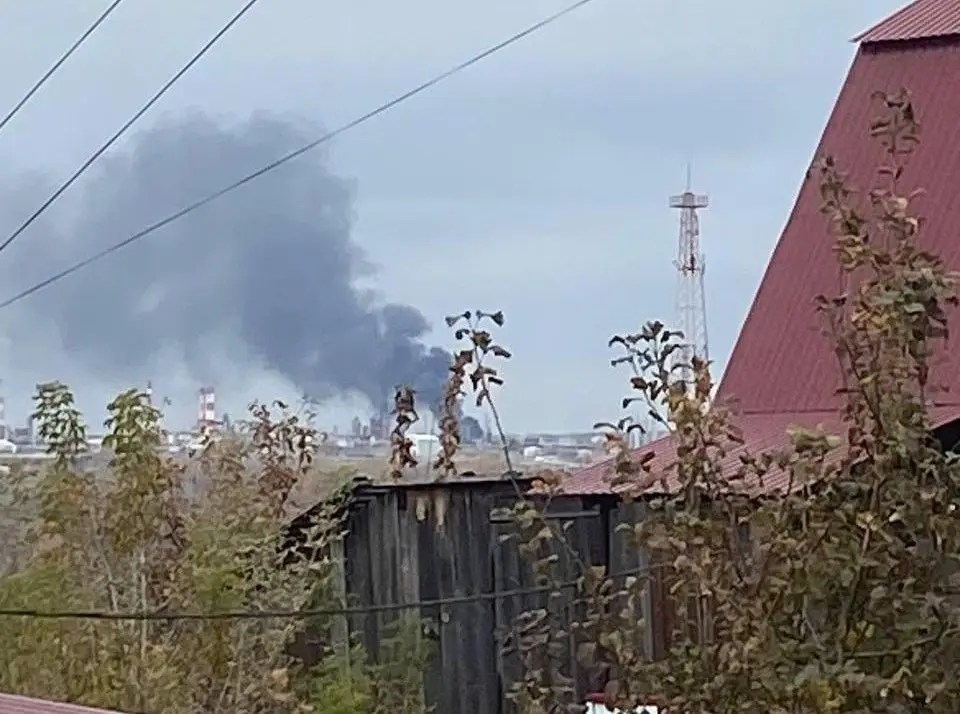
Israel killed a Hezbollah commander in Lebanon. Attack in the middle of the day with guided drones


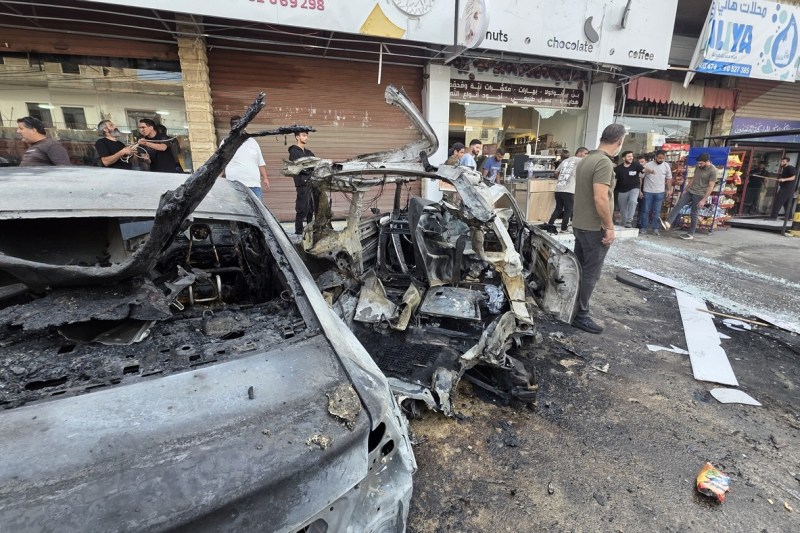
The Israeli attack resulted in one dead and 7 wounded Photo: Mohamad Zanaty / AFP / Profimedia
The Israeli armed forces launched new strikes in southern Lebanon on Monday, killing a commander of the Hezbollah paramilitary organization and another man in separate attacks, Lebanese security sources announced to DPA, taken over by Agerpres.
The Lebanese Ministry of Health announced that one person was killed and seven civilians were injured in an Israeli drone strike on the eastern Doueir road in the Nabatieh district.
Lebanon's National News Agency (NNA) reported that the attack took place in the middle of the day when three guided drones hit a car at the Sharqiyah-Doueir intersection, killing Mohammad Ali Hadid, identified by security sources as a pro-Iranian Hezbollah commander. The explosion set fire to nearby vehicles and caused significant damage to a commercial complex with restaurants, shops and apartments.
Shortly after, another drone strike hit a motorcycle in the border town of Aita al-Shaab, killing a man, according to Lebanese security sources. The Israeli military said it was verifying the reports.
According to Lebanese security sources, the Israeli army has stepped up military activity along the border in the past 24 hours, including deploying tanks and armored vehicles near Lebanese territory.
A truce between Israel and Hezbollah has been in effect since late November last year, but Israel continues to launch attacks, accusing the Shiite organization of rebuilding its military capabilities.
In August, Lebanon's government accepted a US-brokered plan to disarm Hezbollah by the end of 2025, even though the group rejected that deadline. Tensions remain at high levels, with Washington and Tel Aviv warning of escalation if Hezbollah does not disarm.
At the same time, Lebanese President Joseph Aoun declared that Lebanon has no other solution but to negotiate with Israel, stressing that dialogue is the only realistic way to resolve conflicts and defend the country's interests.
“Lebanon has no other option but negotiation. In politics, there are three tools: diplomacy, economy and war. When war gets us nowhere, what do we do? The end of every war in the world was negotiation,” Aoun told a group of his visitors.
He emphasized that “the language of negotiation is more important than the language of war,” recalling that Lebanon has suffered enough from repeated cycles of conflict.