“Everything is serious here” — we heard from representatives of the NATO Multinational Northeast Corps command in Szczecin, a key unit of the Alliance when it comes to the potential protection of the Baltic region. It was “serious” to such an extent that until the last minutes we did not know where the exercises would take place – everything so that the “potential opponent” could not find out anything about it. During exercises, soldiers had to wear vests and helmets at all times and be constantly prepared for threats. “In a word, a simulation of a war situation” — we heard from the exercise organizers.
The “Avenger Triad 25” (literally: “Avengers' Trinity”) exercises were of a command and staff nature. However, some of the tasks were carried out on the Suwałki Isthmus itself, in one of the Lithuanian bases. We couldn't take photos there, but we saw the “heart” of the Lithuanian part of the exercises. For example, staff containers hidden somewhere in the bases. At first glance, they are ordinary “tin” pieces. In fact, these containers are the most important. Commanders in Lithuania receive orders from other NATO headquarters and forward them to “frontline” soldiers.
The containers are hidden somewhere in the garages. So that the “potential adversary” cannot locate them.
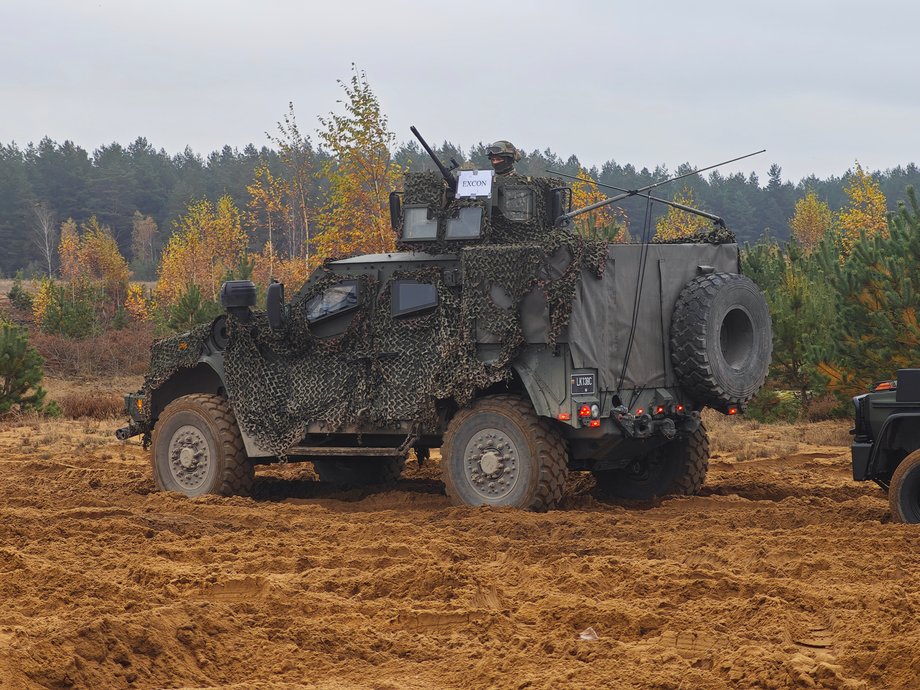
Vehicle of the Lithuanian Armed Forces
|
Mateusz Madejski / Business Insider Polska
While everything is very secret in the “Avenger Triad” exercises, the situation is different in the case of “Strong Griffin” exercises. These are primarily exercises of Lithuanian troops, in which the main violin is played by the brigade, whose symbol is the griffin. However, soldiers from NATO countries also take part in the exercises, mainly Poles, but also, for example, Americans.
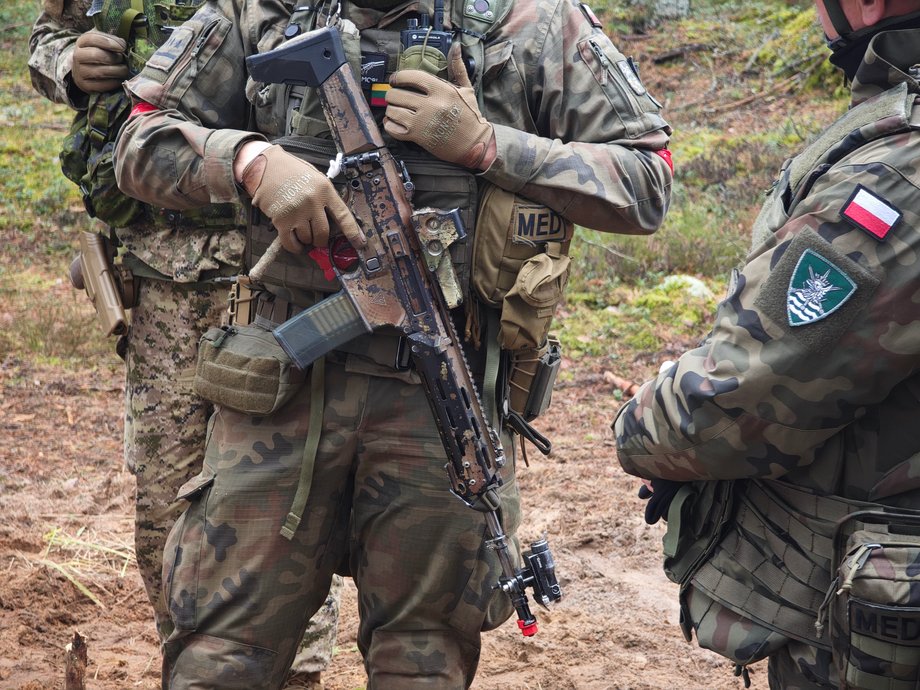
Soldiers during exercises
|
Mateusz Madejski / Business Insider Polska
Briefing in the basement
“Strong Griffin” is strictly a “training ground” exercise. What such exercises actually look like will surprise any civilian, even those who think they know something about defense issues.
We are going to the training site – a training ground in Podbrodzie, Lithuania, which is located right next to the border with Belarus. Everyone realizes that the Belarusian side knows that such important exercises are taking place on the other side. The military recommends that we take basic digital precautions – for example, turn off the location on our phones.
Our day at the training ground begins with a visit to the “command center”. It is located in the basement of one of the blocks. In this secret place (you can't take photos there) there are rows of computer stations with busy soldiers sitting at them. Time for a briefing. The Lithuanian colonel talks about the details of the exercises, using quite specific military terminology and countless abbreviations. Military men from Poland, Germany and the USA listen to the Lithuanian and nod. We don't really understand anything.
A Danish officer comes to the rescue. – It looks like this. The exercise simulates an attack on Lithuania, including Vilnius and the surrounding area. ““Red” soldiers attack, i.e. those who have red tapes on their uniforms or on their vehicles. “Blue” soldiers are supposed to defend against them and prevent the enemy from taking over, for example, the suburbs of Vilnius – explains the Dane.
“Potential opponent”
“Ah, Reds, I think I understand,” I reply. The officer smiles. – No, no. Please do not have any political associations. “Reds” has no connotations. It's just the way it is in exercises that usually the attackers are the “reds” and the defenders are the “blues” – I hear from an officer of the Danish armed forces. Nevertheless, the “reds” attack. That is, they play the role of a “potential opponent”. It is not difficult to guess who the “potential opponent” is. But NATO representatives prefer to use these diplomatic terms rather than speak directly. This approach is intended to emphasize the strictly defensive nature of the Alliance.
Soldiers from Poland predominate among the “reds”. The “Blues” are mainly Lithuanians. This is because the exercise is primarily intended to be a lesson for the Lithuanian troops and to train them in defense techniques against a “potential enemy”. But such exercises are, of course, also a great lesson for Poles. They can test their skills, but also simply “shoot” each other on the training ground.
See also: 6.3 thousand PLN is just the beginning. That's how much the military pays students
The bullets used in the exercises are, of course, “blanks”. Everything else is supposed to reflect the realities of a real conflict as best as possible. Driving through the training ground, every now and then we see hidden “red” or “blue” cars. Apparently there are also snipers buried here and there.
The soldiers are visited by Lieutenant General Dariusz Parylak, commander of the Multinational Northeastern Corps. Generals' stars obviously impress soldiers, but in NATO doctrine it is important that “front” military officers make many decisions. For example, the Russians had a different approach in the first stage of the full-scale war in Ukraine. They gave a lot of orders to their soldiers, were present close to the front lines, and whenever they appeared among the military there was a lot of confusion. As a result, they became an easy target for Ukrainian troops, and many high-ranking generals and colonels died in the first stage of the conflict.
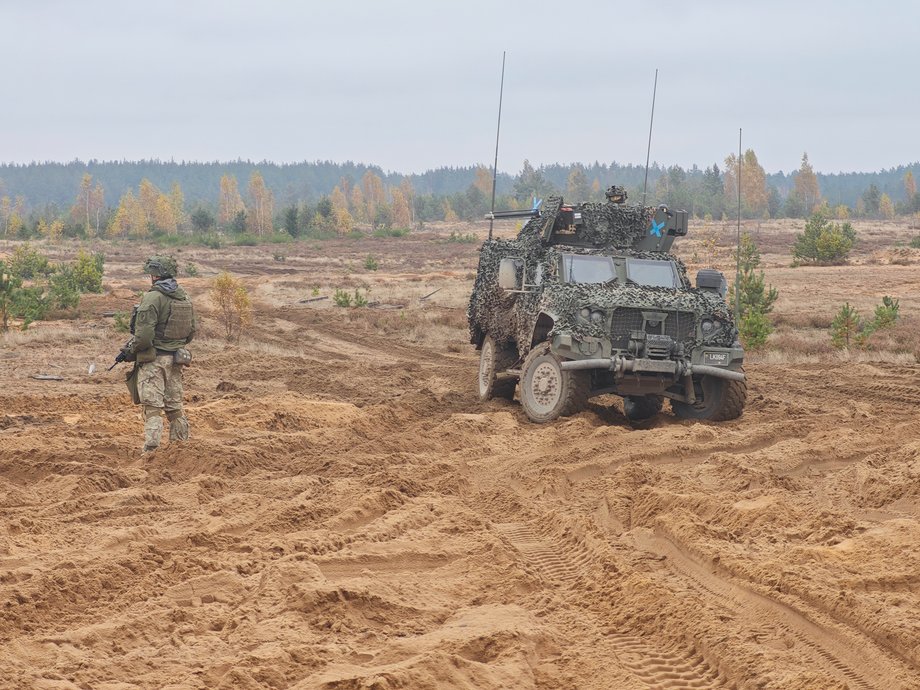
“Blue” soldiers on exercises
|
Mateusz Madejski / Business Insider Polska
Generals tend to give their officers a lot of freedom during exercises. Sometimes they also want to lighten the mood or share advice that may be surprising to a civilian at first glance. Gen. Parylak, for example, told Lithuanian soldiers to learn the Cyrillic alphabet, pointing out that fewer and fewer people in Poland can read even basic messages or maps with such markings. “But it's worth understanding the language of a potential enemy,” the general says to the soldiers.
The rest of the article is below the video
Dariusz Parylak is not the only general who visits the exercises. There are also the highest-ranking soldiers from Lithuania and John S. Kolasheski, until recently one of the most famous US Army commanders in our country. This retired three-star general (who himself has Polish roots) commanded the reactivated V Corps of the US Army, one of its headquarters in Poznań. Kolasheski, although retired from the military, is still involved in NATO life – he is currently one of several Alliance mentors who advise commanders such as General Parylak.
The general explains that this solution allows him to share knowledge and experience. – But there's something else. It helps me feel young, smiles John S. Kolasheski. The American was long associated with US troops in Europe. I ask him whether he sees a threat that Washington will decide to seriously reduce forces in Europe. However, citing US politicians, he says that this will not be the case, and the Old Continent is still important to America. He points out that the United States is a country with interests all over the world, so the presence of US troops may decrease in some regions and increase in others. But he says Americans will remain. There are quite a lot of Americans at the training ground in Podbrodzie – you can also see a lot of heavy military equipment belonging to the US Army. However, Lithuanian leaders admit in our conversation that there are slightly fewer Americans than in the case of previous similar exercises. – But please understand that there is a shutdown in the USA – one of the high-ranking officers from Lithuania explains to us.
See also: Reduction of US troops in Europe. There is a reaction from the Ministry of National Defense
I ask the military whether they are not afraid that they will have to use the skills they practiced on the training grounds in practice. — Fear is the wrong word. We are soldiers to be absolutely ready for this, I hear from one of the officers. “It's not us who should be afraid,” says another. I ask who should be afraid then? – Who's that? A potential opponent, my interlocutor smiles.
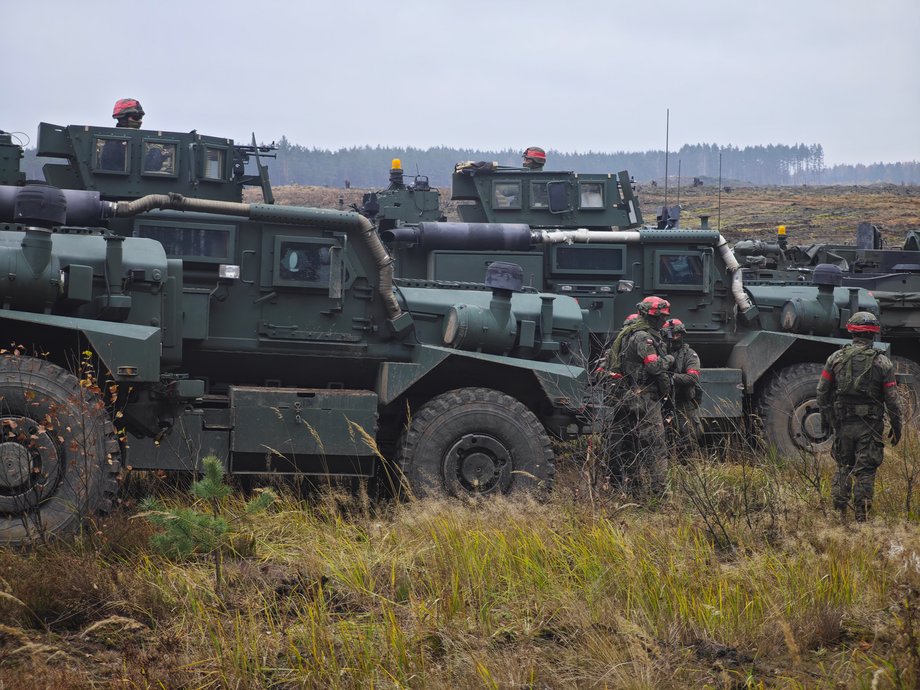
Polish soldiers during exercises in Lithuania
|
Mateusz Madejski / Business Insider Polska
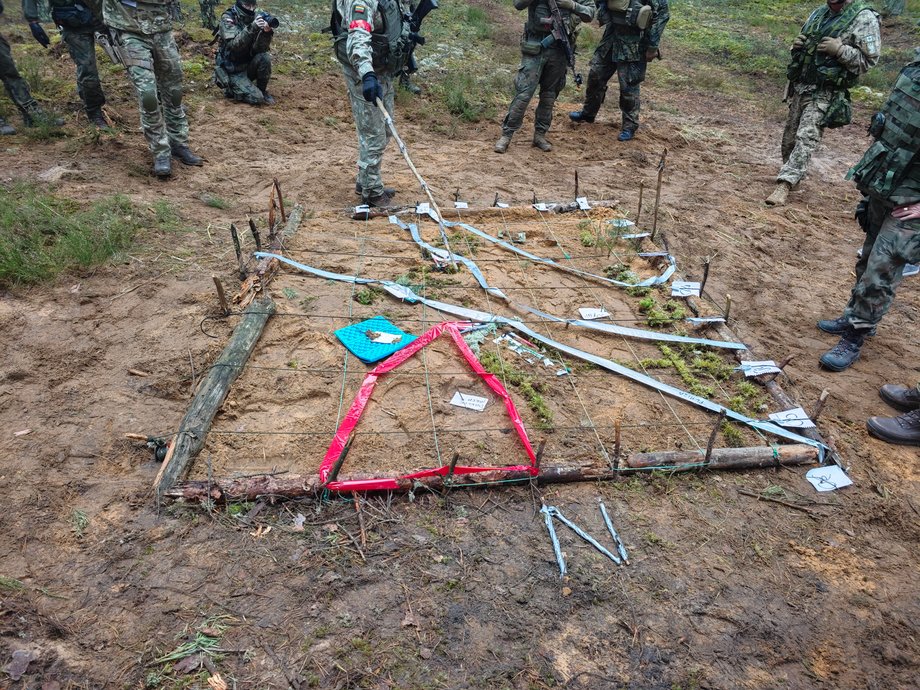
A Lithuanian soldier presents a “map” of exercises
|
Mateusz Madejski / Business Insider Polska
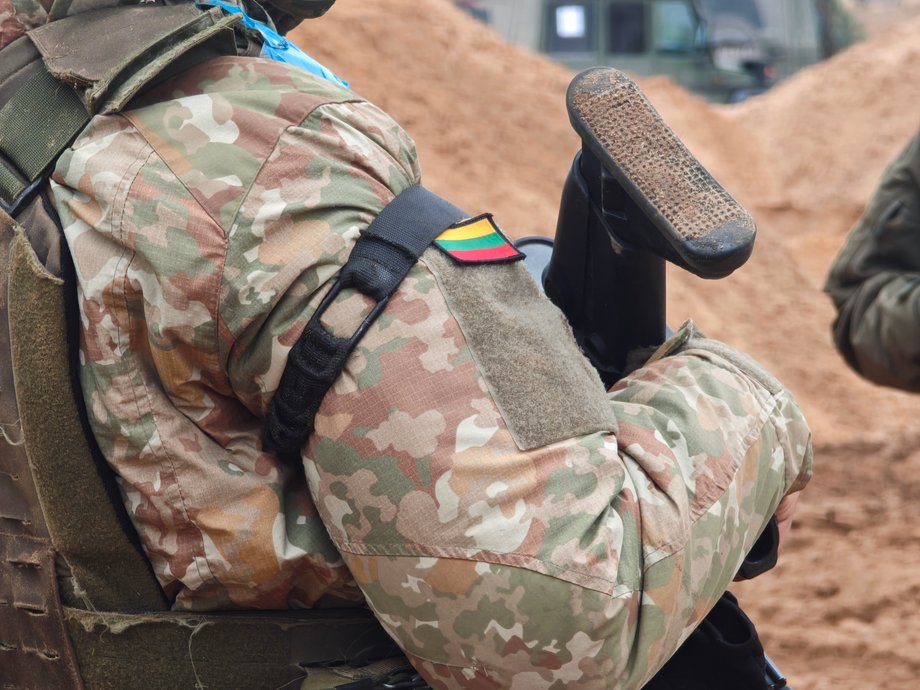
Lithuanian soldier
|
Mateusz Madejski / Business Insider Polska
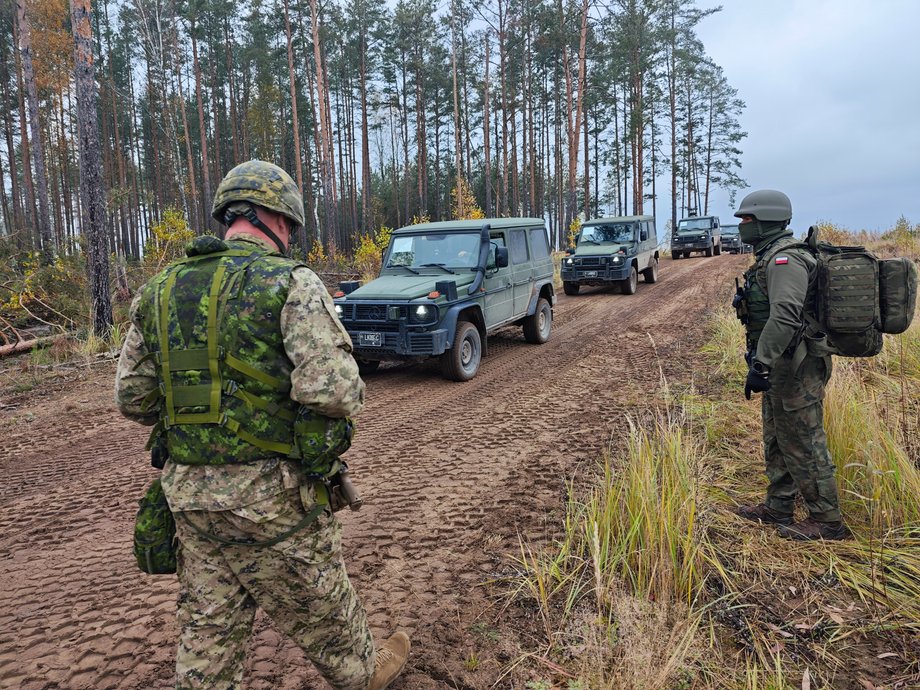
The exercises took place at the largest Lithuanian training ground, located right next to the border with Belarus
|
Mateusz Madejski / Business Insider Polska
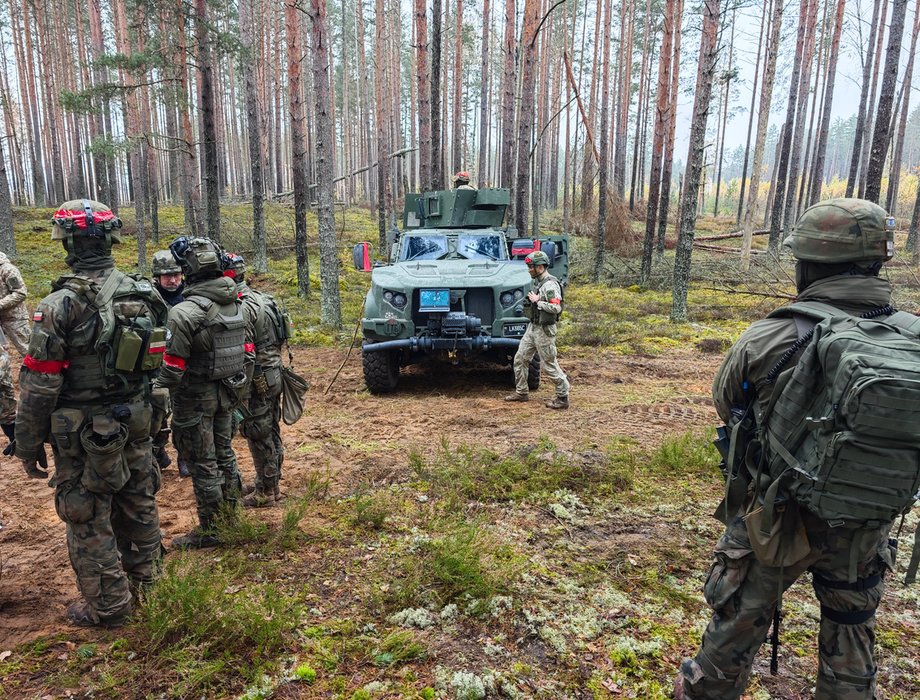
Exercises in Lithuania
|
Mateusz Madejski / Business Insider Polska
Author: Mateusz Madejski, journalist of Business Insider Polska