The sanctions hurt Putin. The condition of this key sector for Russia has not been so bad for a long time

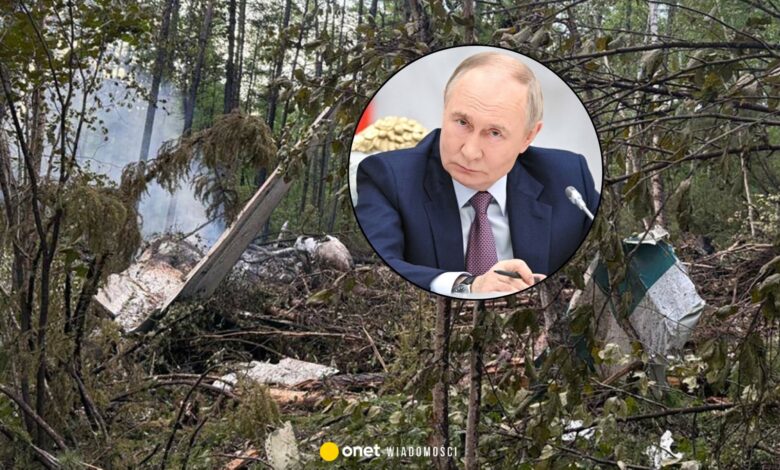
If it weren't for the plume of smoke rising above the dense pine forest, the scene could have resembled any other part of Russia's vast and sparsely populated Far East.
Earlier in the day, an Antonov An-24 plane with 48 people on board disappeared from radar while approaching Tynda, a city in the Amur region bordering China. When investigators reached the source of the smoke, they saw only damaged metal among the trees and found no survivors.
The July 24 disaster prompted authorities to launch an investigation investigations into 51 regional airlines to improve industry safety standardswhich they claim is seeing an increase in the death toll. This week, authorities grounded carrier Angara Airlines.
But while sanctions are devastating the country's aviation sector, a more noticeable trend appears to be emerging, according to experts and industry observers increase in the number of technical accidentsnot fatalities.
Data from German aviation safety company JACDEC, obtained by The Moscow Times, show that the number of fatalities in Russian aviation has not increased significantly in recent years.
In fact, the so-called hull losses – that is, the total destruction of an aircraft – remained relatively constant, and “major incidents” saw only a slight increase. JACDEC data covers accidents involving civil aircraft weighing more than 5.7 tonnes or having at least 19 seats.
The article continues below the video
However, the number of smaller security breaches, which include everything from engine failures, fires and collisions to errors during take-off and landing.
– We are seeing an increase in the number of attributable technical events shortages in the supply chain and certified spare partssuch as avionics, carbon brakes or engine turbine parts that affect the reliability of flight schedules, says JACDEC CEO Jan-Arwed Richter. — However, this is not a level that could lead to a plane crash.
Turbulence in Russian aviation
The lack of a clear trend in the number of fatalities in air accidents undermines the official thesis that the number is increasing.
At the same time, findings from The Moscow Times suggest that the effects of sanctions — in particular the lack of parts to repair planes — continue burden domestic aviationand air travel seems less and less safe.
Experts say the inspections may be an attempt to reassure a terrified public and ensure that domestic planes are fit to fly.
When news of the disaster broke on July 24, observers quickly turned their attention to the Soviet Antonov-24, which was said to be 50 years old.
This 52-seat twin turboprop aircraft, introduced into service in the early 1960s, is an example obsolete passenger plane. During Russia's war, more and more people are forced to board this type of equipment.
— For many regional routes, especially in Siberia, airlines have no other choiceas long as they continue to operate older types of aircraft, as many remote airports do not have the infrastructure to support newer or larger aircraft such as the Sukhoi Superjet, explains Oleksandr Laneckij, CEO of Lithuanian consulting company Friendly Avia Support.
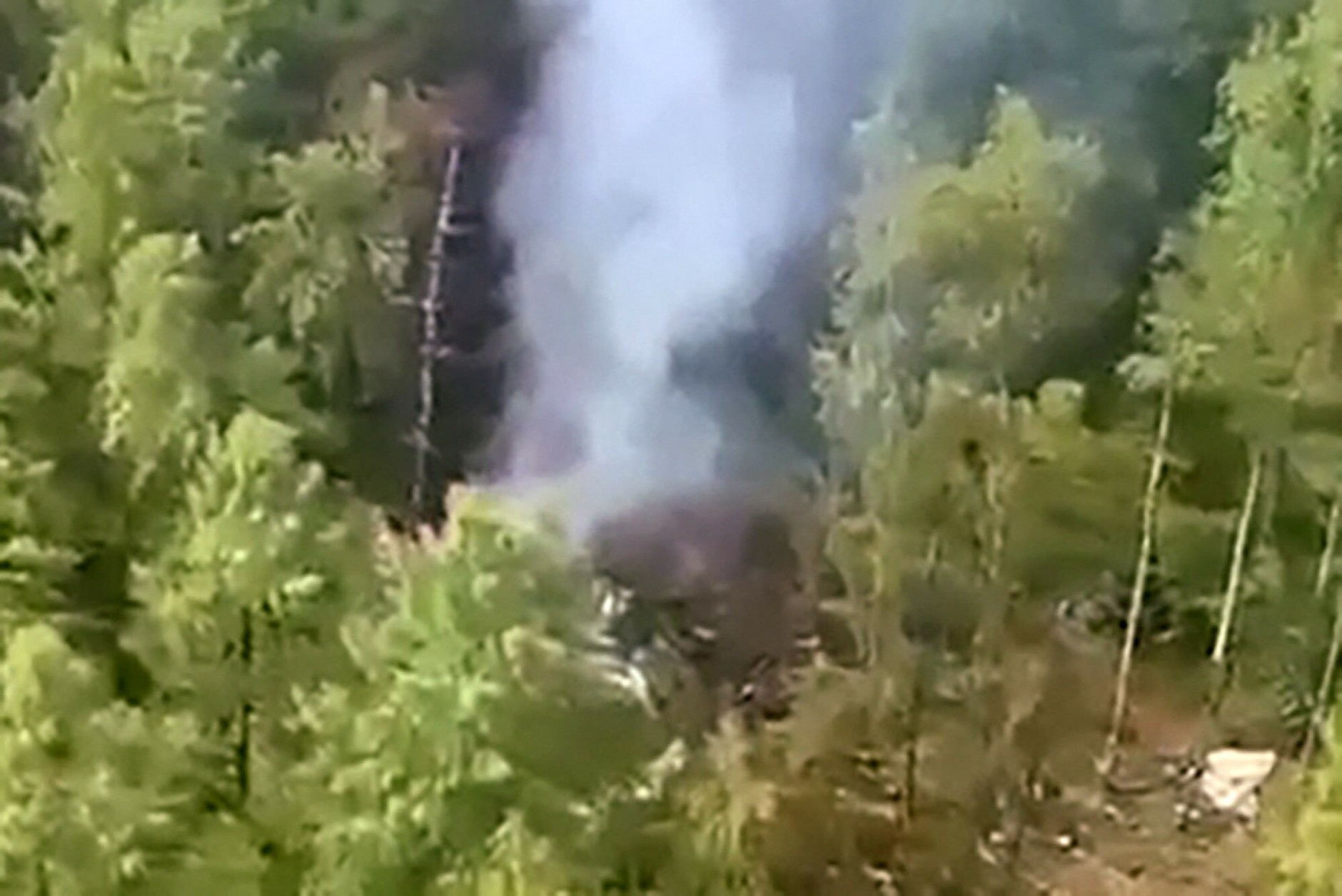
The site of the Antonov An-24 plane crash near Tynda, RussiaHANDOUT/AFP/East News / East News
Victims of the system
Then came the stories of the victims.
Among them was 71-year-old surgeon Leonid Maizel, who was on a plane to visit his granddaughter and take her to the Far Eastern city of Khabarovsk.
Flight attendant Anastasia Bessmertnaja, 43, was described by a colleague as “nice” and “full of energy”.
Sergei Shiyan, his wife and their 18-month-old daughter were flying to visit his wife's family.
After the disaster, the deputy director of the Russian transport authority gave the reason for the mass inspections increase in the number of deaths from air accidents in 2023–2024.
In December, authorities will begin a year-long process of monitoring 51 regional airlines' regulatory compliance, crew training and equipment performance.
Angara Airlines, the operator of the plane that crashed in July and was grounded this week, was first on the liquidation list.
While JACDEC data shows an increase in aviation fatalities from 2022 to this year, the full picture is more complex.
Accident prone
In fact, the average number of aviation fatalities in Russia has remained at a relatively constant level of approximately 30 per year. Looking back at this period, the last three years seem unremarkable.
JACDEC data shows that the deadliest period for Russian aviation was 2000-2010, when a series of plane crashes pushed the average annual death toll to 71.
The reason for the Antonov plane crash in July remains unclear. Investigators are considering both pilot error and technical failures that may be related to sanctions.
— Sanctions undoubtedly created conditions that contributed to the accident — Laneckij tells The Moscow Times. — Without these restrictions, aircraft of this age would likely no longer be operated.
Older planes are more prone to technical problems. From 2022, the increase in the number of both minor and serious accidents is undeniable, averaging 66 per year.
According to JACDEC data, more than 60 such events have been recorded by October 2025.
Some of this growth can be attributed to the larger transparency of publicly available sourceswhich JACDEC uses to create its databases, says Richter, the company's CEO.
Moscow airportDeposit Photos / East News / East News
Problems in the industry
The results are reflected in Russia's regulatory data. The Interstate Aviation Committee (MAK), which tracks aviation accidents in Russia and neighboring countries, has not recorded a significant increase since the outbreak of the war, and recent years appear to show a decline in the average number of injuries and fatalities.
“When you look at the data from 2023 to 2024, you don't see a significant increase across the industry in terms of significant safety deterioration,” says Steven Harris, a history professor at the University of Mary Washington who studies Russian aviation.
Even though MAK also covers the Caucasus and Central Asia, Harris says the data is still useful for gaining insight into Russian aviation.
Another caveat is that the data reported by Russia may be misleading incomplete picture of the situation. Last year, the CEO of aviation safety company RANAVIA said the actual number of plane accidents may be higher than reported because airline workers choose not to report them.
Currently, many planes in Russia are almost at a standstill abandoned all over the country. The commercial aviation sector, which has been hit hard by sanctions, has been unable to import key components from the West for more than three years, making planes unsafe to operate.
In a country as large as Russia, aviation is often the only option to reach more remote regions, and airlines have evolved in an attempt to maintain their services.
Some companies were able to keep their fleets in good condition by smuggling parts into the country. The government spent billions of rubles on subsidies to aircraft manufacturers and the maintenance of airlines, and on the purchase of planes that were previously leased. In 2023, the authorities legalized the dismantling of planes, a process commonly called “cannibalization.”
Flying coffins
However, the condition of the Russian air fleet is so bad that officials expect withdraw more than 300 aircraft and 200 helicopters from service in the coming years, Dmitry Yadrov, head of the Federal Air Transport Agency, said this month. By 2030, almost 30 percent planes manufactured in the West may be grounded.
During a meeting of the International Civil Aviation Organization last month, Russian authorities asked their Western counterparts to easing of sanctions regarding Western aircraft components, presenting the issue as a security problem.
Now officials are doubtful they will be able to patch the problem, says Harris, who is writing a book about Russia's national carrier Aeroflot.
In addition to reassuring public opinion, one motivation for the latest industry-wide inspections may have been to ensure that Russia's dwindling commercial resources can meet growing demand.
“To their credit, they're trying to get ahead of this,” Harris notes.
– On the other hand, this may be influenced by other factors, such as the state's desire to consolidate the regional aviation market and take over some smaller carriers – he adds. — There is nothing better than a harsh performance review to serve as a pretext for such actions.
Laneckij agrees that other factors may motivate scrutiny of the industry, which may change its structure in the coming years.
— Aeroflot, as the dominant carrier in the country, has a strategic interest in consolidating the market by displacing weaker competitors, he says. — Smaller and regional airlines, which typically do not have significant political or financial support, are most vulnerable to such pressure.