Phoenix Baia Mare, the combined buried in his own ashes. What the forbidden place in the northwest of Romania looks now

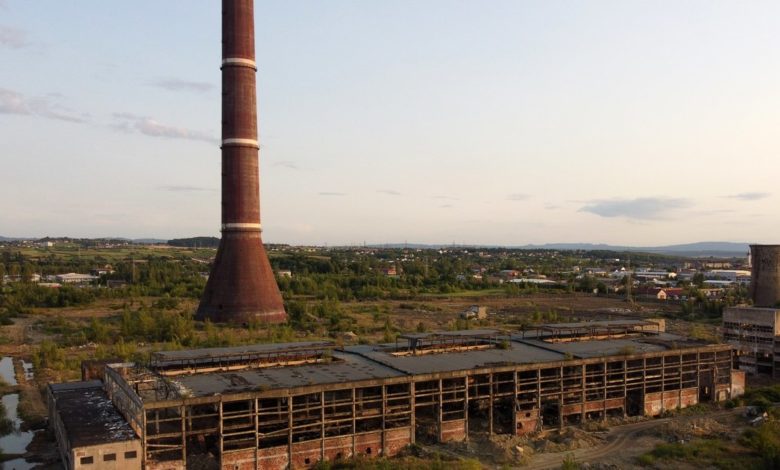
For almost a century, the metallurgical factories in Baia Mare, the current former Phoenix combined, were among the best performing industrial units in Romania. The place where they worked, however, remained one of the most polluted in the country.
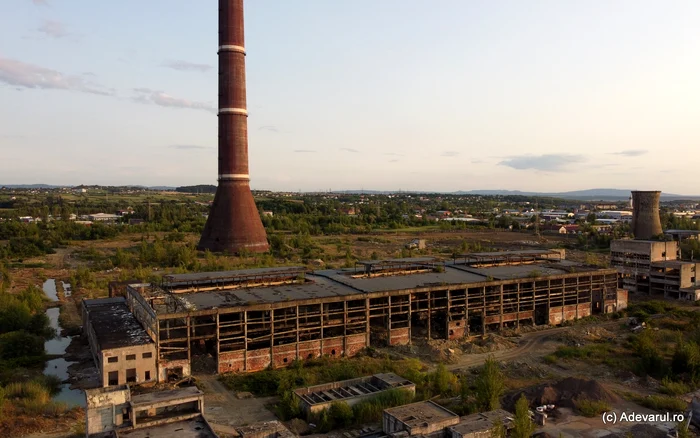
The combined from Baia Mare. Photo: Daniel Guță. TRUTH
A concrete fence, over two meters high hides the passers -by offered by the former metallurgical combination of Baia Mare, now a large land occupied by ruins, ponds and contaminated lands, rubble and dangerous areas for the safety of those who venture among them.
And despite its “restraint”, the former “Phoenix” is not bypassed by locals, families in search of scrap iron and other metal residues that can be valorization and children and young people in search of fun and adventure.
Some are scouring among the ruins ground by the passage of time and the damage started almost three decades ago, others are courage to climb on the decommissioned buildings and, especially, on the tower – giant of the combined, which rises to over 350 meters, dominating the former mining and metallurgical city in the northwestern Romania.
The fortress of copper
The metallurgical factories in Baia Mare were established in 1907, bearing the name “Phoenix”, inspired by the mythological creature that reborn from their ashes, a symbol of resistance and renewal. According to the legend, the Phoenix bird, with red-gold feathers and the body that emitted light rays like the sun, lived five centuries, and at death, a new Phoenix bird appeared. She covered her father in a myrrh egg and took him to the great Egyptian temple of the Sun Heliopolis.
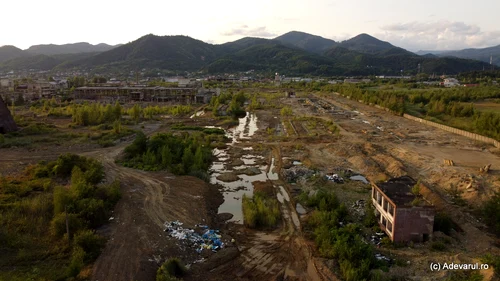
Image 1/15:
Baia Mare, the ruins of Phoenix Photo PHOTO Daniel Guță Adevărul (98) JPG
The name of the copper plant and precious metals seemed predestined in its beginning, when it had become, shortly, one of the most efficient in Europe, as production and technological equipment. At the beginning of the last century, annually, in Baia Mare there were over 300 kilograms of gold and over three tons of silver, but sulfuric acid was its main product. Copper sulphate, lead oxides and other metals and compounds were also reference products of the industrial complex in the interwar years.
During World War II, the plant in Baia Mare increased its production due to the need for metals and military components of Romania, and after the war the communist regime was nationalized and transformed it into a metallurgical combination based on copper production. In the 1970s and 80s, the city of Baia Mare rapidly expanded around the great non -ferrous metal complex, reaching almost 150,000 inhabitants in 1990.
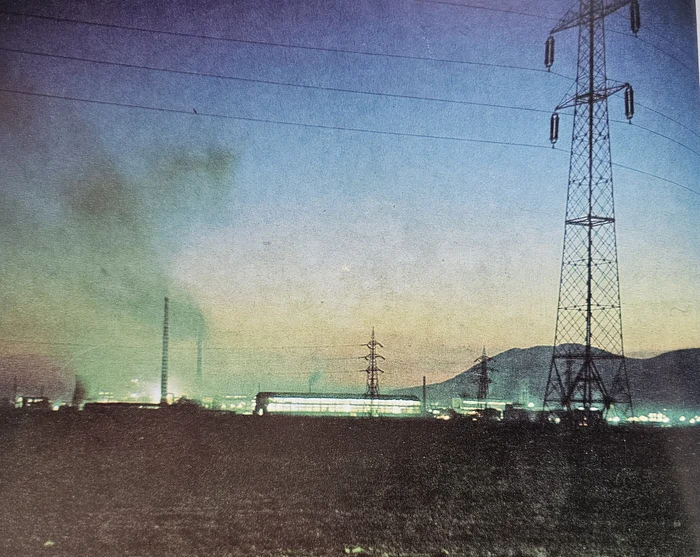
Baia Mare in the 1980s. Photo: Sandu Mandrea, Album Maramureș, Sport – Tourism Publishing House, 1982
The former medieval fair, known in the past for the precious metal mines in its vicinity, was transformed into an industrial city, dominated by the Phoenix Combined, where the gold, lead and copper ore were processed, and with a mining industry developed from the exploitations in the Gutâi Mountains and the Țible.
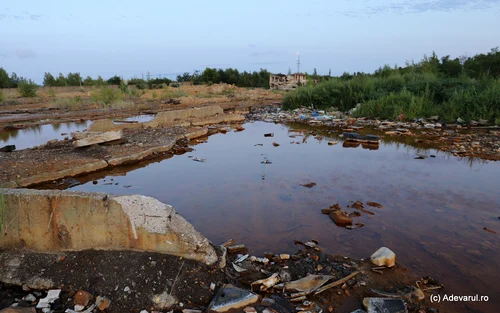
Image 1/10:
Baia Mare, the ruins of Phoenix Photo PHOTO Daniel Guță Adevărul (41) JPG
There were also a sulfuric acid plant and chemical products, as well as factories for mining, cement and building, canning and light industry. The Phoenix combined, the largest employer, had over 10,000 employees in the last years of communism, and the city had been called the “Capr City”.
Pollution from the 1990s
The price paid by the locals for the expansion of the industrial complex was extremely high. The air, soil and waters of Baia Mare were contaminated with heavy metals and toxic substances, and noise, industrial dust, dense and toxic smoke, acid rains and numerous sterile ponds have made Baia Mare considered one of the most polluted cities in Europe, in the early 1990s.
“The human cost is awful. For the 150,000 residents in Baia Mare, life expectancy is 50 years, with almost 20 years under the Romanian average. Children, according to a health study by UNESCO, have high lead concentrations in their bones and teeth. Chronic lung diseases are endemic. Sulfur in the air, at levels of 100 to 200 percent above the Romanian norms ”, The journalists of The New York Times in 1992 showed.
The American newspaper informed that, in the frequent forests around Baia Mare, 585 kilometers northwest from Bucharest, the toxic emissions of this metallurgical center have reduced the growth of half. About one third of the nearly 12,000 hectares of forest were devastated. Some trees have lost up to two thirds of the foliage. Even in the least affected areas, the acid rains covered the leaves with brown spots.
At the beginning of the 1990s, a high -dispersion basket over 350 meters was raised in the middle of the industrial complex, being considered an effective solution to reduce the effects of pollution that affects the city and its surroundings. The tower, planned from the 1980s and completed in 1995, was used only a few years.
Privatization, on the hand of the scammers
At the end of the 1990s, the Phoenix metallurgical combination was privatized and sold by the Romanian state of Allied Deals (then which became RBG Resources), based in the United Kingdom, led by the Indian Gautam Majumdar and his associate Viren Rastogi, later proved as an international level.
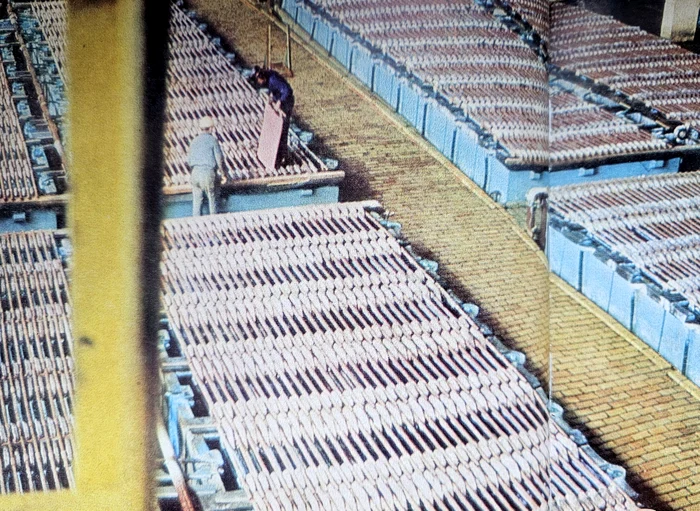
Baia Mare in the 1980s. Photo: Sandu Mandrea, Album Maramureș, Sport – Tourism Publishing House, 1982
Arrested in 2002, Majumdar, Rastogi and their accomplices were condemned in 2008, in the UK, for frauds of over 300 million pounds, being accused of being able to deceive billions and metal scholarships in the UK and USA, relying on false transactions.
Rastogi and his family used ghost offices worldwide to create a false document route to support their scam with metal transactions.
Without the knowledge of the creditor banks and the auditors, they controlled over 200 so-called trading partners, located at fictitious addresses in over 20 countries. Instead of transporting millions of tons of metals around the world, the network of fake transactions only rotated the money borrowed from the banks-one part being hidden in a maze of offshore trusts in the British Virgin Islands.
Image 1/12:
Baia Mare Photo Daniel Guță Adevărul (72) JPG
“The address of one of the customers was, in fact, a cow stable in India. Another customer in the United States was an automatic laundry in New Jersey.” the investigators showed.
The disaster left behind the former factories
Meanwhile, the non-ferrous metals in Baia Mare has entered an irreversible decline, which finally brought it bankruptcy. Following tens of hectares of industrial ruins, in the middle of which the highest tower in Romania, decommissioned for over two decades, remained. Its land is contaminated, instead the air has become cleaner in the meantime.
A concrete fence surrounds most of the over one hundred hectares of the former industrial platform, but its height did not discourage the old iron seekers. In the vicinity of the old combined, several social blocks create the image of a ghetto. Some of their tenants pass daily to the other side of the fence in search of the old iron, snatched from the rubble. Among them are mixed and children, who have found playgrounds among the ruins.
The rainwater and abandoned springs created colorful ponds and ponds due to the water mixture with ore and chemicals used in the past.
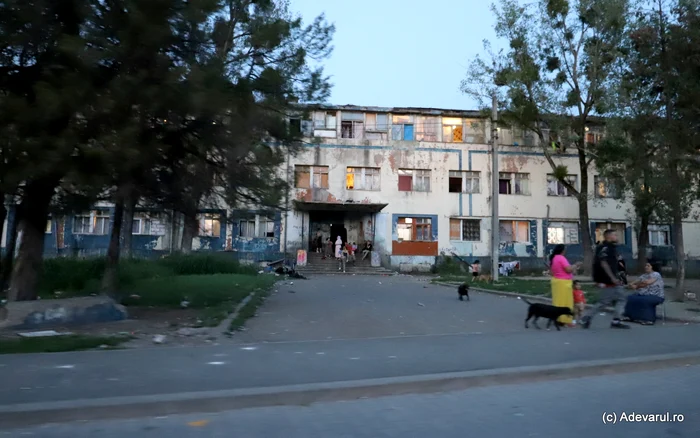
Social block near the combined. Photo: Daniel Guță. TRUTH
“There are all kinds of traps here, but we bypass them, because we have beaten these places. For years, we deal with it”, Say one of the scrap iron seekers, who break the tranquility left over the former combination in the barrier, far from the ashes.
Less than three kilometers from Phoenix, the lead plant in Baia Mare, bankrupt in 2012, offers a similar view, even if at smaller dimensions.
The degraded blocks and old houses, inhabited by poor families, surround the former plant, which contributed decades in a row, to the serious health problems caused by lead and cadmium pollution.