The dark side of Zelensky's rule. “They need a scapegoat now.”


When Russia launched a full-scale invasion of Ukraine almost four years ago, Volodymyr Kudrytsky, then head of state energy company Ukrenergo, struggled to maintain electricity supplies.
Somehow he succeeded and continued these activities in the following years [wojny]earning the respect of energy executives around the world, ensuring the country was immune to Russian missile and drone attacks on the power grid, and avoiding catastrophic power failures — until he was suddenly forced to resign from office in 2024.
Kudrycki's dismissal was condemned by many people from the energy industry and also caused alarm in Brussels. Kudrytsky told POLITICO at the time that he had fallen victim to the relentless centralization of power pursued by Ukrainian President Volodymyr Zelensky and his influential bureau chief, Andriy Yermak. He expressed fear that “corrupt people” would take control of the state-owned company.
According to his supporters, it is these kinds of statements — and his refusal to remain silent — that explain why Kudrycki found himself in a glass booth in a central Kiev courtroom last week, facing embezzlement charges. Opposition MPs and civil society activists are outraged by calling it out another example of the Ukrainian authorities using legal means to intimidate opponents and silence critics by accusing them of corruption or cooperation with Russia. Zelensky's office declined to comment.
Others who faced the same treatment include Zelensky's predecessor, Petro Poroshenko, who was sanctioned this year and put on trial on corruption charges — a move that could bar him from running in future elections. Sanctions were frequently used or threatened against opponents, effectively freezing assets and blocking sanctioned individuals from conducting any financial transactions, including using credit cards or accessing bank accounts.
Poroshenko accused Zelensky of growing “authoritarianism” and striving to “remove all competitors from the political scene.”
It may also explain why Kudrytsky was indicted, according to opposition parliamentarian Mykola Knyazitsky, who believes the use of legal means to discredit opponents will increase as the president's office prepares for possible elections next year in the event of a ceasefire. He fears that [obecne władze w Ukrainie] they use the courts “to clear the field of competitors” to lead to unfair elections.
Others, including well-known Ukrainian activist and head of the Anti-Corruption Action Center Daria Kaleniuk, claim that the president and his entourage are using the war to monopolize power to an extent that threatens democracy in the country.
Kaleniuk was present in the courtroom during Kudrycki's two-hour arraignment and shares the former energy chief's opinion that the accusation is “political” in nature. According to Kaleniuk, the case makes no legal sense, and it all sounded “even weirder” when the prosecutor presented the charges against Kudrycki in detail: – He failed to demonstrate that [Kudrycki] received any material benefits from the infrastructure contract, which was ultimately not implemented, she explained.
The case concerns a contract that Kudrycki approved seven years ago as the then deputy director of investments at Ukrenergo. However, the subcontractor did not even start work on the ordered infrastructure improvements, and Ukrenergo managed to recover the advance payment that had been paid.
Kaleniuk's concern is also shared by opposition MP Inna Sowsun, who told POLITICO: “There is no evidence that [Kudrycki] he got rich from it. No damage was caused. I can't help but feel that this is all politically motivated.
Sowsun appeared at the hearing to offer herself as a bail guarantor if necessary – two other deputies also pledged to do so, but the judge decided on a different procedure to release Kudrycki from pre-trial detention, requiring a bail of PLN 325,000. hole. [1 mln 200 tys. zł].
One senior Ukrainian adviser, who asked not to be named, denied the defense's description of the case against Kudrycki as politically motivated and said the embezzlement allegations were baseless. “People should wait to comment on this case until it is fully reviewed,” he added.
The article continues below the video
However, for former Ukrainian Deputy Prime Minister Ivanna Klympush-Tsintsadze, the situation “does not look good from any side – neither in the domestic context, nor in relation to international partners.” In her opinion The timing of these events is unfavorable for Ukraine as it coincides with ongoing calls from Kiev for more energy aid from Europe ahead of what will likely be the most difficult winter since the beginning of the war.
As Russian missile and drone attacks intensify on a much larger scale than before, Ukraine's energy challenges will likely become even greater. Unlike previous winters, Russian attacks are now directed not only against Ukraine's energy grid, but also against its natural gas production, storage and distribution facilities. Sixty percent Ukrainians currently use natural gas to heat their homes.
Some Ukrainian energy executives also fear that prosecuting Kudrycki may be part of a preventive scapegoating tacticto place the blame on him in the event that the country's energy system can no longer withstand Russian attacks.
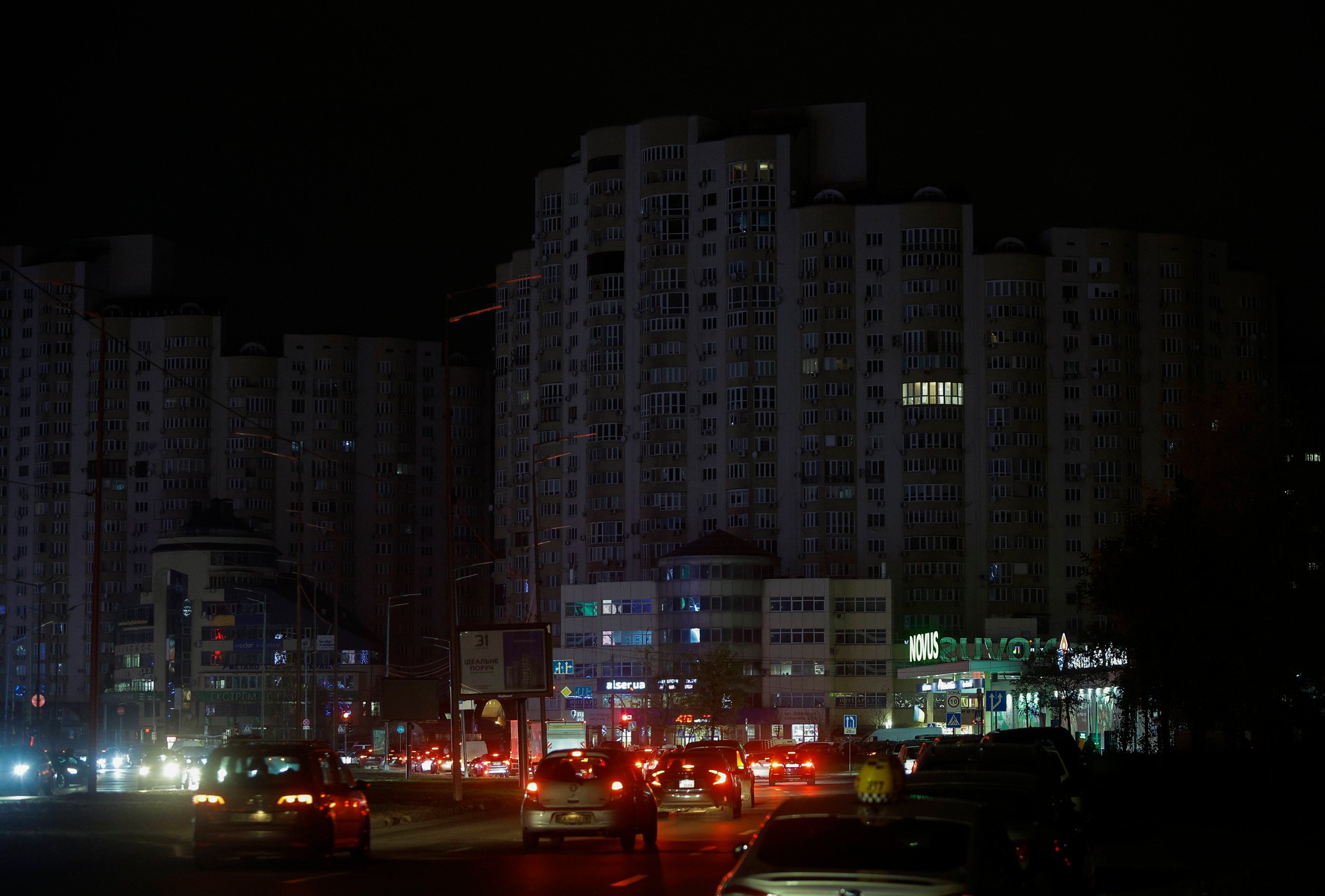
Blackout in Kiev during a planned power outage resulting from damage to energy infrastructure caused by Russian attacks, Ukraine, November 18, 2024,SERGEY DOLZHENKO / PAP
Citing anonymous sources, two weeks ago the Ukraińska Pravda website reported that former energy directors feared that they would be blamed for insufficient actions to increase the resilience of energy infrastructure and strengthen facilities.
“They need a scapegoat now,” a foreign policy expert who has advised the Ukrainian government told POLITICO.
Some parts of Ukraine will likely have no electricity until spring. The temperature in Kiev's apartments is already 10 degrees Celsius, and the city may experience prolonged power outages. People are already pissed off about this, so the president's office needs scapegoats
– he explained.
— The opposition will accuse Zelensky of letting Ukraine down and argue that he should have already prepared contingency plans to prevent prolonged power outages or severe frosts, he added.
Adrian Karatnicki, senior researcher at the Atlantic Council and author of the book “Battleground Ukraine” [ang. “Pole bitwy: Ukraina”]is also worried about the direction of the political situation. “Although Zelensky is an inspiring and courageous war leader, there are indeed some disturbing elements to his rule,” he said.
Find out more: