Pension? Some young Poles don't see the point in postponing it because they “won't live to see it”


2025-11-01 16:00
publication
2025-11-01 16:00
More than a quarter (27%) of people aged 18-29 believe that there is no point in saving for retirement because they may not live to see it. The remaining 73 percent has a different opinion – according to a report on the attitude of young Poles to saving for retirement, sent to PAP on Monday by PFR Portal PPK.

Retirement coming? It will be much worse than we expect
The aim of the report “Saving and investing for retirement purposes through the eyes of the young generation”, prepared as part of the Analytical and Research Program of the Warsaw Banking Institute in cooperation with EFPA Polska, PFR SA and PFR Portal PPK, was to learn about the attitudes, beliefs, knowledge and behaviors of young Poles regarding building financial security for the future, in particular retirement.
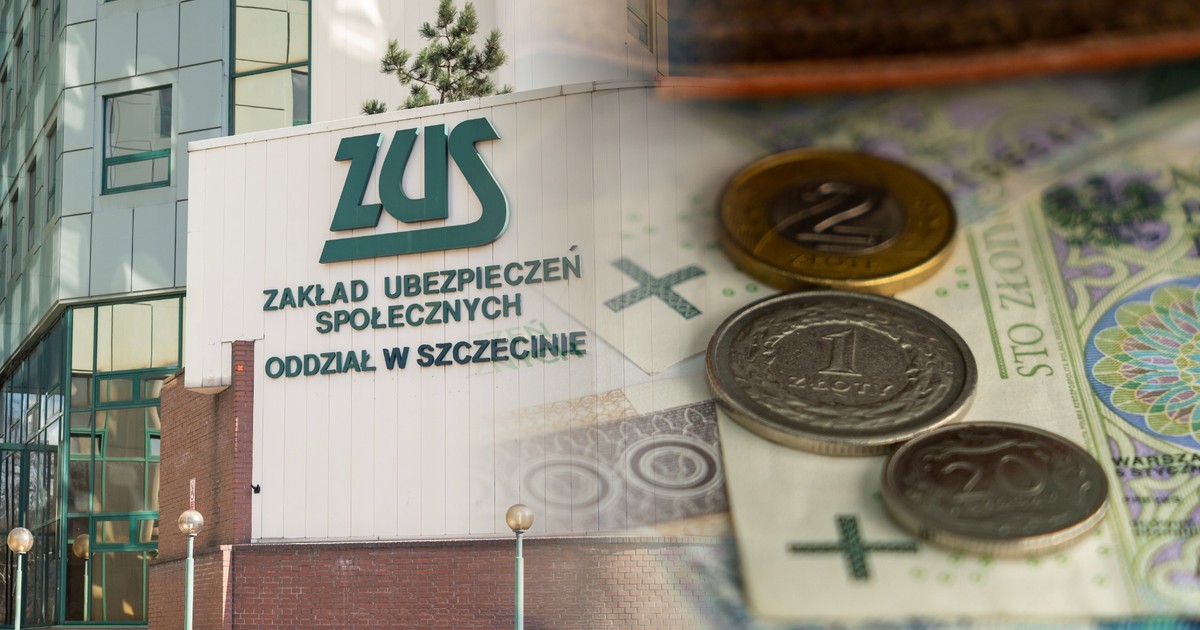
As the authors of the study emphasized, according to ZUS, by 2060 the ratio of the pension amount to the final salary will be 24.6%. Meanwhile, the study shows that as many as 83 percent respondents overestimate the future replacement rate of their retirement benefits in relation to these forecasts.
“Half of the respondents estimate that their future pension will constitute at least 53% of their last salary, while 31% expect that the benefit paid from ZUS will be equal to or higher than their last salary,” we read in the report.
Only 1 percent respondents declared that a pension of 25 percent last salary would be sufficientto maintain an acceptable standard of living. Half of young adults believe that a benefit equivalent to the last salary would be sufficient.
Young Poles are getting ready for retirement, but with a delay
The respondents also chose between two statements: “I don't know what awaits me, so it's worth saving for retirement” and “There's no point in saving for retirement, because I might not be around tomorrow.” The first statement was chosen by 73 percent. people, and the second 27 percent
Every fourth person plans to start saving only after the age of 40. 77 percent respondents also agreed with the statement that it is worth saving even small amounts. According to 61 percent respondents, saving for retirement makes sense, even if it will not ensure their dream standard of living in the future.
They save money in PPK and don't even know it
Currently, 27% of people consciously save for retirement. respondents. However, the authors of the study emphasized that this number may actually be higher because “some young people participate in programs such as PPK without realizing it.”
The majority of young adults (75%) consider issues related to financial security during retirement difficult. For the remaining 25 percent they are easy. Only 6 percent of all respondents are actively looking for information about pension financial instruments and the pension system. The remaining people deepen their knowledge only after coming across an interesting topic (43%), and others rely only on information obtained from the radio, television or conversations with friends (51%).
They know how the system works
However, the study shows that the majority of young adults have at least basic knowledge about individual financial instruments from the third pillar of the pension system – IKE (90%), PPK (92%), IKZE (84%) and PPE (83%). These are voluntary forms of saving that complement ZUS and OFE. Individual saving, e.g. in IKE, is associated with tax benefits – including exemption from capital gains tax.
According to the vice-president of PFR, Mariusz Jaszczyk, co-author of the PPK Act, quoted in the press release sent to PAP, the report's results confirm that education is key to popularizing the habit of saving. As he emphasized, the topic of retirement is still dismissed as “distant”, and young people's expectations often differ from realistic forecasts. He emphasized that in the context of saving, we should talk not from the perspective of obligation, but from the perspective of freedom and agency – building future financial independence.
“The new generation has different values and perspective: it values flexibility, authenticity and meaning. As a financial sector, we want to respond to this with simple products, clear communication and daily support in decision-making,” he emphasized.
The author of the study is Dr. Hab. Katarzyna Sekścińska from the Department of Business Psychology and Social Applications, Faculty of Psychology, University of Warsaw. The study was conducted on a representative group in terms of gender and age, diversified in terms of education and place of residence, of 1,100 Poles aged 18-29, between September 8-20, 2025, using the CAWI method. (PAP)
kblu/ agz/