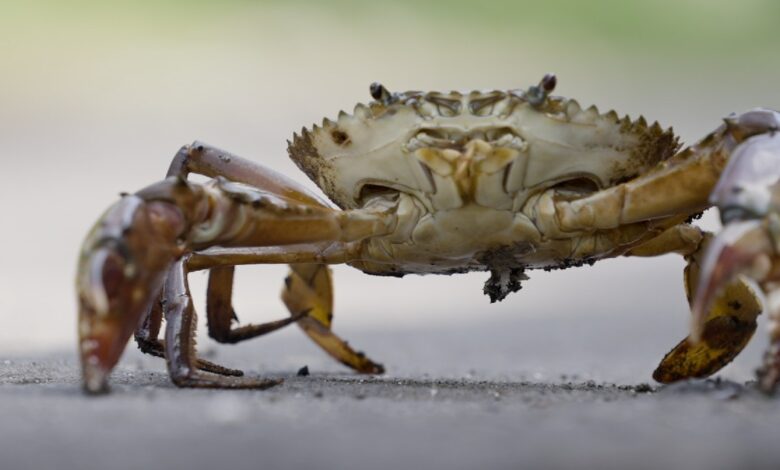
This crab fisherman watches for the slightest movement on the surface of these murky waters. When those pincers emerge, he puts his bare hands in to catch them before they catch him.
“The worst thing is being pinched by their pincers,” says Kelik, the crab fisherman.
See also: The poor dig in the mud, the rich count their profits. Here, green is not only the color of hope
Mud crabs are the national dish
Mud crabs like this one have large, fleshy claws and are prized throughout Asia for their sweet flavor. Here in Indonesia, villagers prepare them with local mangrove fruits and a secret spice. In Singapore, they are the main element of the national dish, even though they are local crab populations have declined so dramatically that they are now mainly imported from other countries.
However, mud crab habitats are disappearing throughout Asia. If Indonesia, one of the last refuges of mud crabs, does not save the mangroves in which they live, these creatures have no chance.
They will definitely die out within 10 years
– says Agus Diana, secretary of the Wanasari Tuman Kuta Bali fishing group.
The Indonesian government and so-called crab villages like this one say they are replanting trees and removing pollution to help preserve the species. But is it too late?
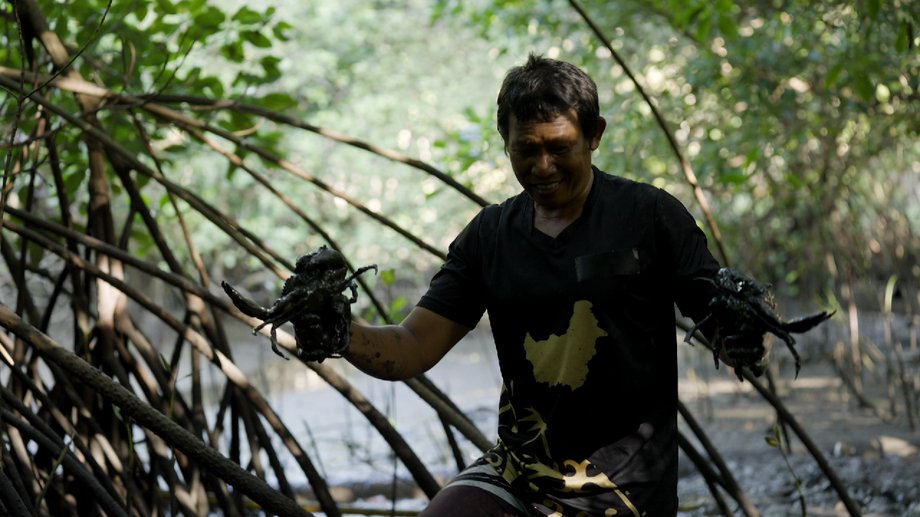
Kelik specializes in tracking elusive creatures in their natural habitats
|
Business Insider
Kelik is a 51-year-old mud crab fisherman in Kampoeng Kepiting Ekowisata Bali, Indonesia.
— I've been able to catch them since I was a child. As a child, I loved being in the sea and looking for crabs, Kelik recalls.
Kelik specializes in tracking elusive creatures in their natural habitats, salinity-resistant trees and shrubs known as mangroves that grow along the coast.
“Crabs are hard to find these days,” he says.
Barrel-shaped bamboo traps called bubu are an easy way to catch them.
Kelik puts fish or chicken heads in the bubble and leaves them in places where crabs usually feed on plants, mollusks and crustaceans.
— Sometimes you can't install traps because the ground is too muddy. Then we look for crabs with our bare hands. First, we use a technique called menggugu. We are trying to catch a crab that is hiding under the mud. It can be tracked by looking for traces of its legs or entire body on the ground or in the mud – explains the fisherman.
Kelik also uses a bent iron rod to dig through the mud, trying not to disturb the delicate mangroves.
Our fishing system has never damaged the environment. We never cut down trees or destroy them. Even if the crab is hiding in the mangrove roots, we use rods called tore'an to bring it out without damaging the tree
– explains Kelik.
Catching mud crabs can be painful
— The hardest part is catching crabs with your bare hands. There is a high risk of being “tercapit“, that is, pinched, because we do it without protection, to feel exactly where the crab is. After catching it, we tie the crab and clean it, says the fisherman.
In 2020, the Indonesian government banned the fishing of crabs smaller than 12 cm or weighing less than 150 g, and pregnant females are not allowed. This crab village has its own, slightly stricter rules. He wants to give the local crab population in these swamps a better chance of recovery.
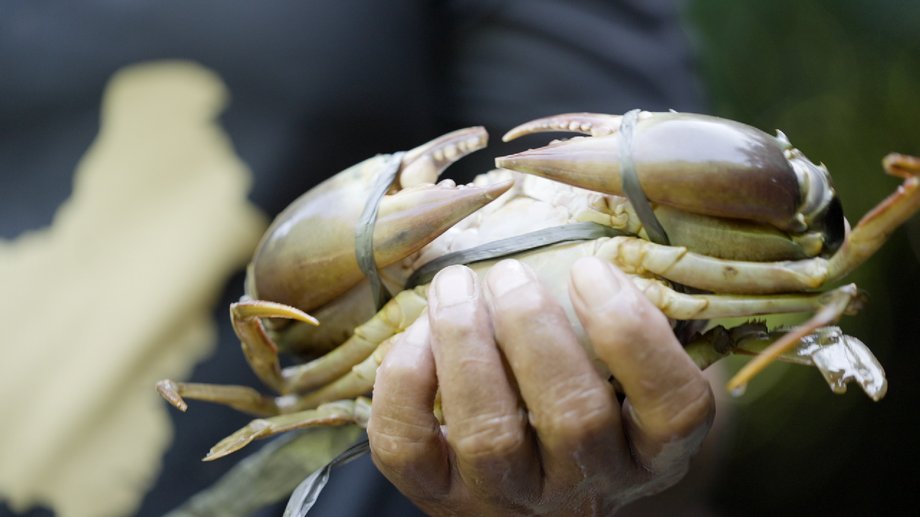
In 2020, the Indonesian government banned the catch of crabs smaller than 12 cm or weighing less than 150 g, and pregnant females cannot be caught
|
Business Insider
Fishermen can only catch a crab if it weighs at least 200 g. However, in order to be sold and eaten, it must weigh 300 g or more. Smaller crabs like these will have to spend about four months fattening up in a plastic container called crab suite.
Villagers can easily feed them and monitor their growth until they are ready to eat. By focusing only on adult crabs, they give younger crabs time to grow enough to reproduce and prevent population decline. There are about 500 crab dwellings in the village.
It's better than farming crabs in cages. Thanks to this, we don't have to soak in mud every day to control the crabs. We can just open the door and see what's happening to the crab
– explains Made Sumasa, head of fisheries in Wanasari Tuman Kuta Bali.
Made Sumasa is the head of the fishermen's association to which Kelik and other local fishermen belong. When the crabs weigh between 300 and 500 g, they are ready to leave their apartments and go to the kitchen of the restaurant in the crab village.
A local fishermen's association has established a village and buys all the crabs caught locally. Local fishermen catch only enough to feed restaurant guests.
— We use recipes handed down by our ancestors. We serve crabs of various weights – they can weigh 400 or even 500 g – says Ni Kadek Surasmini, the chef.
Surasmini runs a group of women, fishermen's wives, who opened this restaurant in 2013. Today he is preparing one of their hit dishes.
— First, we clean the crab. Then steam for five minutes. Add the marinade. We use garlic, ginger, galangal and a secret spice that I cannot reveal. We also use mangrove fruit for seasoning, he explains.
Surasmini fries the crabs for about seven minutes.
— Crab meat has a tender and sweet texture. It doesn't smell like fish at all. I like medium-sized crabs best because then the meat is more tender and sweeter, he says.
Read more: Billionaires want to cheat death. Scientists say it could work
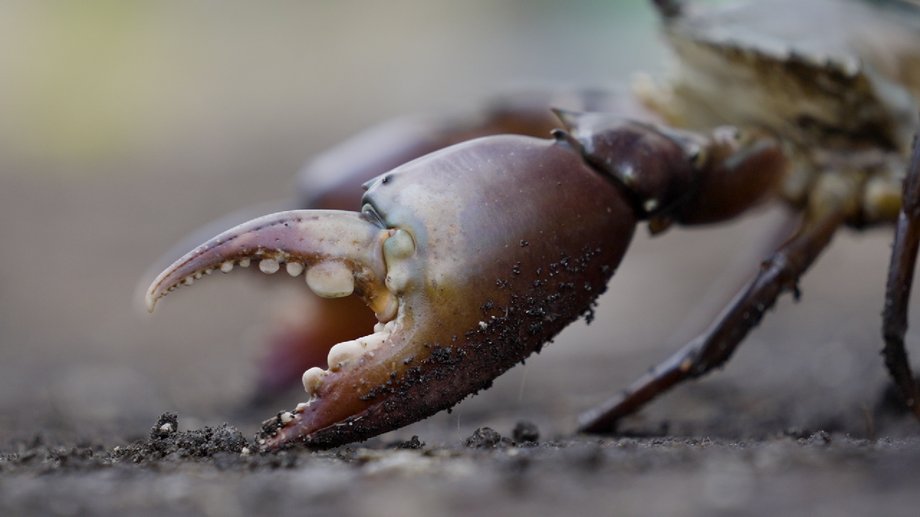
“The worst thing is being pinched by their pincers,” says Kelik, the crab fisherman.
|
Business Insider
Mud crabs cost $11 to $21. per kilogram, and the exact price depends on the variety
Exported crabs can command much higher prices in markets such as Singapore. The restaurant never serves more than 300 crabs a day.
— We mainly use male crabs. Maybe within a month we will also fry females, but it depends on the catch. In a month we may have up to 50 female crabs to use. Male crabs are delicious because their meat is softer, explains Surasmini.
The crab village cooks its dish with local mangrove fruits, but the most popular way to eat the shellfish is with a sweet and spicy tomato-based chili sauce. Chilli crab is Singapore's signature dish and can be found across the country in top restaurantssuch as Red House Seafood. They are served with a spicy, thick red sauce in a cracked crab shell with fried or steamed buns called mantou.
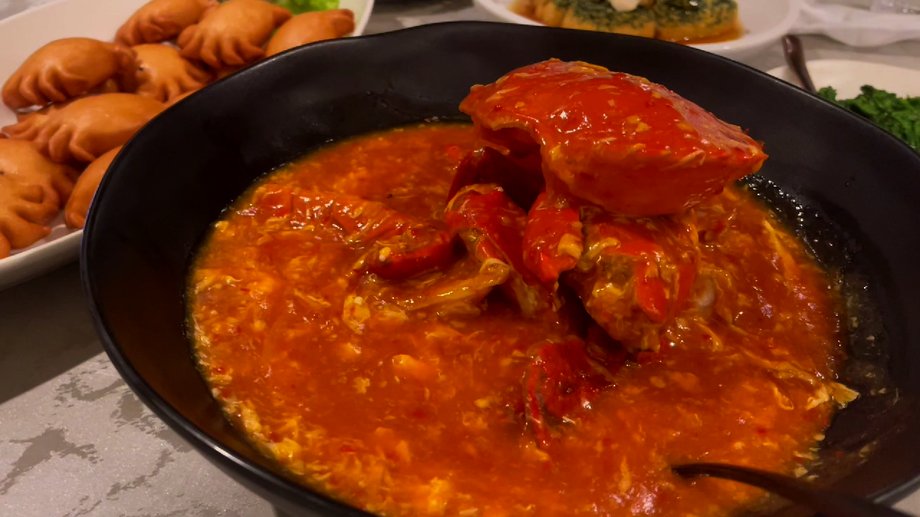
Chilli crab is Singapore's signature dish and can be found across the country in top restaurants
|
Business Insider
Since the late 1990s, this local delicacy has been almost entirely imported. Singapore is the second largest importer of mud crabs in the world, importing several thousand tons of this crustacean annually. According to some estimates, almost 90 percent mangrove forests in Singapore have been destroyed over the last 70 years.
The same thing is happening in Indonesia. However, this was not always the case.
“When I was a kid, I used to play here, looking for fish and crabs,” Agus recalls.
Today, almost one-fifth of all mangrove forests on Earth are in Indonesia. Over the last 30 years, Indonesia has lost about 50 percent. mangrove forests due to the establishment of aquaculture farms, logging and coastal development. Globally, mangrove forests have declined by 35%. during the same period.
Made and Kelik experienced the destruction of mangrove forests in 2011, when the Indonesian government built a new toll road through the region, which involved cutting down about two hectares. With the help of a government grant, Made established a self-sustaining community that regulates mud crab harvesting.
We do not only care about profit, but also about taking care of our farms. The impact of our actions makes us happy
says Made.
The community is not only limiting the number of mud crabs harvested. To preserve the 30 hectares he oversees, he also focuses on protecting trees.
— To preserve this forest, we must be able to plant new trees and protect them. We can't cut them down, says Made.
According to our rules, if someone cuts down one tree, he must plant 50-100 new ones and each of them must survive. If one of our members catches a crab when they shouldn't, they will also be penalized. He won't be able to do this for six months
– explains Agus.
More than half of the world's mangroves are at risk of extinction by 2050.
The fishermen's collective is also working to eliminate pollution in the area.
— Garbage from rivers or the sea reaches us every day and we are unable to fully cope with it. This is the main problem that hinders our success in restoring mangrove forests, he says.
Agus Diana's main goal is mangrove conservation and education.
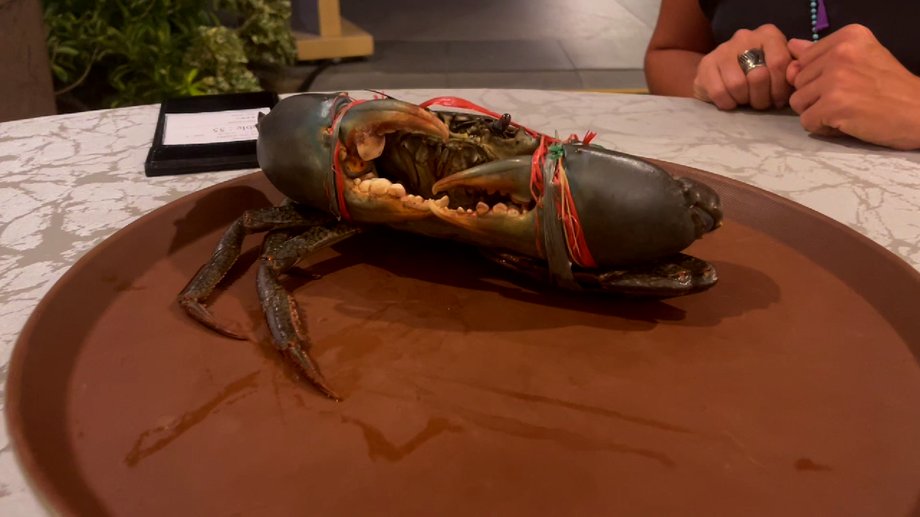
Can mud crabs survive?
|
Business Insider
— I grew up here, then I went to college and work, and then I came back here. A lot has changed. I was shocked to see that there were so few trees in the forest. Many mangrove trees were cut down and garbage polluted the entire environment. I want to bring back the nature I enjoyed as a child, he sighs.
Part of Agus's job is also to educate young people in the area about the issues they face. Students regularly visit the site to learn about crab farming and help plant new mangrove trees. Despite the work of Agus and others to protect mangroves and the species that thrive there, the global outlook does not look good.
The International Union for Conservation of Nature predicts that more than half of the world's mangroves are at risk of extinction by 2050.
Although mud crabs are not yet on the endangered species list, recent research has shown that their population is declining and protecting mangroves is crucial to saving them.
If these trees disappear, the crabs will disappear. We won't be able to enjoy nature if we destroy it. We need to restore the forest so that crabs and fish can live and breed there. If we take care of nature, nature will take care of us
says Agus.