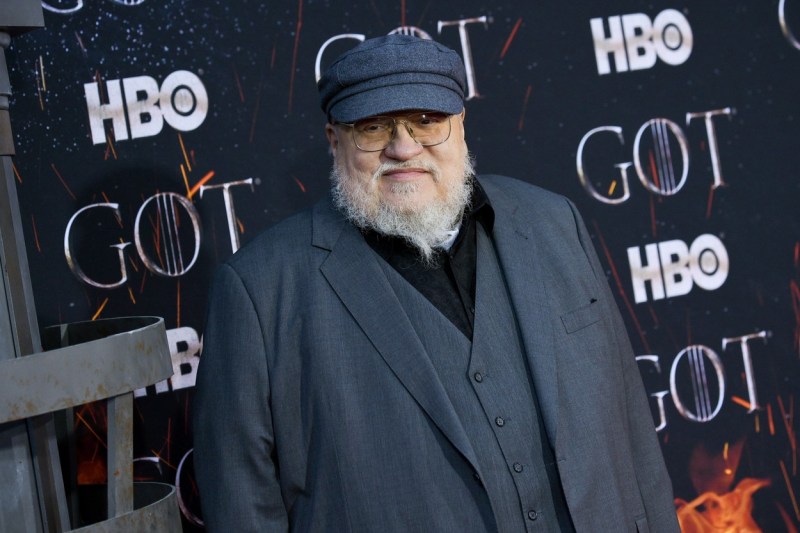
George RR Martin at the premiere of one of the “Game of Thrones” seasons, PHOTO: Evan Agostini / AP / Profimedia
When a US federal judge decided to allow a large class-action lawsuit against OpenAI to proceed, he also cited “fan fiction” literature inspired by the books on which the popular HBO series “Game of Thrones” is based, reports Business Insider.
In a ruling issued the other day, US District Judge Sidney Stein said that an idea for a book generated by ChatGPT, as part of the still-unfinished A Song of Ice and Fire series by George RR Martin, may have infringed the US writer's copyright.
“A reasonable jury could conclude that the allegedly fraudulent results are substantially similar to the plaintiffs' works,” the judge said in the 18-page ruling handed down in federal court in Manhattan.
The decision was made in a case that brought together several class-action lawsuits filed by the authors, including George RR Martin, Michael Chabon, Ta-Nehisi Coates and Jia Tolentino and Sarah Silverman – against OpenAI and Microsoft.
They claim that OpenAI and Microsoft, which have just entered into a major new settlement, have infringed their copyrights by using their books without permission to train large-scale language models (LLMs) and then generating “results” that resemble their legally protected works.
In the ruling, Stein analyzed one of the examples presented by the authors' lawyers.
ChatGPT's response to being asked to write a sequel to the books on which 'Game of Thrones' is based
The judge cited the example of a user asking ChatGPT to “write a detailed plan for a sequel to A Clash of Kings that is different from A Storm of Swords and takes the story in a different direction.”
“Of course!” replied ChatGPT. “Let's imagine an alternate sequel to A Clash of Kings and deviate from the events of A Storm of Swords. We'll call this sequel A Dance with Shadows.”
The AI chatbot proposed several plot ideas for the book, including the discovery of a new type of “ancient dragon-related magic,” new claims to the Iron Throne from “a distant relative of the Targaryens” called Lady Elara, and the emergence of “a rebellious sect of the Children of the Forest.”
The details provided in ChatGPT's response were sufficient to justify continuing the class action based on the copyright infringement allegations, Stein said.
Representatives for OpenAI and Microsoft did not immediately respond to requests for comment.
The Manhattan judge said he would decide at a later stage of the trial whether OpenAI and Microsoft can be protected by invoking the “fair use” exception under US law.
Record damages in a lawsuit similar to the one involving George RR Martin
In a similar lawsuit, a federal judge in San Francisco ruled this year that artificial intelligence company Anthropic's use of copyrighted books to train its language models is covered by that principle.
But the court ruled that keeping digital works in a “central library,” as Anthropic did, violated copyright law
After the ruling, Anthropic agreed to pay $1.5 billion to authors whose works were used without permission to train its AI model to settle the lawsuit out of court.
The amount was the largest compensation ever paid in the US in a copyright lawsuit.