Raising the minimum wage, political risk for the Government: lose if they accept, lose if they refuse


The government does not agree to the increase in the minimum wage per economy from 2026, a measure urgently requested by the unions, and the coalition seems willing to take significant political and social risks with this decision.
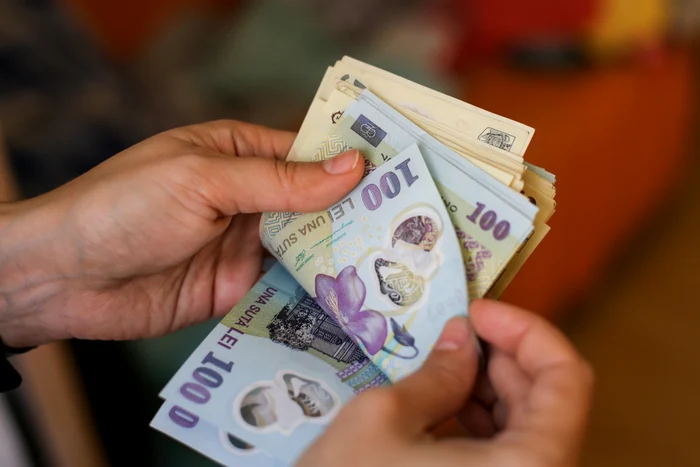
Raising the minimum wage is a double-edged sword. Archive photo
Specifically, the employers (IMM Romania and Patronatul Tinerilor Intreprinzători din România – PTIR) have officially announced that they do not agree with the increase in the minimum wage for the economy from January 1, 2026, arguing that many entrepreneurs, over two thirds, cannot face a new wage increase, otherwise they will have to close their businesses.
At the opposite pole, the unions urgently demand an increase in the minimum wage on the economy, arguing that it will not have such great effects, because less than 1 million Romanians are paid this way.
The subject also generated tensions within the governing coalition, where Prime Minister Ilie Bolojan and Sorin Grindeanu, the interim leader of the PSD, have diametrically opposed positions.
Prime Minister Ilie Bolojan announced that the increase in the minimum wage would have a chain impact on public sector revenues, as many salary scales refer to the minimum wage. “Next year, in Romania, salaries in the public sector are capped. Given that certain salaries in the public or private sector are calculated on the basis of the minimum wage, any change has some effects that go head to head with the capping“, said the prime minister.
On the other hand, Sorin Grindeanu, the interim president of the PSD, rejected the idea of freezing the minimum wage.
Negrescu: By increasing the salary, we end up with redundancies
Contacted, the analyst Adrian Negrescu explained to “Adevărul” that all businessmen wish to be able to increase the salaries of their employees, because this would also increase their loyalty, but this is not always possible.
“I don't think there is any sane businessman in Romania who does not want to give a higher salary to his people, to make them loyal and thus make them work better. But the big problem is related to the too high taxes on labor – giving a salary of 5000 lei net means paying the state at least 4200 lei. And this in the conditions where the economy is stagnant, sales have decreased everywhere, the financial plans of many companies were turned upside down by inflation, by the increase in taxes, by the effects of this purchasing power crisis that we are currently facing.
By raising the minimum wage out of hand without an impact study, we will find ourselves with layoffs and another wave of inflation, as firms pass the higher wage costs into the prices of the products and services they offer. In other words, we will put gas on the fire of inflation”, Negrescu declared for “Adevărul”.
“Financial Maradona”
On the other hand, Adrian Negrescu explained, the increase in the minimum wage has, unfortunately, become a kind of financial “Maradona” that some politicians present to us every year as the miracle solution to increase the standard of living of Romanians.
“I call it “maradona'' because it is built like the famous scam from the 90s – you have a pile of money in front of you but which, beyond the first and last banknote, the visible ones, hides many sheets of newspaper. It's the same with the minimum wage – at first glance its increase is significant, but when you do the calculations you see that people's incomes will increase by 100 lei at best. From all this combination, the most profitable will be the state, which will collect four times more money. The solution is far from freezing the minimum wage, as they did with pensions and children's allowances, but to find the formula by which the increase in the minimum income can be supported especially by micro-enterprises – and the optimal option is to increase the level of the untaxed amount of the minimum wage from 300 to 500-700 lei. That is if we really want to help the companies to pay this salary as well.
Why some politicians want to raise the minimum wage has more to do with self-interest. There are over 100,000 state employees who are paid a multiple of the minimum wage. If it increases, so do their incomes. And the threat of infringing is just a manipulation. CE does not ask you to raise the minimum wage every year, but to use a formula that no longer includes a political decision, without economic foundations, when you make the administrative decision to raise wages.
In addition, there is another effect that not many people talk about. The increase in the minimum wage would lead to an increase in fines, from traffic to fiscal ones”, explained the analyst for “Adevărul”.
Professional fields whose income increases according to the minimum wage
Things are much more complicated than they appear at first glance: the increase in the minimum wage per economy has an impact not only on the salaries of dignitaries (the president of Romania has a monthly income calculated as 12 minimum wages per economy, while a mayor of a commune with less than 3,000 inhabitants has a coefficient of 3 minimum wages per economy), but also on the salaries of teachers and even priests.
For example, a university professor has a salary coefficient depending on seniority, between 3.02 and 4.35, and a university assistant between 1.65 and 1.82.
Teachers have a salary ratio between 1.60 and 2.21, while educators have salary ratios between 1.60 and 1.75.
Also, the salaries of people with management positions in scientific research, technological development and design units have salary coefficients between 3.51 and 4.56, a simple trainee assistant having a coefficient of 1.44, and a scientific researcher 3.02.
Salary coefficients also apply to priests, a novice having 1.42, and a priest with first degree – 1.60.
According to the calculation formula adopted by GD 35/2025, the minimum wage should reach 4,325 lei gross in 2026 (compared to 4,050 lei at present), an increase aligned with the real evolution of labor productivity and the increase in the average annual inflation rate from 2026, the trade unionists announced.
This would mean that the basic salary of a university professor (coefficient 4.35) will increase from January to 18,814 lei, from 17,617 lei currently, while the salary of a scientific researcher (coefficient 3.02) will increase to 13,061.5 lei from 12,231 lei currently.
Double-edged sword: what Romania risks
One of the biggest risks that Romania would take if it freezes the minimum wage next year is the initiation of an infringement procedure.
Infringement is an important mechanism for correcting the position taken by a member state in the event of its non-compliance with European legislation, as is the case of non-transposition of a directive within the prescribed period, lack of harmonization or incorrect application. Infringement may ultimately mean financial repercussions for the state in question, but only after several stages of this procedure have been completed.
From the information published in the central press, it appears that the assumption of this risk of financial repercussions is taken into account, which, in balance with the assumed cost of increasing the minimum wage the following year, would mean a smaller pecuniary effort and which the state would not honor anyway in 2026 (such a procedure would take more than a year).
In other words, the state assumes the “fine”, because it is lower than what it would have to pay if it kept its commitment.
On the other hand, if it increases the minimum wage for the economy from 2026, even if it freezes the salaries of dignitaries and mayors and vice-mayors at the current level, honoring the austerity measures assumed through package 2, the Government risks increasing the budget deficit again, violating the obligations assumed before the European Commission.