Day in the history of the Jewish Autonomous Region
Photo: Regional Library
October 30, 1949
The newspaper “Birobidzhan Star” (12+) 1949 October 30 wrote about the first days of operation of the starch and syrup plant of the Birobidzhan municipal food processing plant. The article describes the main production processes, the equipment of the enterprise, and the work of the starch department. “The plant can process 8 tons of potatoes per shift. This provides 1,200 kilograms of raw starch – the main raw material for making molasses.
The first three days of operation of the new enterprise yielded good results: the designed capacity of the starch department was fully mastered, and the equipment operated uninterruptedly. This is a great merit of the author of the project and the head of the work, Comrade. Tetelbaun and the head of the work, Comrade. Bogdanov.
Starting up a starch plant is important for improving the overall operations of a food processing plant. The new enterprise will create favorable conditions for providing the remaining workshops with raw materials, for expanding the range and additional production of products.”
October 30, 1930
Based on the decision of the secretariat of the Far Eastern Regional Committee of the All-Union Communist Party (Bolsheviks) dated October 19, 1930 (protocol No. 23), the Birobidzhan regional committee of the All-Union Communist Party (Bolsheviks) was allowed to publish a regional newspaper in Hebrew.
On October 30, 1930, the first issue of the newspaper “Birobidzhaner Shtern” (12+) was published in Hebrew.
Its first editor was the Secretary of the Republic of Kazakhstan All-Union Communist Party (Bolsheviks) Yankel Levin.
The newspaper “Birobidzhaner Stern” translated from Yiddish means “Birobidzhan Star”.
The first editorial building was located in a small wooden house on Oktyabrskaya Street. Printing equipment was driven by hand, and work areas were often lit by a kerosene lamp or candle.
Over the years, the newspaper was edited by Genakh Kazakevich, Busi Goldenberg, Boris Miller, Naum Fridman, Naum Korchminsky, Leonid Shkolnik, Semyon Yablonovsky, Solomon Karlinsky, Mikhail Kul, Vladimir Belinker, Inna Dmitrienko and other famous Jewish prose writers and poets.
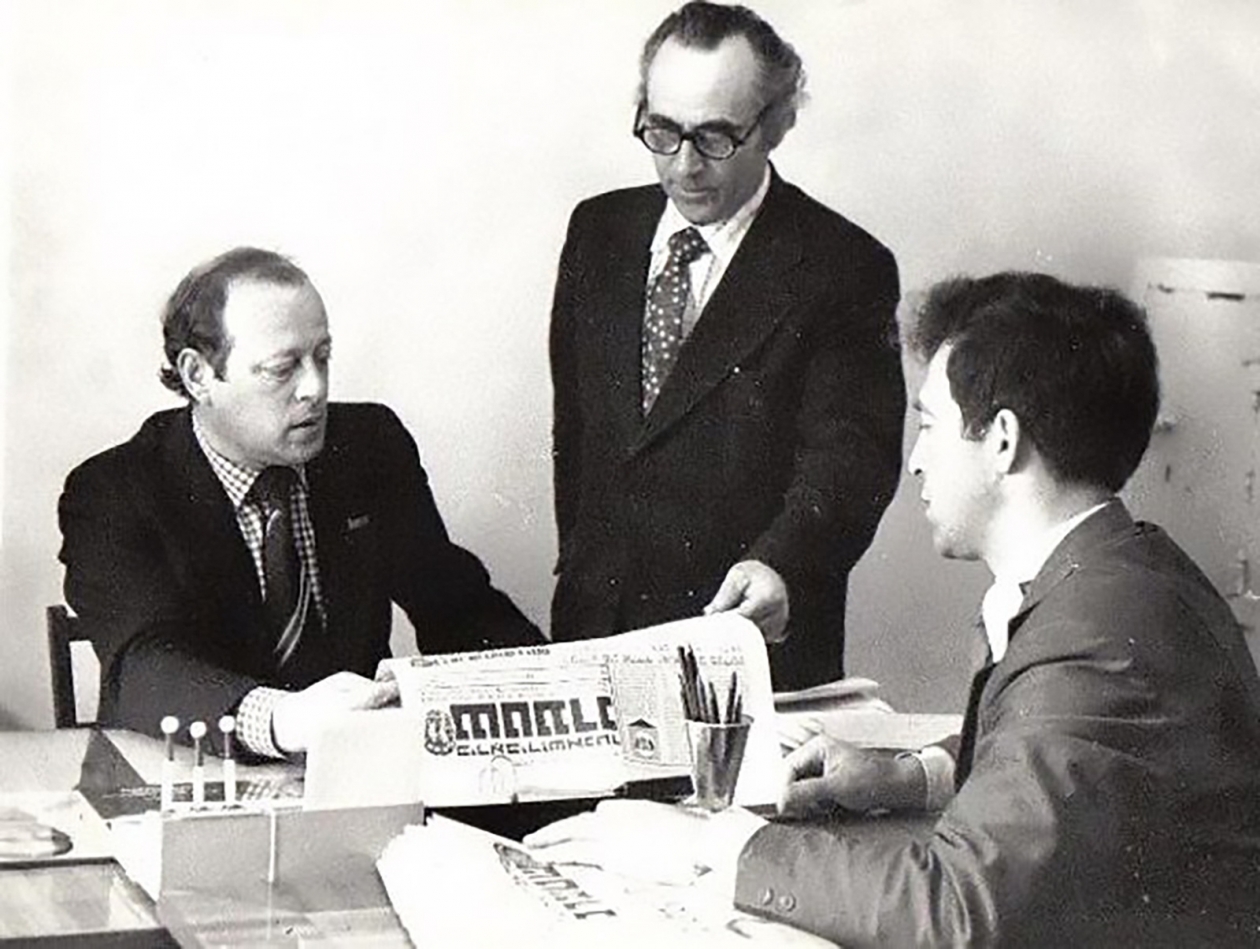
B. Kushnir, M. Kul, L. Shkolnik. Photo: Newspaper “Birobidzhan Star”
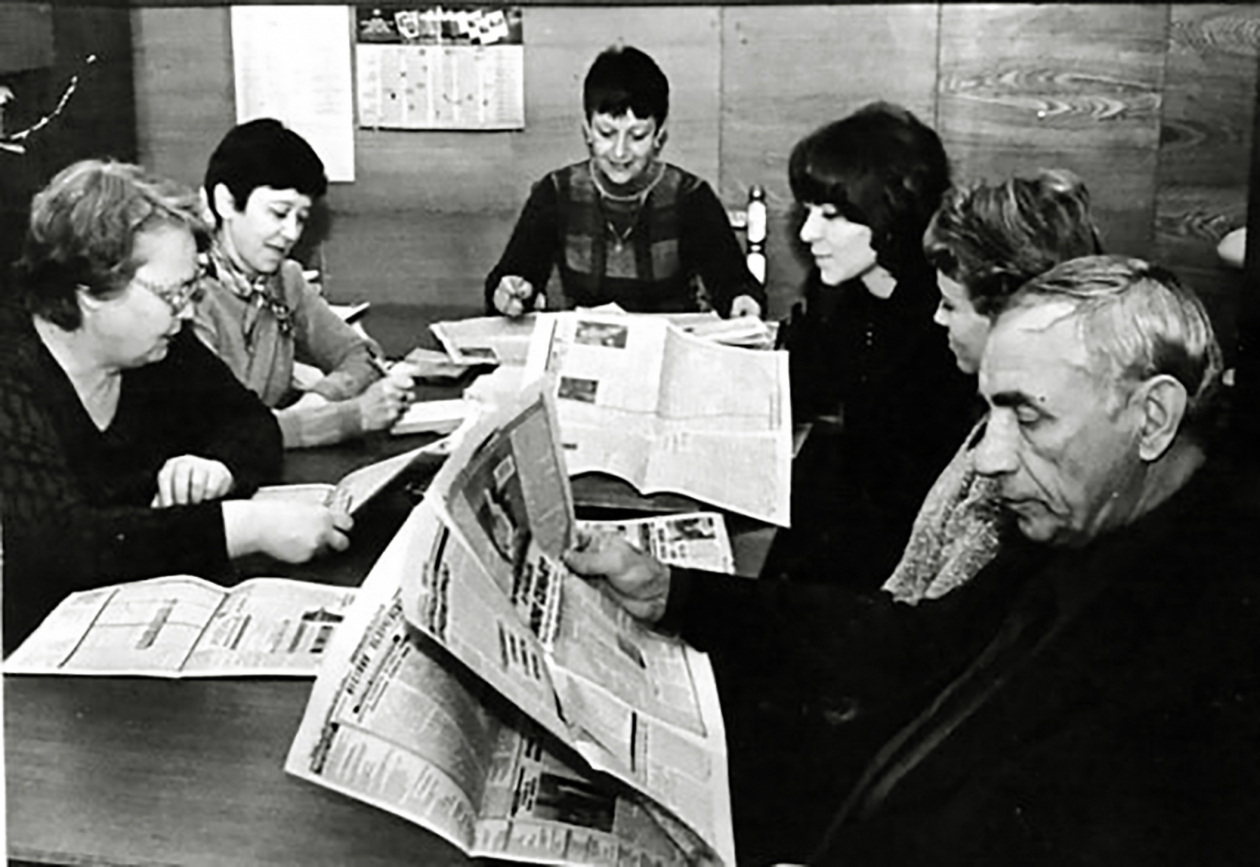
Edited by Birobidzhan Star and Birobidzhaner Stern. Photo: Newspaper “Birobidzhan Star”
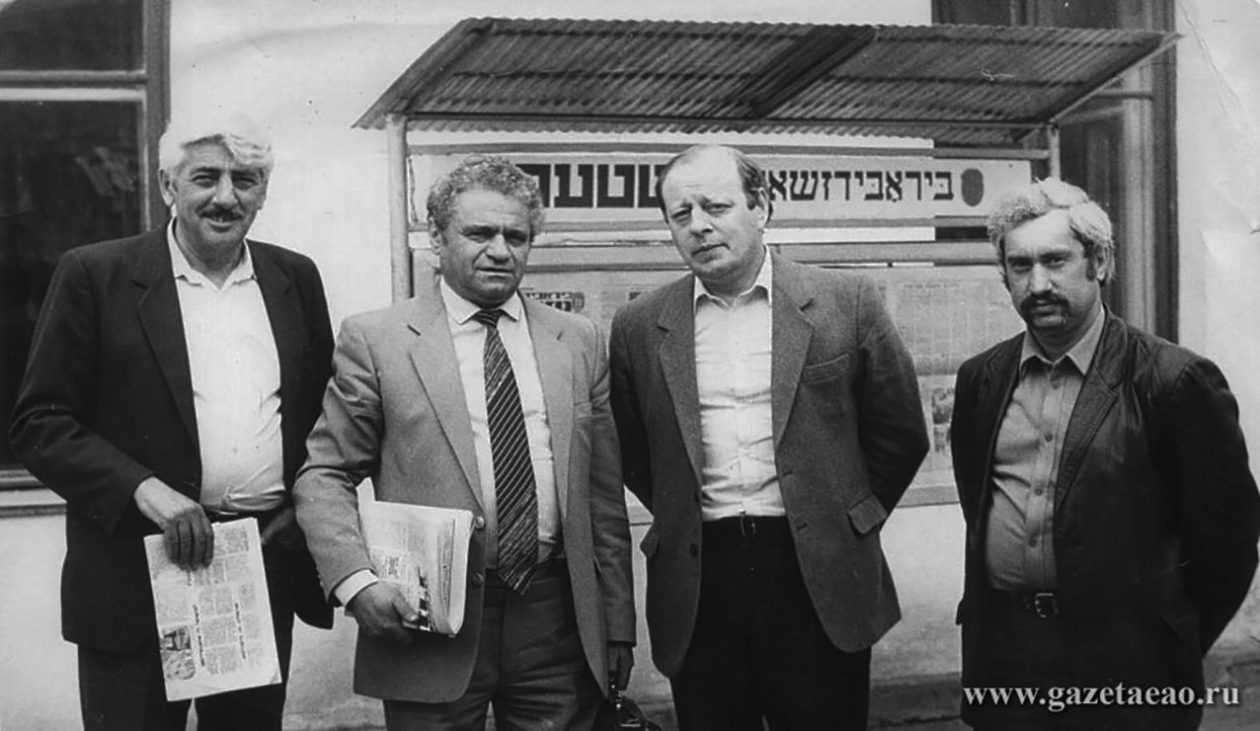
Stern members – R. Shoikhet, L. Shkolnik and V. Belinker with the editorial guest, the famous Soviet composer Veniamin Basner. Photo: Newspaper “Birobidzhan Star”
Naum Korchminsky was the longest-serving editor of Birobidzhaner Stern, 18 years.
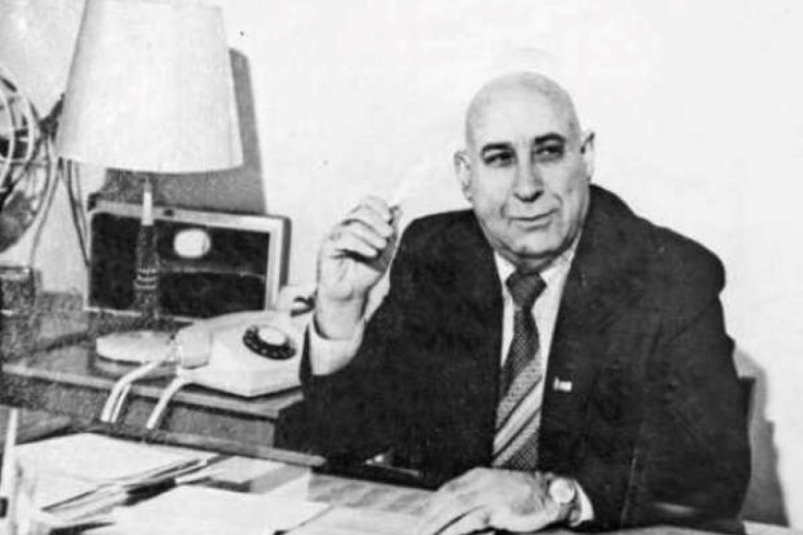
Naum Korchminsky. Photo: Photo: Newspaper “Birobidzhan Star”
In 1932, the Birobidzhan printing house was considered one of the best in the Far East. The first poetry collections of young poets, Stern employees – Emmanuel Kazakevich and Israel Amyot, were published here.

Delivery of fresh mail. Photo: Photo: Heritage EAO
In 1938, the editorial office was located in a new building on Lenin Street, 32, where it is currently located.
In October 1980, the newspaper was awarded the Order of the Badge of Honor.
In the mid-1980s, when the revival of national identity began, a craving for the history, culture and traditions of the people appeared. Among the first to open the closed pages of our history to the residents of the region were Stern employees – writer Roman Shoikhet, journalists Abram Volodarsky, Mikhail Kul, Faina Pasmanik, Vladimir Belinker and many others.
The famous artist, member of the Union of Artists of Russia Vladislav Tsap, also made a great contribution to the development of the newspaper.
As a socio-political publication, the newspaper covers issues of socio-economic, political and cultural life of the region and the country. In addition, it regularly introduces readers to the latest in Jewish literature and culture, traditions, religion and philosophy of the Jewish people.
Since 2010, the newspaper has been published on the website of the Birobidzhan publishing house in electronic form.
The newspaper's editor-in-chief is Elena Sarashevskaya.