They went to the death zone in Ukraine. “Oh my God! Are you alive?”

Note: the article contains descriptions of drastic scenes and people in extreme situations, they are for documentation purposes.
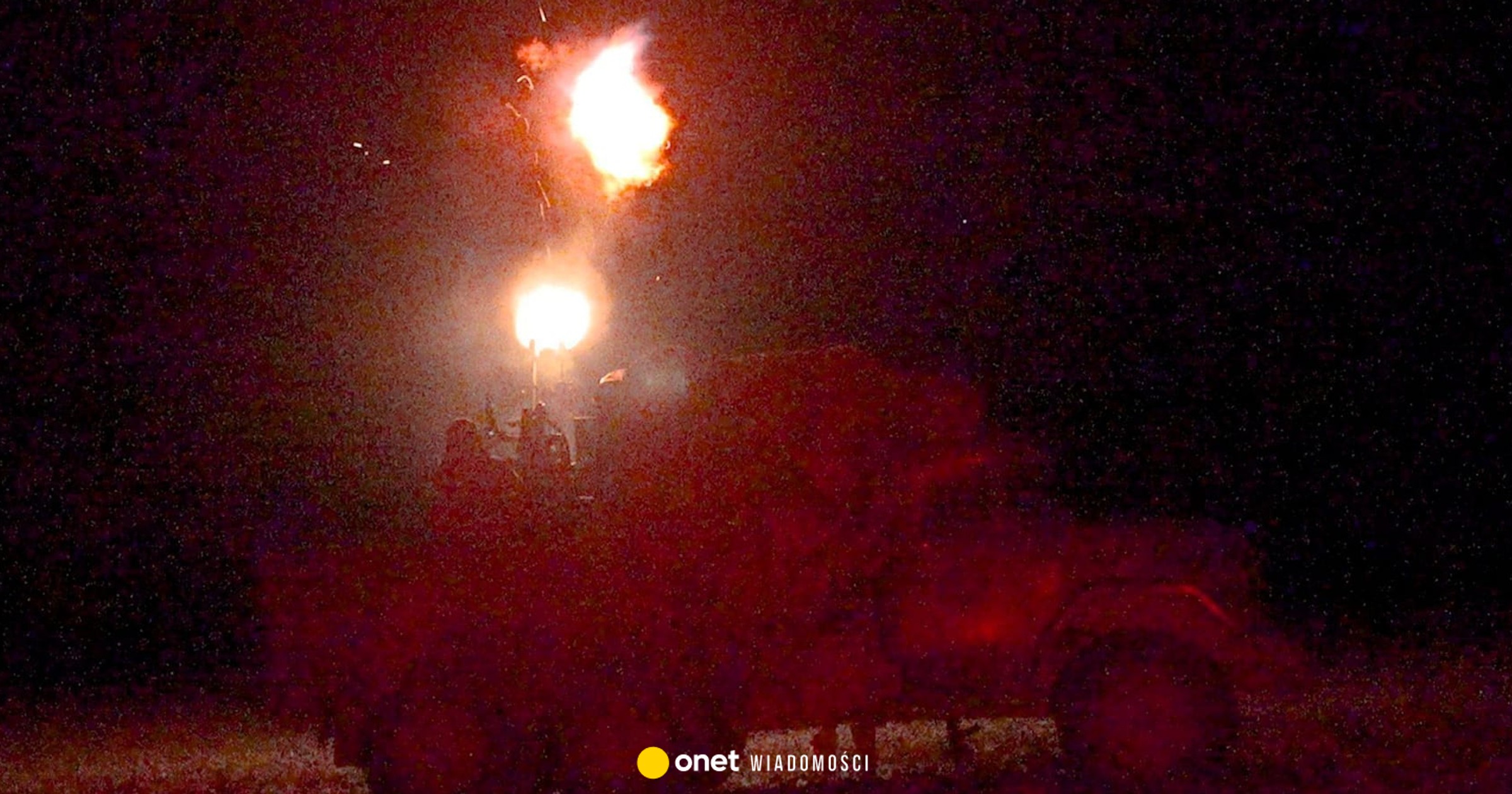
It's a frosty October night. We hear a sound as if a car was speeding towards us. But that's impossible. Here, in a remote area, on a vast meadow in the Dnieper region, near the border with Donetsk, there is no road. Next to a military truck on which an SU-23 double-barreled anti-aircraft gun is mounted, stand three Ukrainian soldiers from the mobile fire unit of the 42nd brigade – Konstantin, Igor and Oleksiy.
Just as they have been in action countless times before, they shoot down long-range drones that Russia uses to attack Ukrainian cities. We – a three-person team of Die Welt reporters – accompany them with a camera that night. It is shortly after half past ten when you hear a strange noise, like a humming noise.
Within seconds, the noise turns into thunder. The shockwave caused by a Russian Lancet drone hitting a military truck knocks us all down. I fall to the ground. I only hear screams: in Ukrainian, in English – they were recorded by cameraman Viktor Lysenko.
A man lies motionless in front of a burning military truck.
We are driving at high speed on a country road east of the large city of Pavlohrad towards the filming location. Parts of the road, some hundreds of meters long, are covered with nets. They are intended to protect against Russian kamikaze drones that are searching for targets – dozens of kilometers from the front line. In front of us is an off-road vehicle with anti-drone technology on the roof and a protective cage on the sides to protect against infernal flying devices.
In Ukraine, what was once called the front line has long since turned into a rapidly expanding death zone. These are areas up to 20 km away from the contact line that are constantly exposed to a high risk of attack. Due to low production costs of several hundred euros, they are widely used in attacks.
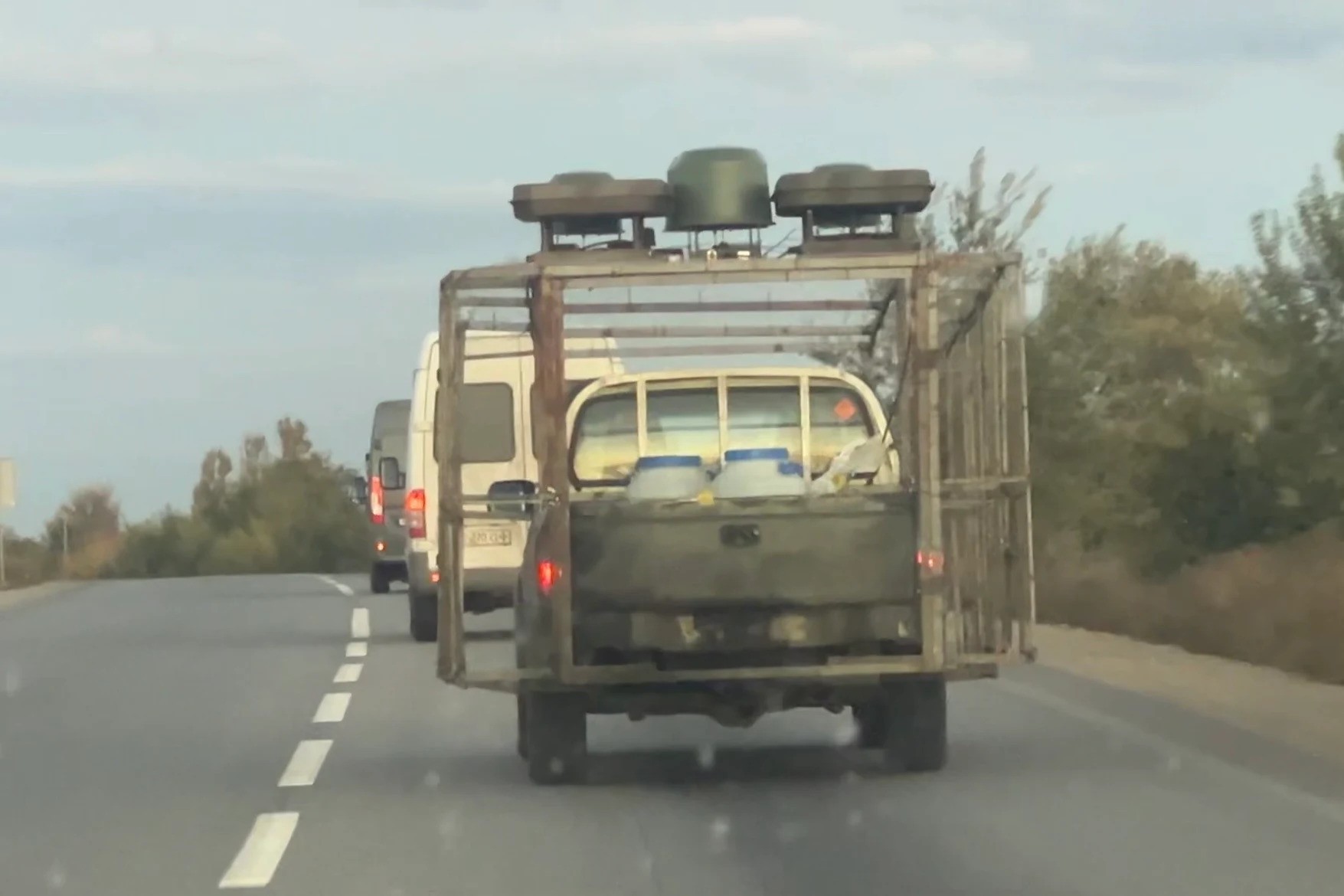
A vehicle with anti-drone technologyIbrahim Naber / Die Welt
Armies on both sides hunt for these deadly weapons even at distances of more than 50 km if the target is valuable enough – when, for example, they fly towards command posts and air defense systems. For this purpose, modified and more expensive combat drones are used, such as the Russian Lancet.
In this war, drones are not only a lethal weapon, but also a psychological one. The buzzing of flying “mopeds”, as Russian long-range Shahid-type drones are called in Ukraine, is causing fear in cities such as Kiev. Moscow uses up to 800 of these three-meter-long kamikaze planes — and their unarmed dummies — to terrorize people across the country every day.
To combat these hordes, the Ukrainian army has deployed mobile fire units throughout the country. We see these crews many times as we travel, on the right and left sides of the road. Sometimes they are just off-road vehicles with a machine gun mounted on the cargo bed. When at dusk one of these teams opens fire because you can clearly hear the Russian Shahid drone flying over the area, we all cringe in the car.
When we reach a meadow in the middle of nowhere, about 30 km from the front line, around 8 p.m., it is already dark. We park the car near a row of trees. As reporters, we wear glowing “Press” signs on our helmets and protective vests. Three Ukrainians from the mobile fire unit – Konstantin, Igor and Oleksiy – are already at work. We approach them to the meadow.
Konstantin stands in the back of a military truck and stares at the horizon. “I observe the sky and identify targets using this thermal imager,” he explains to us. The targets are primarily Russian Shahid and Geran combat drones – they often fly over this section of the front – but also Orlan reconnaissance drones. Their work takes place in real time, says the 48-year-old. — Sometimes we only have a few seconds to react.
Before Russia attacked Ukraine, Konstantin worked for the Ukrainian railways. In the first year of the war, he became a soldier and received basic training in anti-aircraft defense, in particular in the use of a 23-mm SU-23 machine gun. His father also served the country, he was a professional officer in the Ukrainian army.
The article continues below the video
Igor is standing on the cart next to the machine gun. Since the summer of 2024, he has been serving in a mobile fire unit. Previously, the 49-year-old earned his living by working on a construction site.
He says their job is difficult because Russian drones constantly change routes and flight altitudes to confuse defenders. If the target is close enough, they have time to fire about 10 shots to destroy it. However, if the Shahids fly a few kilometers above them, they are out of their range.
Therefore, to stop Russian combat drones, the Ukrainian army also uses helicopters and interceptor drones. — I am defending my homeland so that our cities will be less bombed. To prevent the Shahids from hitting people, we stand here and intercept them, says Igor.
On the monitor next to the machine gun, soldiers observe whether there are flying objects in their area. They also receive information from other teams in the area and use special target recognition software, Konstantin explains. “Get ready,” Oleksiy calls a moment later as the drone approaches. At a quarter to 9 p.m. their cannon thunders for the first time.
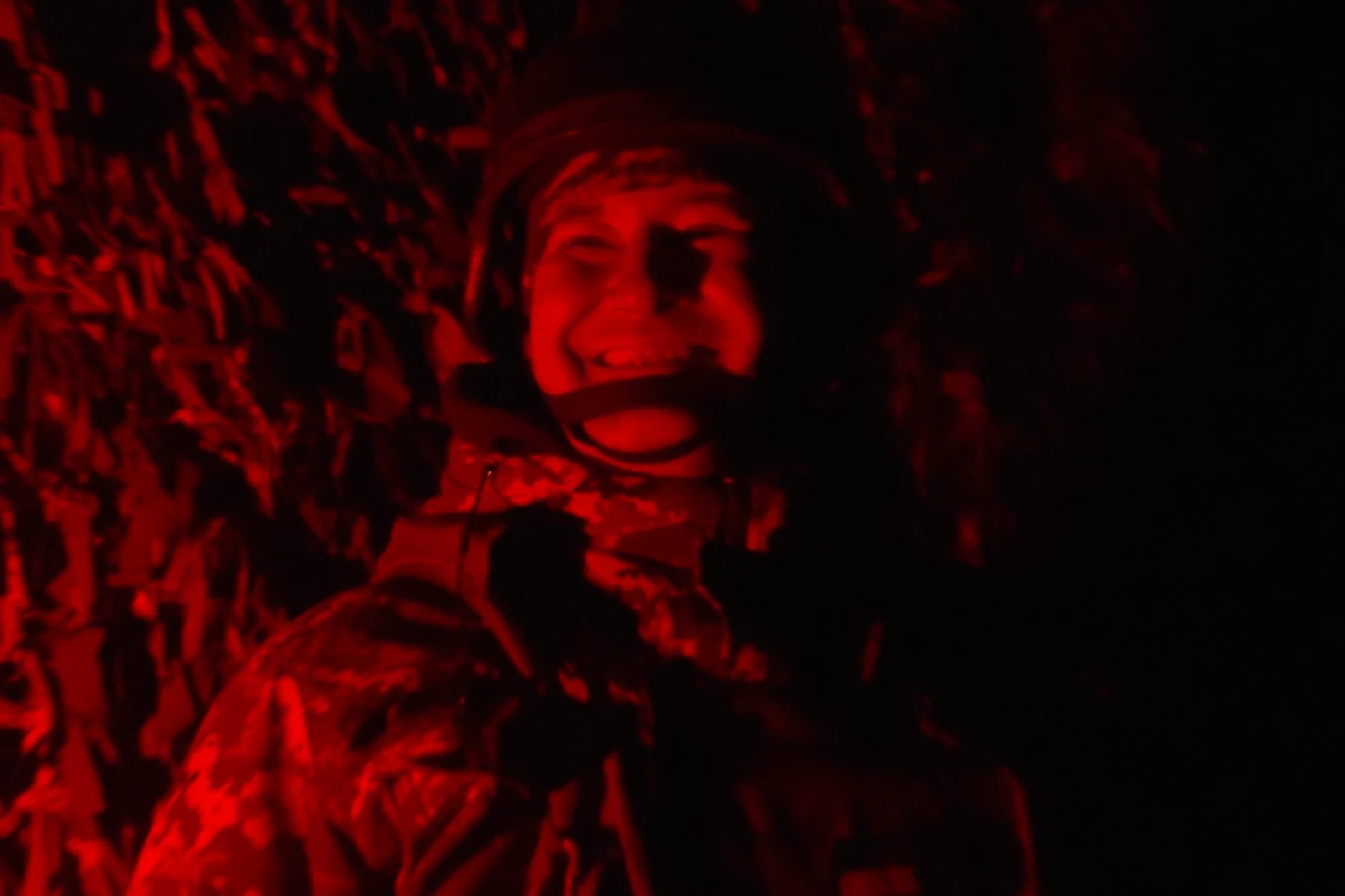
Soldier KonstantinViktor Lysenko / Die Welt
A few minutes later, the target is destroyed. Another anti-aircraft unit hit the aircraft. It was a Russian reconnaissance drone, says Konstantin.
Did this really just happen?
A moment later, a brief commotion is heard. One of the soldiers shouts that there is an “unknown flying object” somewhere above them. I ask our producer Ivan if we should take shelter in a row of trees to be safe. But then a signal comes that there is no threat: it is probably a Ukrainian drone.
Half an hour later, at 9:15 p.m., we conduct the last on-camera interview with Konstantin. We intend to continue our journey soon. So far, it's a “pretty normal night,” says Konstantin. He adds that there is nothing to worry about because the unknown flying object was friendly. It's a moment of relief – for the first time that evening, he laughs happily as he says it.
The time is 9:33 p.m. Cameraman Wiktor is filming the starry sky again. We are standing a few meters from the army truck at this point and maybe four or five meters from Konstantin.
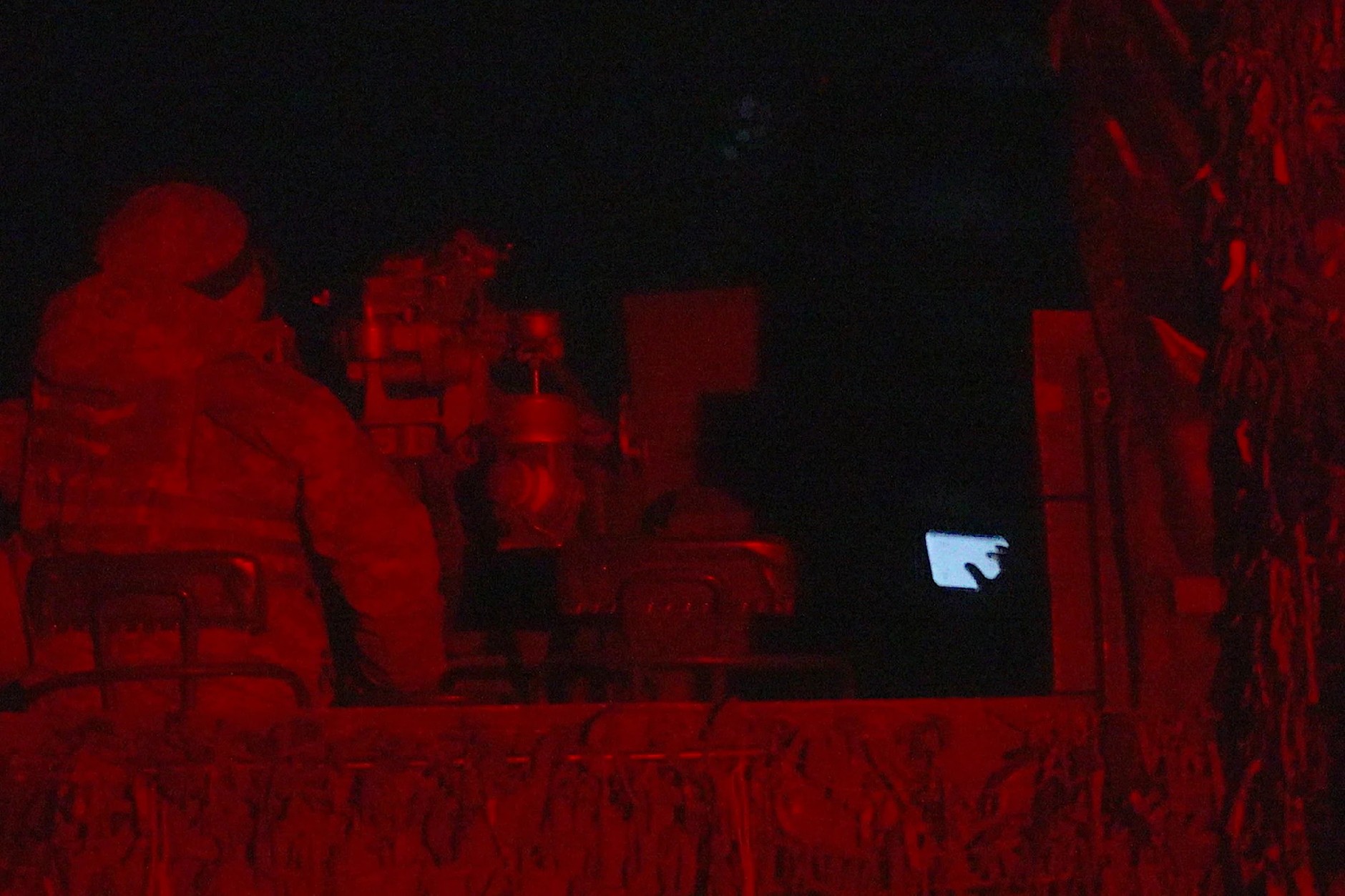
Mobile Ukrainian unit monitoring the surroundingsViktor Lysenko / Die Welt
Suddenly we hear noise that we cannot initially identify. Moments later, a Russian Lancet drone strikes the middle of a military truck — exactly on the side we're on. Konstantin stands right next to the impact site – he immediately falls to the ground. Me too.
When I get up, I touch my head, arms and thighs in panic. Did this really just happen? Am I alive?
The thought immediately comes to mind: what if the Russians attack again soon? I stumble through the meadow, heading towards a row of trees that offer at least a little protection from the drones. Halfway there, I call for Wiktor, and he calls for me.
“Hello. We have been attacked.”
When I turn around, he's coming to meet me – in his arms is our producer Ivan, obviously injured. Together we drag him to the row of trees. – What about the soldiers? What about the soldiers? – he asks. We don't know yet, but Wiktor has some guesses. “I think one of them wasn't moving,” he says.
We put Ivan on the ground and notice that his pants are all covered in blood. There are wounds on the left and right sides of the thighs, the left one is bleeding heavily. “We survived,” I tell him. — I'm with you.
Even though I try to stay calm, I'm very worried about him. I enter into my iPhone's notes app: 9:40 p.m. We cut Ivan's pants and apply a tourniquet to stop the bleeding. Ivan is pale but conscious. We turn off airplane mode on our phones to call for help.
Ivan, who organized the filming, contacts the brigade spokesman via encrypted messenger. “Hello. We have been attacked.” – writes and specifies where we are. The spokesman promises to send help immediately. For a moment we wonder if we should take our car. But we don't know this frontline area, and the brigade promised to come.
While waiting for the evacuation, Ivan asks me to check for any other wounds. I can't see anything at first glance, but I can't see his back completely either. – But I'm getting married soon! “Ivan suddenly exclaims, as if he had just remembered it. In November, the 28-year-old plans to marry his fiancée Eleonora.
Less than 35 minutes after the attack, the SUV passes our row of trees and turns straight into a meadow where a burning military truck is parked. They are soldiers from the brigade. Wiktor runs after them, I stay with Ivan.
October 13 is our second birthday
When Victor returns after a few minutes, he says briefly: Konstantin is dead. Another soldier is seriously injured. He helped carry them to the car. Then another off-road vehicle pulls up in front of our row of trees and the doors open. “Come on, come on,” the soldier shouts. Wiktor and I pull Ivan into the car and get in.
Around 11 p.m. we enter a narrow room called “stabilization point” – a field hospital on the front where soldiers receive medical attention before being transported to hospitals. On the left, Ivan is lying in boxers and the doctor is giving him an injection. On the right side there is a man whom I recognize only after a moment: Igor, a soldier from the fire unit whom we interviewed at the machine gun. His left leg is torn. Doctors immediately decide that it needs to be amputated.
Ivan is luckier: a brigade medic can directly remove a smaller piece of debris from his right leg. The second piece of metal is embedded so deeply into his left thigh that he doesn't have the courage to remove it. However, he tells us that Ivan's leg does not require amputation. Perhaps in a few weeks he will be able to walk.
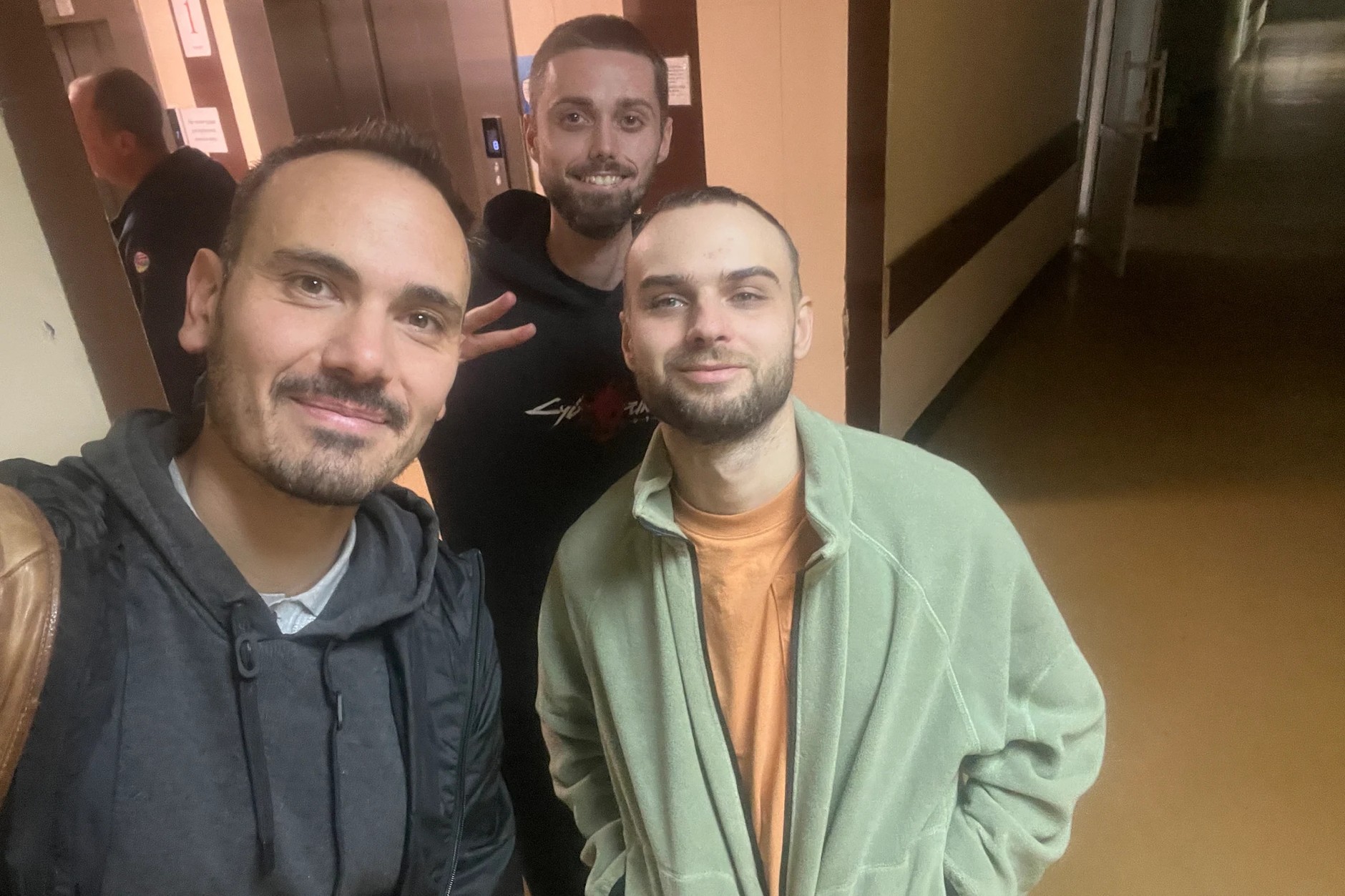
“Die Welt” reporter Ibrahim Naber (left) and camera operator Wiktor (right) visit their injured colleague Ivan in a Ukrainian hospital a few days after the attackIbrahim Naber / Die Welt
In the kitchen of a field hospital, a soldier from the brigade brews black tea. “Konstantin had children,” he says, handing us plastic cups. Last year, there was a similar drone attack on another mobile fire unit of their brigade. Also then, one of the comrades died and the other was seriously injured.
I go out into the small courtyard in front of the field hospital and call my best friend from my youth, a teacher who lives in our home village in Swabia, 2,400 km from the front in Ukraine. I am completely unnerved and trembling as I tell him about the Russian attack. “You're finally coming home,” he says finally. It's been a long time since any conversation helped me so much.
I return to the kitchen and find Victor sitting cross-legged on the floor, texting friends and family. Since we've been working for three years, I've never seen him so pale before. When he sees me, he shakes his head in disbelief. He says that October 13 is now our second birthday.