More and more young people are taking drugs to sleep. Doctors: The effect is the opposite of what they imagine


In a fast-forward society where performance is the ultimate criterion, even sleep has come to be treated as a competition. Young people try to sleep less, be more productive and function at peak capacity, ignoring the physiological need for recovery.
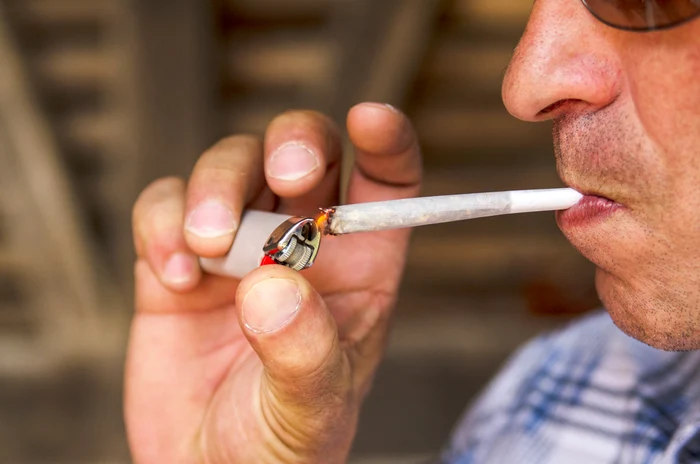
Photo credit: Shutterstock
Specifically, a new study from the University of Michigan shows that one in five young Americans between the ages of 19 and 30 turn to cannabis or alcohol to fall asleep, despite the long-term risks to sleep and health.
The research, published in the journal JAMA Pediatrics, found that 22 percent of participants used one of these substances for sleep, and cannabis was much more common than alcohol: 18 percent versus 7 percent. Among young people who used cannabis in the past year, 41% said they used it specifically to fall asleep.
The lead author, Professor Megan Patrick from UM's Institute for Social Research, warns that this practice can backfire: “Cannabis and alcohol can disrupt sleep quality and worsen long-term sleep problems.”
The study also identified gender and race differences: women tend to use cannabis nearly twice as often as men, people who identify as a different gender four times more often, and black youth are three times more likely than white youth to use alcohol for sleep.
Megan Patrick points out that repeated use of these substances can lead to tolerance and addictive disorders rather than restful sleep: “It is essential that young people and health professionals are aware of how widespread this practice is and what risks it entails.”
Why is it also relevant for Romania?
The phenomenon is starting to take shape in Romania as well. According to the most recent ESPAD 2024 (European School Survey Project on Alcohol and Other Drugs) report released during 2025, carried out in 37 European countries and published by the French Observatory on Drugs and Toxicomania (OFDT), approximately 9% of Romanian adolescents aged 16 stated that they had experienced cannabis or other drugs at least once in their lives, percentage slightly below the European average, but increasing compared to 2020.
At the same time, a report by the Social MED organization from February 2025 draws attention to the fact that a growing number of young Romanians start using drugs before the age of 13, often combining several substances, which increases the risk of addiction and severe mental disorders. Specialists point out that the developing nervous system is extremely vulnerable to these substances, which leads to the impairment of cognitive, emotional and scholastic ability.
In addition, a Sociomed 2025 survey shows that over a third of Romanians (34%) have difficulty falling asleep and fragmented sleep, a phenomenon accentuated by stress, screens and irregular work schedules. In this context, the temptation to use substances to induce sleep becomes an emerging public health problem.
Romanian addiction specialists warn that the use of cannabis for sleep can create tolerance, that is, the need for ever-increasing doses, without long-term beneficial effects, which leads to a vicious circle between insomnia and addiction. They call for sleep problems and substance use to be integrated into the same national prevention plan, through collaborations between schools, family doctors and psychological services.
“Here, studies show – more and more young people are turning to cannabis, alcohol or melatonin to help them fall asleep. What seems like a quick fix hides a deeper psychological problem: the loss of the natural ability to self-regulate and the need for instant quiet.” says psychologist and cognitive-behavioral psychotherapist Laura Găvan for “Adevărul”.
She explains that addiction doesn't start with the dose, but with the thought that you can't function without it. “Addiction is, from a psychological perspective, a disorder of self-regulation. It is an attempt to gain control over an internal state through an external stimulus,” shows the specialist.
Cannabis, alcohol and other substances activate reward circuits in the brain, producing a temporary state of calm. “In the long term, however, these substances disrupt natural sleep mechanisms, reduce deep phases of rest, and amplify anxiety. A vicious cycle is created: fatigue, consumption, sleep disruption, and finally more fatigue. What seemed like a solution becomes part of the problem.” emphasizes Laura Găvan.
She says today's youth live in a culture of immediate reward, where any discomfort must be removed immediately. “We live in a world of instant dopamine, where every uncomfortable emotion must be resolved either through a screen or through a substance. This mindset fuels the immediate reward trap, the tendency to choose quick relief, even if the long-term cost is high.” explains the psychotherapist.
She points out that, through this type of behavior, young people lose the opportunity to learn patience and natural relaxation. “Substances provide an escape but block the emotional learning process. Sleep becomes a performance, not a consequence of balance.” says Laura Găvan.
Sleep, an active process ignored by education
The specialist also shows that one of the root causes is the lack of education regarding sleep hygiene. “Few teenagers or young adults know that sleep is not just rest, but an active neurobiological process that relies on rhythm, light, and routine. Lack of sleep education causes insomnia to be treated as dysfunction to be chemically corrected, not as signals of stress, anxiety, or imbalance.”explains the psychologist.
Instead of learning how to regulate their emotions and build a healthy routine, many choose the shortcut: a substance that promises relaxation. “It's a form of emotional self-medication, not a real solution,” she adds.
Normalization of consumption and loss of confidence in one's own body
The phenomenon is amplified by the way in which recreational consumption is presented online. “In the digital environment, cannabis or alcohol are often presented as natural or cool. This normalization lowers the perception of risk and turns the occasional habit into a regular behavior,” says the psychotherapist.
According to Laura Găvan, every chemically “assisted” sleep contributes to the loss of confidence in one's own body. “Insomnia is not a disease in itself, but a symptom of internal imbalance. If we treat it only by suppressing it, we postpone dealing with the real cause: anxiety, stress or a lack of emotional discipline.”
How to rebuild healthy sleep
The specialist claims that the real solutions do not come from the ban, but from education and daily exercise. “Sleep hygiene rituals are essential. Consistent routine, going to bed and waking up at the same times, limiting screens at least an hour before sleep: all these support natural melatonin secretion and restore circadian rhythm,” explains the psychologist.
She says that alcohol, although initially anxiolytic, becomes anxiogenic later and should be avoided before bedtime. “To regulate the biological clock it is important to understand that, in the past, the signal for falling asleep was dusk, and for waking up, natural light. We can recreate this rhythm through simple habits.” recommends Laura Găvan.
Another essential element is creating a calming ritual before sleep: “A warm shower, reading, slow music, breathing exercises or progressive relaxation. For example, 4-7-8 breathing, where we breathe in for four seconds, hold the air for seven, and breathe out for eight, has proven effects on the nervous system. Such techniques, practiced constantly, rebuild the natural capacity for self-regulation.”
These methods do not provide immediate effects, but over time they replace dependence on external stimuli with a healthy form of internal balance. “They train the mind to calm down without chemical help, the exact opposite of the addictive mechanism”explains the psychotherapist.
Moreover, Laura Găvan believes that bans do not work where there is no understanding. “Young people need psychoeducation, to learn how their bodies work, why screens, light or stress affect sleep and how they can use breathing, routine and reflection instead of substances,” she shows.
“The Sleep Trap isn't about sleep, it's about our relationship to effort. In a world that promises quick fixes, discipline and patience seem old-fashioned, but they are the only real forms of inner freedom.” completes Laura Găvan.
In his view, genuine sleep is not achieved, but allowed. “It appears where the mind has learned to quieten itself by exercise, not by escape.”
What people are saying about sleep and cannabis
On platforms like Reddit, hundreds of young people openly discuss the connection between cannabis use and sleep. A user writes: “It's crazy how much better I've been sleeping since I quit cannabis. When I was addicted I was convinced it was helping, but the body can't sleep normally when it's dependent on a substance to sleep.” Another contradicts him: “I sleep worse now without cannabis. I have nightmares and have a hard time falling asleep, and when I smoked I was asleep within 30 minutes. I think it has to do with my ADHD.”
A third user notes that “after I quit it took a while for my brain to readjust, but now stretching and avoiding the phone before bed is helping.” Others take a more relaxed view of the phenomenon: “Cannabis isn't a big deal. It doesn't destroy cognitive functions: it just makes sleep a little shallower. Instead, more than one drink ruins your sleep completely.”
The perspective of those who tell their experiences is also supported by the scientific literature. For example, a large review published in the Sleep Health Journal (Kolla et al., 2022) shows that withdrawal from cannabis use can trigger severe insomnia and intense dreams, confirming what users describe as “withdrawal nightmares”. At the same time, other studies, such as the one published in The Conversation by researcher Deidre Conroy (University of Michigan), explain that the effects of cannabis on sleep differ significantly between people, depending on the type of strain, dosage and factors such as depression or anxiety.Thus, online conversations perfectly reflect the scientific dilemma: cannabis can bring temporary relief to falling asleep, but in the long term it can deepen sleep and addiction problems, especially among young people who are looking for quick fixes for stress and insomnia.
In a world of constant stimulation, real performance becomes the ability to stop. Sleep is not a waste of time, but an investment in mental health.