Brussels believes that “the time has come to finally stop seasonal time changes”. The discussion, relaunched in the EU a few days before the change to winter time


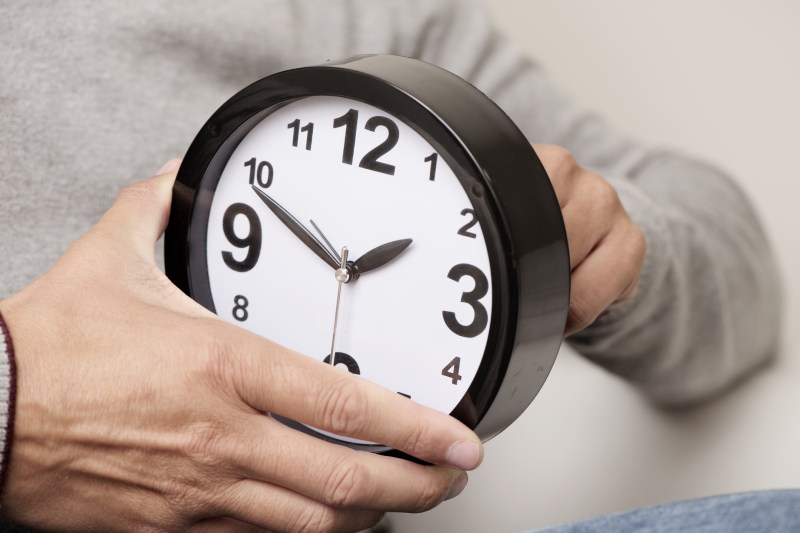
Illustrative image, source: Juan Moyano | Dreamstime.com
Citizens of the European Union will turn their clocks back one hour this Sunday, but Brussels believes that the time has come for the bloc of 27 nations to give up this practice for good, reports AFP.
In 2018, the European Commission drafted a directive that would have abandoned the biannual time change in all EU countries. However, no final decision has been taken and there is no time horizon in this regard, according to the clarifications on the official website of the EU Council.
Just a few days before the time change this autumn, MEPs put the subject back on the agenda, on Thursday, in a debate in Strasbourg.
Launching the discussion in the Strasbourg parliament, European Commissioner for Sustainable Transport and Tourism, Apostolos Tzitzikostas, told MEPs that the time changes should stop and promised that the EU Executive would remain focused on the subject.
“The commission has decided to undertake further analysis through a detailed study that we are working on right now to support future decision-making on this issue,” he said.
“My aim is to move forward. The time has come to finally stop seasonal time changes every year,” added the European commissioner.
There is research showing that the spring and fall time changes harm the economy and people's health, according to AFP.
Brussels' previous reform plans suggested that each member state should be left to decide whether to stay on either winter or summer time all year round.
“It no longer produces energy savings”
Tzitzikostas said the current system “affects all of us, frustrates most, and even I would say harms people.”
The EU Council states on its website that the practice of seasonal time change was first introduced during the First World War to save energy, and was reintroduced in many countries in the 1970s.
European Commissioner Tzitzikostas claims that the practice “no longer produces energy savings” and that the time differences in the EU bloc are causing problems for the transport and energy sectors.
He said he was in contact with EU states to promote the topic – which enjoys public support.
In 2018, before the UK officially left the EU, almost four million people from the then 28 EU member states expressed their support in a public consultation.
Thursday's debate comes after Spain relaunched talks at EU energy ministers' level on Monday, supported by Poland and Finland, an EU diplomat said.
“Changing the time twice a year no longer makes sense. It barely helps save energy and has a negative effect on people's health and lives,” Spanish Prime Minister Pedro Sanchez said in a post on X on Monday.
PHOTO: Juan Moyano | Dreamstime.com