Polish law is helpless when it comes to social media. Is it time for radical steps like Australia?

The law in Poland is not able to protect children from threats in social media – admits media scientist from Maria Curie-Skłodowska University, Dr. Ilona Dąbrowska, commenting on Australian regulations imposing restrictions on the use of social media by people under 16 years of age.
In Australia, a ban on the use of social media platforms by users under 16 years of age has come into force. It is the first country in the world to introduce such a law, followed by Malaysia planning to introduce such a ban, most likely in 2026.
In November, the European Parliament also adopted a document expressing concern about the threats to the physical and mental health of minors online. It proposes that only 16-year-olds or – with parental consent – 13-year-olds should have access to social media, video platforms and virtual AI assistants such as ChatGPT.
The 'State of the Digital Decade 2025' Eurobarometer survey shows that more than 9 in 10 Europeans believe that action by public authorities to protect children online is urgently needed against the negative influence of social media. 93 percent respondents say that social media platforms have a negative impact on children's mental healthand 92 percent claims that they are exposed to cyberbullying and online harassment. According to the study, another 92 percent Europeans want mechanisms to limit content that is inappropriate for their age.
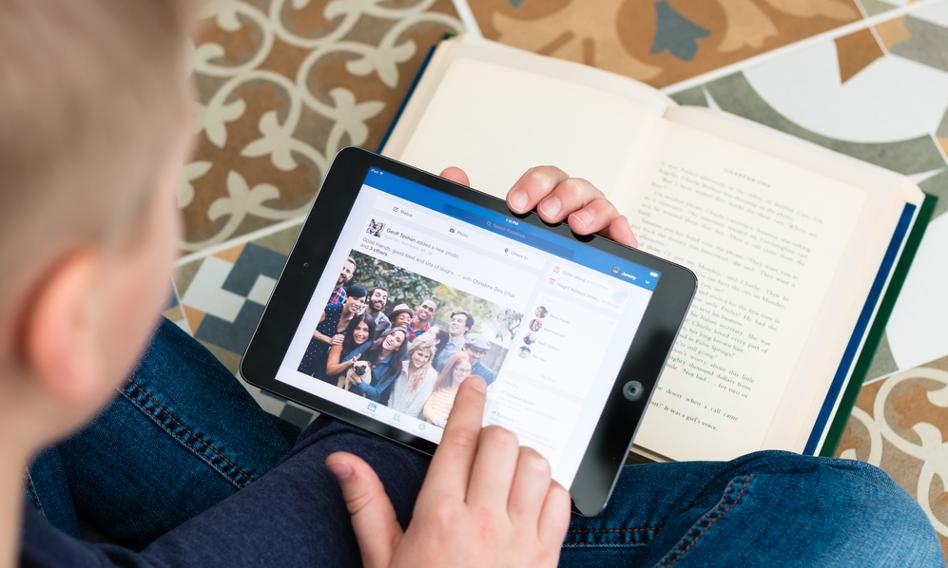
If such a law were to apply in the EU, it would also affect people under 16 years of age in Polande. According to the NASK report “Teens 3.0”, there are approximately 6 social media accounts per teenager. The most frequently used applications included Messenger, TikTok, Instagram and YouTube. The study, published on September 29, also indicates that the average time spent using social media during the day by teenagers in Poland is 3 hours and 23 minutes.
– The current law in Poland is not able to protect children from potential threats, and there are really many of them – admitted media expert from UMCS, Dr. Ilona Dąbrowska, in an interview with PAP.
The expert noted that modern parents face a very big challenge when trying to limit children's access to dangerous content. In her opinion, parental locking on young users' devices is one of the ways to provide care, but it should be remembered that children can bypass this type of locks.
“Restricting the digital freedom of young recipients”
Opponents of limiting access to social media platforms for minors point out that this may be considered as limiting the digital freedom of young recipients. – I would not share the opinion that banning children from using social media would limit their freedom. This is, above all, protection against threats – emphasized Dr. Dąbrowska.
She added that an argument for the need to introduce regulations is the growing number of suicides among young peoplewhich may be an indirect result of uncontrolled access to online content and insufficient care and support from adults. She pointed out that children and adolescents are often not prepared to deal with pressure, cyberbullying or toxic content on their own, therefore appropriate regulations may be an important element of prevention.
According to data from the Police Headquarters, in 2024, 127 children aged 7 to 18 committed suicide in Poland. However, a study published in November by the Dbam o Moje Zasięg Foundation and Bank Gospodarstwa Krajowego showed that content related to self-harm or suicide is displayed on social media by 40 percent. seventh-grade primary school students and 50 percent third-grade secondary school students.
– This is no longer a need, but a necessity to protect children and young people from what may happen if access to the network is unverified and unregulated. – noted the expert.
According to media experts, social media platforms have not sufficiently verified the age of young users so far. – We have often heard that children as young as 10 already have their own accounts on social networking sites – she added.
Nevertheless, she admitted that the platforms themselves introduce age restrictions, which is justified given the developmental stages of children.
Most social networking sites consider thirteen to be the minimum age to open an account. This limit is dictated by the American regulations regarding the protection of children's privacy COPPA (Children's Online Privacy Protection Act) and in the case of Poland – GDPR (General Data Protection Regulation) resulting from the EU legal act regulating the principles of the General Data Protection Regulation.
The expert reminded that registration on Facebook can be done by anyone over 13 years of age. According to the platform, in some regions it may be necessary to confirm your age using, for example, an ID document. – The question arises as to what extent social networking sites should have access to this type of documents – admitted Dr. Dąbrowska. – After all, the modern network is an architecture of algorithms in which privacy has become a commodity – she added.
Weronika Moszpańska (PAP)
wm/ pś/ mhr/