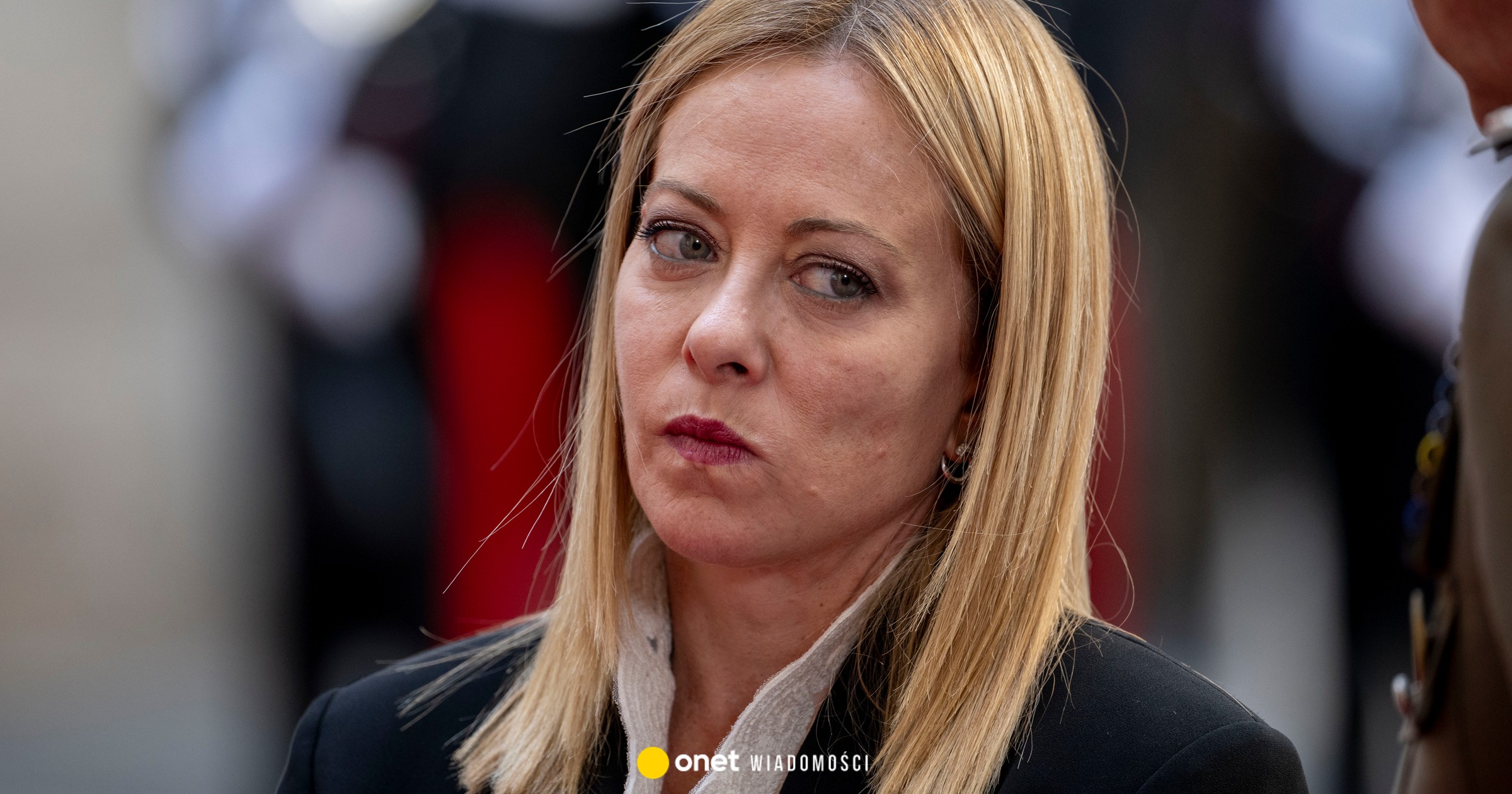
Giorgia Meloni's recipe for success. Populism and pragmatism go hand in hand for her. This is where she differs from Alice Weidel and Marine Le Pen

The French presidential system, unfavorable to compromise, has reached a dead end. Traditional British democracy is weakened like never before. In Belgium, the Czech Republic, Sweden and the Netherlands, governments are on shaky legs, changing rapidly or not being formed at all. And Germany, once admired for its stability, is still not out of the crisis. It seems that there is no longer any room for political stability in Europe. With one exception: Italy.
Since 1946, the country has had 67 governments, with an average duration of just over a year. However, for exactly three years, Giorgia Meloni has ruled the country undividedly. Everything indicates that he and his Italian Brothers party will also win the upcoming parliamentary elections in 2027.
A break with post-war history
Even more surprising is that Italy's political stability was achieved by a politician with nationalist views. Meloni comes from a political and cultural environment in which the values of fascism have survived almost unchanged for decades.
The rise in popularity of the Meloni party therefore means a break with post-war Italian history, which was politically shaped by Christian democrats and the left. Meloni revealed what was already a fact: Italy is not leftist at all.
The Italian brothers – brothers, not sisters – are part of the global rise of parties united by a strong “no” to the world of liberal democracies. But Meloni clearly differs from the populist international. She is the first politician of her kind to head the government in a Western European country. And which, at least in foreign policy, demonstrates a pragmatism that is not just tactical.
That this would happen could have been predicted a long time ago. In 2021, a year before becoming prime minister, Meloni published a book, a kind of programmatic autobiography: “Io sono Giorgia. Le mie radici, le mie przed” (I am Giorgia. My roots, my ideas). In it, she rejects humanitarian universalism, argues with rootless “global elites”, glorifies homeland and family, and advocates a very restrictive immigration policy.
The article continues below the video
However, unlike Alice Weidel or Marine Le Pen, Meloni argues that doesn't close the door. He criticizes universalism for demanding too much from people, and for being desirable, but impractical. He opposes the supporters of an aggressive immigration policy with an even humanitarian argument: immigrants cannot expect anything better in Italy than a poorly paid job in which they can be exploited – and this is unworthy of a human being.
Finally: although Meloni uses words quite wastefully orgoglio — pride in being Italian — does not advocate isolation and self-sufficiency. He repeatedly emphasizes the existential importance of the transatlantic alliance for Italy.
And despite all the criticism of the Brussels bureaucracy, he supports remaining in the European Union. Certainly also because of funds from Brussels. But also because he does not think that Italy, proud of its nationality, is strong enough to survive in the world on its own. Meloni's nationalism leaves the door open to multilateralism.
Confrontation with radical nationalists
As prime minister, Giorgia Meloni surprised everyone. It did not torpedo the EU from the very beginning. Thus, she offended the radical, nationalist part of her supporters. Moreover, from the very beginning, she unhesitatingly supported support for the attacked Ukraine.
It has not joined the group of EU countries that have recognized the Palestinian state. She said: “Peace is not achieved through appeals and ideological declarations that are welcomed by those who do not want peace. Peace is built with patience, courage and common sense.
Thus, she opposed the prevailing opinion in this country. This has to do with the strong communist tradition in post-war Italy, where attitudes towards Russia are much milder than in the rest of Europe. Supporting Ukraine is not popular at all. It is similar in the case of Israel.
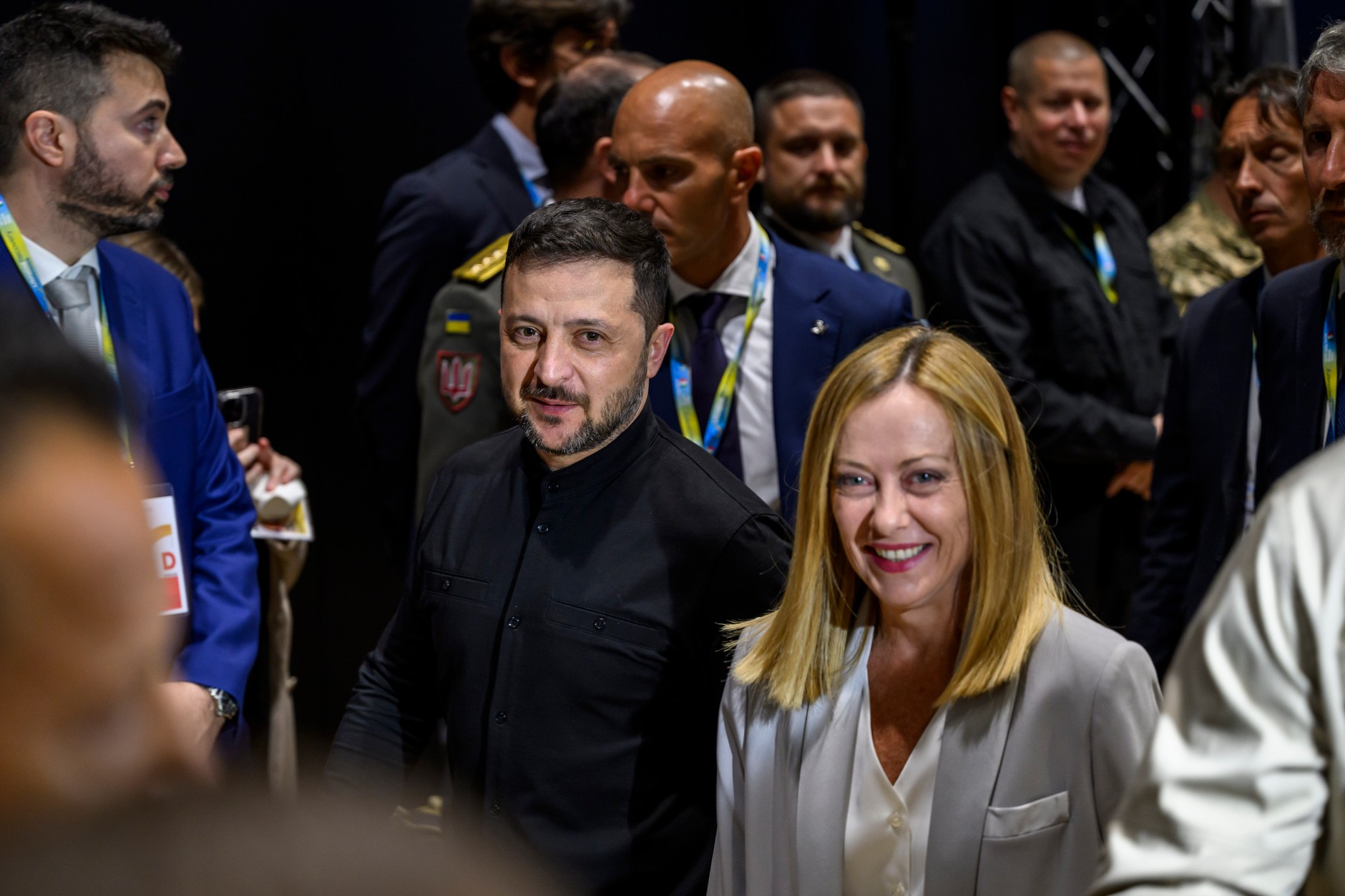
Italian Prime Minister Giorgia Meloni and Ukrainian President Volodymyr Zelensky during a joint press conference in Rome, July 10, 2025.Antonio Masiello/Getty Images/Getty Images
In recent months, millions of people have taken to the streets of Italy to protest against Israel's actions in the Gaza Strip. Accusing Israel of genocide is common among the left. And anti-Semitism in progressive guise is almost socially acceptable: this is due to the fact that there has never been a serious debate about ventennioor two decades of fascist rule. What is even more surprising is that Meloni did not hesitate for a moment regarding Ukraine or Israel.
In politics, Meloni's achievements so far look modest and contradictory. On migration, it has failed to keep its promises. The refugee centers in Albania announced with great pomp and built will most likely fall into ruin. Economic and budgetary policy still lacks success. The infrastructure revolution has still not arrived. The Meloni government pursues a personnel policy in the public media that is strictly party-oriented.
Meloni has just introduced the “Law on Combating Islamist and Cultural Separatism”, which provides for a total ban on wearing the burqa and niqab. This goes well beyond the requirement of secularism: the bill has nationalist overtones. However, despite all these attempts to limit the liberal field of action, we cannot currently speak of an illiberal turn.
When Giorgia Meloni speaks not at summits and international conferences, but in front of home audiences and even supporters, her rhetoric is still expressive, loud, often aggressive and blatantly explicit. When her newly founded party first ran for election in 2013, it won two percent. votes, and in the 2018 parliamentary elections – 4.4 percent.
The fact that it has become the strongest party, starting from such a low level, is due to the iron will of Meloni (“I am a soldier”) and her almost revolutionary policy of radical “no”. She didn't get caught up in political games. Thanks to this, she remained the only person who did not get her hands dirty. Achieving this promotion on her own, against all previously dominant parties, only strengthened Meloni's determination.
No bridges, no compromises
Watching Meloni's public appearances around the country, one often gets the impression that her naturally fast speech, which is even more common among women than men in Italy, literally infuriates her. However, she always remains coldly calculating. And it focuses on polarization more effectively than its competitors from its own camp. Us and them: draws a clear line between his camp and the leftist camp. No bridges, no compromises.
Meloni thus faces a real dilemma. As a “superpatriot”, she wants to speak and act on behalf of all Italians, the entire nation. The heads of government of moderate democracies also see their role this way: they rightly claim that they also play politics for those who did not vote for them: for their opponents.
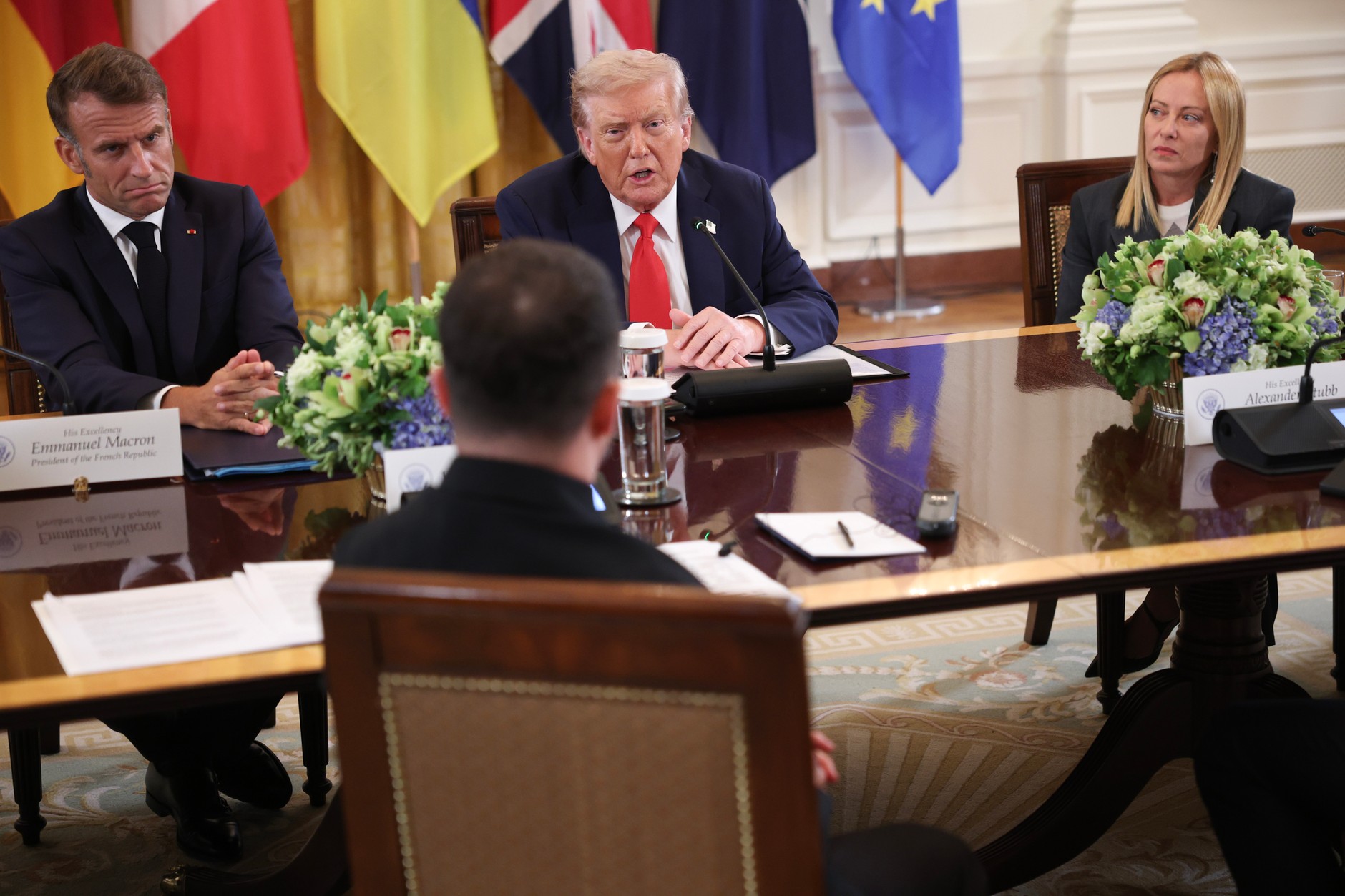
Giorgia Meloni during Donald Trump's meeting with Ukrainian President Volodymyr Zelensky and European leaders, Washington, August 18, 2025.Win McNamee/Getty Images/Getty Images
However, Giorgia Meloni cannot do this because the leftist half of the country is still enemy territory for her. Her patriotism is therefore only half patriotism. Which is still not much different from hackneyed old-school patriotism.
Meloni's foreign and domestic policies are inconsistent. Her constructive approach to foreign policy contrasts with domestic policy and the far-right, very simplistic and rather vague desire to return to a supposedly glorious past: no foreigners; father, mother, child(ren); morality, law and order.
However, instead of looking maliciously at Meloni's dilemma, EU countries should take her into account more than before. The fact that she has good contacts with the current American administration is not her least advantage.