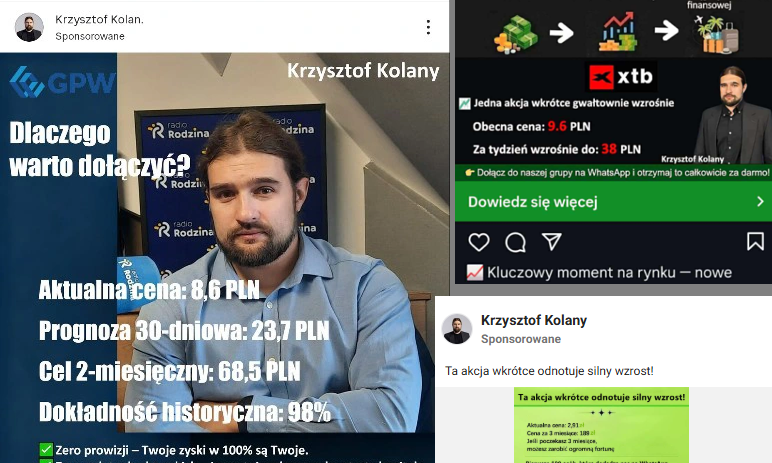
Fraudsters on Facebook started impersonating Bankier.pl and Krzysztof Kolany – the main analyst of our website. Advertisements published on social media encourage people to join WhatsApp groups where we share tips for sure profits. Be warned: this is a scam.
Fraudsters on social media have stopped trying to steal the image of the most famous Poles and are impersonating stock exchange experts – we warned less than two weeks ago. Now their targets have become Bankier.pl and the website's chief analyst Krzysztof Kolany, who “encourage” people to join free signal groups on WhatsApp in sponsored posts on Facebook and Instagram.
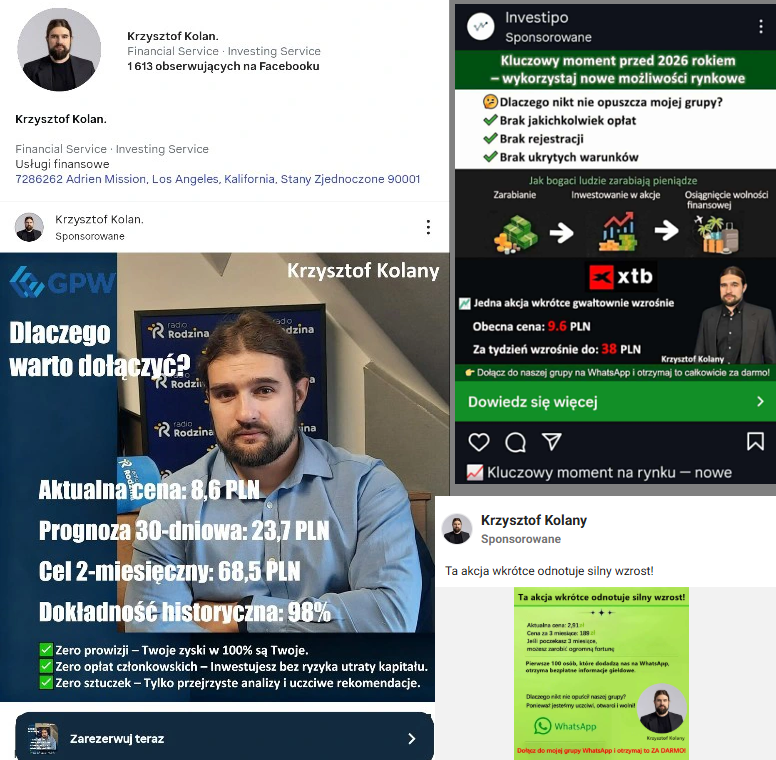
“The bottom has been reached! It's time to buy! Follow the new official banker.pl WhatsApp channel. This stock is expected to increase 300%. Join the community now to receive free information. Even if you are not sure yet, start planning ahead. Join the community to stay up to date with the latest news. Join the official Bankier.pl WhatsApp community now now,” reads one of the fraudulent ads published on Facebook.
As Bankier.pl, we warn you: this type of sponsored posts have nothing to do with our website or Krzysztof Kolany. We do not run signal groups on WhatsApp or anywhere else. We do not share investment advice on stocks or any other financial instruments.
Scammers are rampant on Facebook
As we described in the text “Fraudsters clone the president and stock exchange experts. Profits for Meta, losses for Poles”, advertisements leading to fake investment platforms and signal groups are no longer limited to stealing the image of widely known people, such as Rafał Brzoska, Robert Lewandowski or politicians and celebrities from the front pages of newspapers.
Sponsored posts on Facebook and Instagram are increasingly used by people associated with the Polish capital market. In recent weeks, their targets have included, among others: Piotr Kuczyński, chief analyst of Xelion, selected as the analyst of the year, Marcin Tuszkiewicz and Grzegorz Zalewski, market analyst from Dom Maklerski BOŚ.
Criminals also use the logos of well-known investment companies such as XTB or Beta ETF, and even impersonate the Warsaw Stock Exchange (which can also be seen in the screenshots of false advertisements attached to this article).
Meta says the number of reports is decreasing
“Using the image of public figures in a misleading way to deceive people is against our policies. We remove these types of ads and accounts when we detect them,” commented the Meta Press Office in response to our questions in early October.
The owner of Facebook and Instagram informed us that since March, its platforms have been using facial recognition technology to identify and remove advertisements that use the image of public figures for fraud. According to the company, the tool appears to be producing results.
“In the first half of 2025, the number of user reports of fraudulent celeb-bait ads decreased by 22% globally,” we learned from Meta. The company also intends to use artificial intelligence to detect and remove fake profiles on social media.
Your statistics, your life
Despite data from Meta showing a decline in identity theft, it is still a serious problem on its platforms, as evidenced by the cases described in this article. The list of people whose image is protected on Facebook and Instagram includes almost 500,000 people, the company informed us. However, this becomes a small number when compared to 3.48 billion monthly active users.
Cybersecurity expert Mateusz Chrobok does not spare words of criticism towards Mark Zuckerberg's company. He commented on this matter to an earlier text on fraudulent advertising in social media.
In one of his videos on YouTube, Chrobok directly called Meta “an accomplice in an organized criminal group”, explaining his position that the company earns money from advertisements published by criminals, while its response to reports of abuse is delayed.
– Throughout Meta's ad library, where researchers could get to who did what when and react, the data is delayed sometimes by a few days, sometimes by a week. And for attackers, this is enough. Meta makes their lives easier so that someone who analyzes this type of fraud will not be able to quickly detect them – commented Mateusz Chrobok.