“We were made to kneel on concrete for hours.” She sailed to Gaza, her story is chilling. “Welcome to Israel”


Journalists from Aktuality.sk: How did the Israeli army intervene?
They quickly boarded. First they used water cannons, then they got closer and soldiers with automatic weapons jumped onto our ship. They destroyed the cameras that were broadcasting live, and searched each of us to see if we had microphones, for example. However, we have already thrown our phones into the water.
We did not try to resist because our action was peaceful. There were about 15 military ships around us and they created a blockade. Their precision and technology were terrifyingly perfect.
After their release, many of the cruise participants expressed reactions to unpleasant or brutal treatment by the Israeli military. How were you treated?
Upon arrival in Ashdod, we were made to kneel for hours on the concrete in the sun, with our palms facing up. They shouted at us: “welcome to Israel, we will show you how to behave here.”
From what I saw, light-skinned people were only pushed, while darker-skinned people were held in painful positions.
In the detention center they did not give us food or water for the first 24 hours, they took away medicines from some and did not return them. And when the food finally arrived, it was spoiled, having been left in the sun for hours.
Has anyone shown you any human gestures?
There was no overt physical violence, but rather systematic psychological abuse and humiliation. Sometimes it happened that one of the guards promised help, e.g. water or mattresses. We waited for hours for it, but they never kept their promise.
However, this unpredictability is part of the system. It keeps you in suspense so that you lose track of time and don't know what to expect – being treated nicely or being shouted at.
The article continues below the video
At night they woke us up, moved us between cells, and mixed groups. Some slept on the ground, others shared mattresses with five people each. We were deliberately treated arbitrarily, not giving everyone the same conditions.
What made you join the flotilla heading to Gaza?
I could no longer watch what was happening, that people were dying, that no one was responsible for it, and that the international community was silent. I am irritated by the complicity of Western governments, including the Czech Republic, which maintains relations with Israel despite what is happening there.
I was aware of my privileges, such as a European passport, education, freedom of movement, and I asked myself what I could do with them: should I just sit at home and watch horrors on social media, or use my privileges and my own body for concrete action?
“A tough, one-sided position prevails”
When you talk about Czech complicity, how do you perceive the Czech Republic's attitude towards Israel and Palestine?
I'm disappointed, but not surprised. Czech politics has long been shifting to the right and is almost fascist. Public opinion often treats events such as October 7 in isolation from their historical context. If governments admitted responsibility for the current situation, they would also have to admit past failures, and that is difficult.
What is the Czech's complicity?
The Czech Republic allows arms exports and maintains trade relations with companies whose products are used in the war in the Gaza Strip. However, the state can intervene, for example through investment withdrawal or sanctions, as in the case of Russia. When trade is interrupted, pressure builds for the country to listen to international criticism.
You used the phrase that Czech politics is “almost fascist.” That's a pretty strong term, what do you mean by that?
When I look at the Holocaust – the genocide of the Jews committed by fascists – and today's expulsion of Palestinians, I see a similarity.
I also use this term to refer to those who, although they do not directly commit violence, are its accomplices. It's a strong word, but I think it reflects the degree of inhumanity and tolerance towards evil.
And now, after the elections, do you see room in Czech politics for a change of position?
It's hard to say. There are also different opinions, for example that what is happening is genocide, but it is difficult to say whether this is just pre-election rhetoric. Currently, a tough, one-sided position dominates.
“It was a moving and powerful experience”
Let's get back to the cruise – how did you prepare for it, both mentally and practically?
I talked a lot with people who have been dealing with this conflict for a long time – journalists, activists, and also Israeli opponents of the occupation. I was interested in what we can expect from the Israeli army and how to behave so as not to escalate the situation.
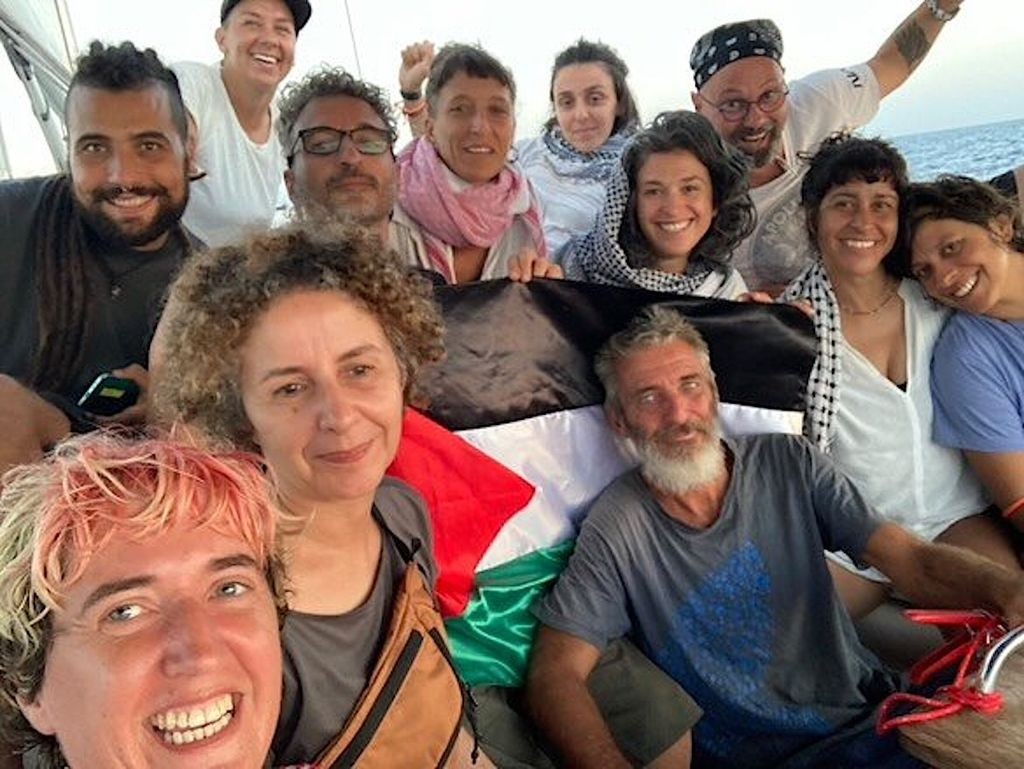
Czech activist with other flotilla participantsSarka Prikrylova / Aktuality.sk
We took practical preparations in Sicily, where we had several days of training – from legal issues, through model scenarios, to physical preparation. We studied the history of previous fleets, for example the Mavi Marmara in 2010. We talked about what non-violence means and how to behave. We also learned how to deal with stress and react in crisis situations.
What was a typical day like on the ship?
The crew consisted of people from different countries, most of whom did not know each other before. In a small space, communication and respect for boundaries are important to avoid conflicts. We also had divided responsibilities such as cooking, cleaning, and taking care of the toilets.
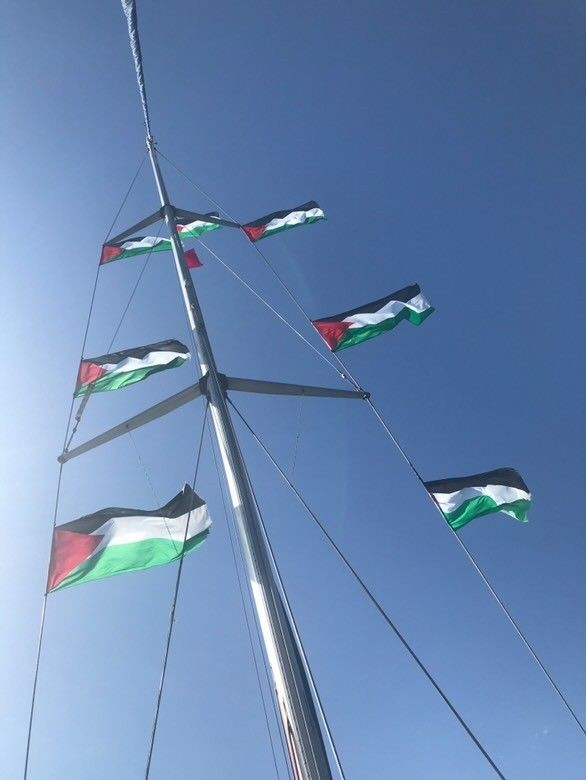
A photo from the ship on which the Czech activist was sailingSarka Prikrylova / Aktuality.sk
We were on guard duty every night as drones flew overhead constantly from the third day on. Emotions changed – laughter, crying, stress, but also a sense of community. Time passed quickly at sea, we were on the road for about 14 days.
When you returned to the Czech Republic, information appeared in the media that you refused to sign the deportation document.
First they gave me a document in Hebrew. Of course I didn't sign it – I won't sign something I don't understand. Later, I received a document in English stating that I was admitting to illegally entering Israel in exchange for immediate deportation.
I refused to sign this document – I did not come to Israel voluntarily, I was on my way to Gaza and was kidnapped. Some signed the document, others did not. But in the end it didn't matter. Israel organized deportations at its discretion and also deported those of us who did not sign anything.
What was the return to the Czech Republic like?
From Ashdod, where we were held, we were transported across the border to Jordan in armored cars. There we were picked up by the Jordanian ambassador, who handed us our passports and handed us over to the diplomatic representatives of our countries.
The Czech deputy ambassador was very helpful, he gave me water, an apple, and I could use his phone to contact my friend. He stayed with me until my flight.
Many of your critics complained that your trip home was paid for by Czech taxpayers.
The costs of deportation were not covered by the Czech Republic or its citizens, but by the Swiss delegation, as part of which I participated in the flotilla. Financial resources came from public fundraising, from which the ships were also purchased.
Only a few countries brought their citizens back to their homeland at their own expense, for example the Greek, Malaysian and Slovak governments.
How did Czech public opinion receive you after your return?
I had no idea what was going on in the country because I had no access to information. I, along with others, threw the phone into the sea. It was only when I contacted a friend that I learned that there were demonstrations in the Czech Republic and people were demanding my return.
My parents were waiting for me at the airport, but also complete strangers with banners saying “Chceme Sarku dom” (We want Sarku at home). It was a moving and powerful experience. Many conversations followed that helped me process the experience.
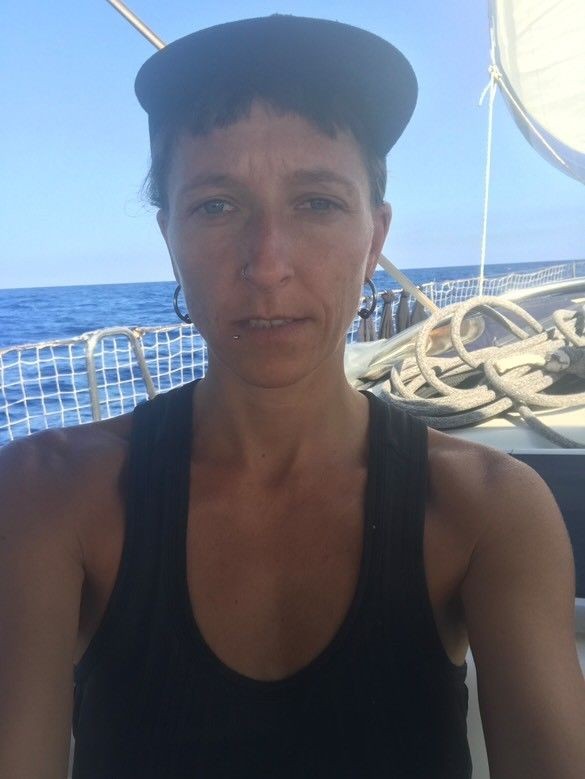
Sarka PrikrylovaSarka Prikrylova / Aktuality.sk
“Will someone ask the Palestinians what kind of world they want to live in?”
Were there any hateful reactions upon your return?
Yes, many. I received emails and messages, thousands of hateful comments, often from men. You could feel aggression, sexism, and Israeli propaganda patterns in them.
I see it as a mixture of real hatred and deliberate manipulation on the internet. I separate myself from it emotionally – I look at it from the perspective of sociology and psychology, which I like, as a manifestation of social frustration.
Some say the fleet was financed by Hamas. What do you think?
That's not true. These claims come from Israeli sources who accuse virtually everyone who has called what is happening in Gaza genocide. According to them, Hamas pays the UN, Amnesty International, the Red Cross, as well as famous personalities.
Our fleet was financed through public collections and transparent donations. Allegations of “ties with Hamas” are merely a tool to discredit those who speak about Gaza differently than official Israeli policy.
In the meantime, both sides of the conflict, with the help of US President Donald Trump, reached a truce. How do you rate him?
The situation in Gaza is at such a stage that I welcome anything that can stop this carnage here and now. Of course, it will take some time before the situation calms down.
Secondly, I do not agree with Trump's plan because it is just another form of colonialism. For Trump, this is a strategically and geopolitically advantageous place. Mossad, the Israeli intelligence service, has an incredible level of communication, which is why it is also admired in the Arab world.
Trum now wants to be seen as a savior. But for me it is colonialism based on oppression and domination.
So if you're talking about colonialism, a two-state solution isn't a solution for you?
(Shakes his head in disagreement.)
It follows that you consider the state of Israel to be a colonizer.
Definitely, one hundred percent. For me, the choice is always important, and the question is: will someone ask the Palestinians what kind of world they want to live in, what culture they want to create, what policies they want to pursue? Trump now intends to appoint some Western manager there who will make decisions for the people.
What will you take away from this experience?
A deep awareness of what freedom and solidarity mean. I saw how quickly a person can lose his rights, how quickly he can turn from a citizen into a prisoner. And at the same time, how much strength humanity has when people stick together – even in conditions where attempts are made to break them.