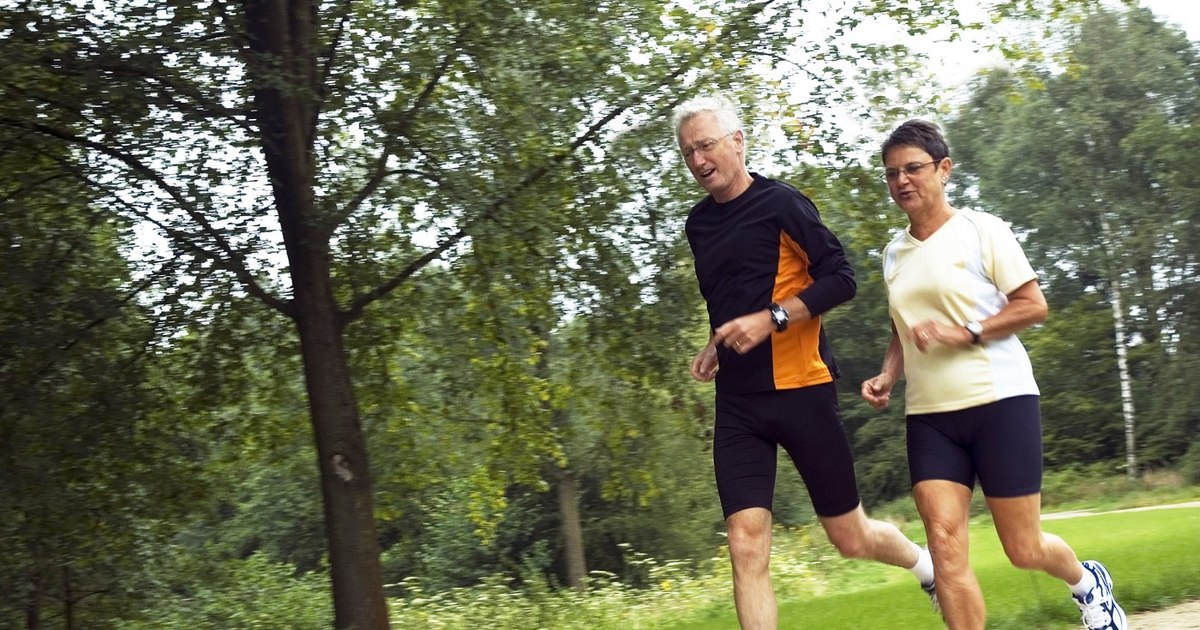
Jogging has an unfair reputation when it comes to knee health. However, recent studies show that things are not at all as most people think.
Photo credit: Shutterstock
A recent article in Women's Health debunks one of the most common beliefs about exercise and aging. The conclusion of the research? Your knees need movement.
Cherie Gruenfeld is 81 years old, a member of Ironman Hall of Fame and had his first marathon at 42. He retired from major competition at 78 after 14 world titles, but continues to compete in half-Ironman and other endurance races.
Rose Marie Savage, 72, took up jogging at 53. Since then, she has crossed the finish line in more than 100 races and has six marathons under her belt.
Mildred Baker, 79, recently completed her first half marathon and already has 24 races under her belt with the New York Road Runners.
All three run. All three have healthy knees. And all three counter one of the most persistent fears about running: the idea that the sport destroys your joints.
Where the myth comes from and why it persists
The idea that running affects the knees has its origins in older studies that fueled this perception for years. An analysis published in 1995 in “Journal of the American Academy of Orthopedic Surgeons” showed that about a third of serious runners suffer at least one injury a year, with the knee being among the most commonly involved areas.
A study published in 1996 in “Arthritis & Rheumatology” looked at the incidence of osteoarthritis (arthrosis) of the hip and knee in 81 former high-performance athletes compared to 977 women with no history of intense physical activity. The results showed that the former athletes more often showed signs of osteoarthritis – such as narrowing of the joint space or cartilage changes – visible on X-rays.
Such results helped to reinforce a perception that quickly spread and became fixed in the collective psyche: the almost automatic association between running and joint degradation. However, the presence of signs of osteoarthritis on X-rays does not automatically mean pain, functional limitation or significant joint problems, experts say. In addition, those studies could not clearly separate the effects of running from other factors common in performance sports, such as repetitive strain injury, overuse, or previous trauma.
From here to the well-known warning “stop running, you're ruining your knees” the step was small. Abigail Campbell, an orthopedic surgeon who specializes in sports surgery and director of the Center for Women's Sports Medicine at NYU Langone, says she runs into this fear all the time.
“I wish I could understand why so many people are convinced that running is bad for the knees. It's an outdated idea.” she explained to Women's Health.
Campbell says that she frequently meets elderly patients who have avoided running for decades, sometimes at the explicit recommendation of their doctors, for fear of damaging their joints.
The same confusion is observed by Lisa Mitro, physical therapist, jogging coach, specializing in the biomechanics of running, quoted by Women's Health: “There's so much conflicting advice, including from professionals. At some point, people just don't know what to believe.”
What recent science says
More recent data, however, seriously changes the perspective. A study published in 2024 in Sports Healthconducted on 3,804 marathon runners between the ages of 18 and 83, identified the real factors associated with the onset of knee arthritis: age, body mass index, previous injuries or surgeries, and family history. Running, as an activity itself, was not among these factors.
Similar conclusions appear in an analysis published in 2023 “Orthopedic Journal of Sports Medicine”which brought together several studies dedicated to the relationship between running and knee osteoarthritis. The result? Running is not associated with osteoarthritis-specific joint changes and, in certain contexts, may even have a protective effect, including knee pain.
Similar results appear in a study published in 2018 “Arthritis Care & Research”which followed nearly 2,700 participants over ten years, using X-rays, clinical assessments and physical activity level questionnaires. A history of recreational running is not associated with an increased risk of frequent knee pain or osteoarthritis, and runners may be less likely to develop these conditions than non-runners.
“The knee is a functional organ – bone and cartilage are living tissues. They respond to stress and adapt to how they are used. High-impact exercise, including running, stimulates the natural processes of maintenance and regeneration. When joints are overprotected and no longer stressed, their structures can weaken over time.”Abigail Campbell told Women's Health.
The real exceptions. When running really isn't indicated
Debunking this myth does not mean that running is suitable for absolutely everyone. Doctors clearly talk about situations where repeated impact becomes a real problem.
For example, in the case of people with joint prostheses – hip, knee or ankle – the recommendation remains, in general, that running should be avoided. “A knee replacement is like a performance car. You can use it heavily, but the wear and tear will show up faster.” adds Abigail Campbell. For this reason, low-impact activities such as cycling or swimming are considered safer long-term options for such people.
The situation is different with arthritis. Here, running is not medically prohibited and does not automatically accelerate the development of the condition, but it can cause discomfort. “Not because the reduced impact would protect the joints or because it would influence the progression of the disease. It is primarily a matter of individual tolerance,” says the doctor. The irony is that being sedentary—the solution many choose precisely for fear of making arthritis worse—actually worsens symptoms through stiffness, discomfort, and the potential for weight gain.
How to run without ruining your knees. Expert advice
“Sometimes I see people rushing and setting ambitious goals like a marathon, but it's important to have intermediate steps and enough time to adapt.” explains Lisa Mitro.
Mildred Baker is a good example of this. He started running at 77, gradually: first walking, then a combined walking-running program, followed by short runs. The half marathon was not an immediate goal, but a milestone achieved over time.
Running technique matters as much as distance. Lisa Mitro explains that a lot of knee pain doesn't come from running itself, but from the way people run. One of the common mistakes is stepping too long, when the foot ends up hitting the ground far in front of the body, thus increasing the pressure on the knee joint.
“Effective running requires a balanced posture: relaxed arm movement, head aligned with shoulders, no excessive forward or backward lean,” she explained.
Strength training, Abigail Campbell and Lisa Mitro argue in unison, is not optional, but an essential component. “Strength exercises contribute to stability, mobility and muscle control, elements that reduce the risk of injury and protect the knee from impact,” says Mitro.
For those returning to running after a long break or injury, experts recommend a simpler approach. “For beginners, it's often more helpful to run by time, not distance. This way, the pressure of the numbers goes away and the adjustment becomes easier, without worrying about pace or kilometers”says Lisa Mitro.
Pain or just discomfort?
“When you start running or increase your level of exertion, it's natural to feel some discomfort,” adds Lisa Mitro. Muscle soreness, stiffness or even a slight tenderness in the knees may occur as the body adapts to the sport.
However, the alarm signals are different. “If the pain persists after two or three runs, if you notice that the way you walk changes, or if you end up limping, it's time to see a specialist,” says Lisa Mitro. Quick intervention often makes the difference between a minor problem and one that can become more complicated.
In addition to training, recovery plays an essential role. Sleep, nutrition, stress management and rest days have a direct effect on how the body tolerates impact. Cherie Gruenfeld, at 81, consistently includes stretching exercises and recovery procedures in her routine. Mildred Baker emphasizes rest days and a simple, often overlooked principle: listening to your body.
“The three women who continue to run at these ages are proof of what becomes possible when fear is replaced with the right information and a program built for a real body, not preconceived ideas of what it means to grow old.”
Cherie Gruenfeld, with 14 world titles at 81, says: “There is no rule that says we have to stop running or slow down at a certain age. Find joy in using 100% of what you have today.”
The research is on the same side. Your body needs exercise. Your knees, unless there is a clear medical contraindication, need to run, not be kept from sports.