The government draft act prepared at the Ministry of Climate and Environment amending the Act on promoting the generation of electricity from offshore wind farms and certain other acts (apart from the “title” issue, it also refers to energy communities, which we describe in more detail in a separate article, as well as to areas of accelerated development of renewable energy sources and several other matters) saw the light of day in February this year, and work on it accelerated in the fall. After being submitted to the Sejm on September 26, the bill was adopted on October 9 during the third reading – 418 MPs voted for it, with 21 absent and the same number opposed. The document therefore gained wide support, going beyond the benches of the ruling coalition; from the largest opposition club, PiS, 176 people supported him. The situation repeated itself in the Senate. On October 14, the draft was adopted without amendments by the local climate and environment, national economy and innovation committees, and two days later the bill was approved by the entire chamber, composed of 86 senators, including all current opposition representatives.
In the industry and among commentators, parliamentary consent therefore raises hopes that there will be no subsequent presidential veto; Unlike onshore wind farms, offshore wind energy does not arouse such antagonizing emotions and there is much greater consensus around it. According to the Polish Wind Energy Association (PWEA), the voting results prove that offshore “is a Polish project, not a party project.” “We are glad that we managed to build a cross-party political agreement around offshore wind farms, because only stable regulations will allow investors to act with confidence and plan for the long term,” commented PWEA President Janusz Gajowiecki, who also recalled related investments in Polish industry and employees.
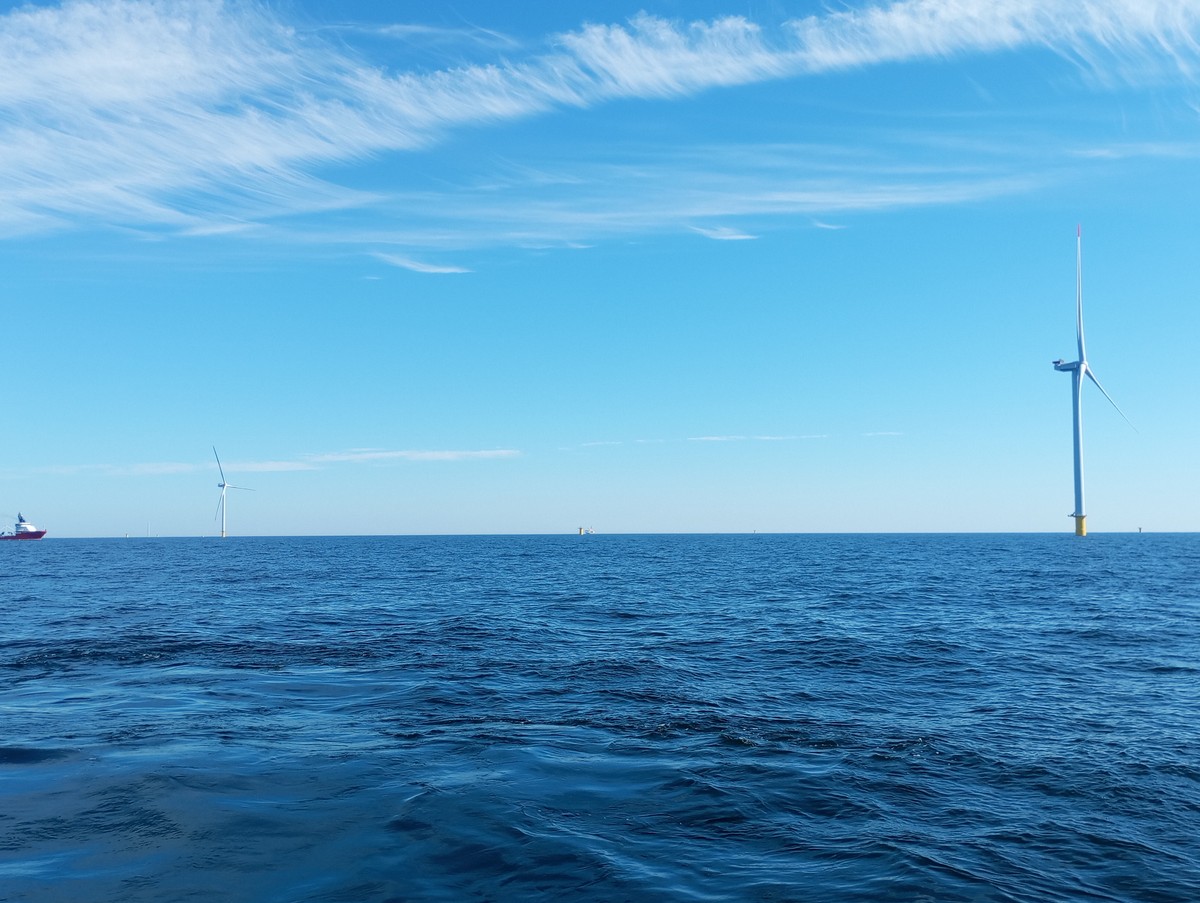
Read also: I saw the construction of the first Polish wind farm at sea. Baltic Power is impressive
Conditional prequalification
— We assess the adopted act positively – comments Dr. Oliwia Mróz-Malik, manager for the development of offshore wind energy at PWEA, for Business Insider Polska. – The provisions included in it are largely consistent with the proposals previously presented by our association. The most important thing is to clarify the auction issues – says the expert, adding that without the changes to be introduced by the document voted in parliament, the first auction for support for offshore wind farms, scheduled for December, could be at risk.
—Today, the offshore industry requires a friendly regulatory environment. If the auction did not take place due to the lack of the required three projects to take part in it, according to the current regulations, the next one would be in two years. This would be a very serious blow to the development schedule of offshore wind energy, and therefore also to the pace of introducing new capacity into the system and its balancing, a hit to supply chains, and, besides, an image tragedy for the entire energy transformation process – adds Dr. Mróz-Malik.
The solutions adopted in the Act, including the introduction of conditional prequalification, are intended to protect against such risk. — Today, only projects with an environmental decision may be allowed to participate in the auction. According to the new regulations, projects that are still in the decision-obtaining phase, or more precisely, in its final stages, will also be able to participate in the auction, provided that the decision should have already been obtained by the time of the auction. This is a seemingly small, but potentially significant change, explains the expert.
Our interlocutor also mentions changes in the verification of applications to participate in the auction, as well as certificates that authorize it. Currently, the president of the Energy Regulatory Office, responsible for organizing the auction, must verify applications one month before the deadline. After the act is adopted, it can do this right up to the moment of the auction. – To put it simply, investors will have more time to apply. Projects positively verified even at the last minute will be able to participate in the auction. This is a potential game changer, thanks to which the chances of a positive course of the December event significantly increase – says Dr. Mróz-Malik.
Another facilitation provided for by the Act, mentioned by our interlocutor, is the possibility of submitting in the auction projects located in areas that were awarded in location decisions from the first phase of offshore development. – However, it cannot be more than 200 MW in total – says the PWEA representative. Support in the second phase will therefore be available to the “leftovers” from the first phase.
Intervention auction
However, the most important provision of the Act is the one that allows for the so-called intervention auction. The mechanism is simple – if the December proceedings fail to select a winner, the Energy Regulatory Office will be able to organize another one in 2026, without waiting for 2027, which was assumed in the original schedule. – This is definitely a key provision which, in the event of failure, may save the second phase of offshore development, sending a clear signal that Poland still focuses on offshore wind energy. Even if something goes wrong now, at the end of the year, investors will be able to prepare better in a few months, explains Oliwia Mróz-Malik.
The remaining points in the act are largely of a technical nature, but they may facilitate the implementation of investments and later increase their profitability. This includes the right to sell energy already during the technological start-up of the farm, allowing for slight relocations of turbines or power stations, as well as the sharing of one station by several sources. — The act also extends the validity period of construction permits, introduces the definition of industrial personnel and regulates the principles of paying compensation for non-market redistribution, says Dr. Mróz-Malik.
He also mentions certain reservations about the adopted act. — It is a pity that two projects from the same area will not be able to participate in one auction, as was assumed in the draft act at an earlier stage. However, during the work in parliamentary committees, these provisions were deleted, which may potentially affect the competitiveness of the first auction, he says.
The act, contrary to the industry's demands, also states that support under contracts for difference obtained at auctions will be indexed annually not to the average annual inflation, but to the inflation target of the National Bank of Poland. — For investors, this isn't ideal; targets may differ from actual inflation, and costs in supply chains may increase further. There is no solution that would help to respond flexibly to this, increasing the valorization of contracts for difference – emphasizes Dr. Mróz-Malik.
“Regulations increase flexibility”
Despite these comments, the overall balance of the Act in the opinion of the expert and the association she represents remains positive. — As I said, we are focusing on auction regulations. In the future, it is also worth introducing simplifications in the procedure for amending the maritime development plan, as well as making it easier for investors to carry out preparatory work. Environmental procedures, especially geological ones, also need to be simplified, our interlocutor concludes.
We also received a comment on the adopted act from Ørsted, an investor who, together with PGE Baltica, is currently implementing the largest offshore wind farm project in the first phase, i.e. Baltica 2 (it is to be complemented by Baltica 3). Agata Staniewska-Bolesta, managing director of Ørsted Offshore Polska, spoke on behalf of the company.
“(…) we appreciate the unanimous adoption by the Senate of the amendment to the Offshore Act, because it actually enhances the predictability and security of investment implementation,” he says. Projects under development such as Baltica 2 are expected to benefit from the introduction of transparent rules for rotational work for their staff and rules for establishing safety zones. “These regulations increase flexibility for investors and contractors, improve planning and logistics at sea, and support safe, timely implementation. They are consistent with the government's priorities, which assume 5.9 GW of offshore capacity by 2030 and 18 GW by 2040 — providing a long-term investment perspective and stable development conditions also for the Polish supply chain,” adds Staniewska-Bolesta.