Although populists all over the world use the same slogans, it is impossible to find two identical politicians in this group. This is mainly due to the fact that populism – today recognized not only as a separate ideology, but also as a form of openly anti-democratic government – is very sensitive to the local context, political culture and the specificity of the political system.
Although the most important researchers of populism, Cas Mudde from the University of Florida and Jan-Werner Müller from Princeton, agree on the general conceptual framework, pointing out such features as acting on behalf of the people, hatred of elites (especially internationalized ones) and aversion to independent institutions, populists are nevertheless unequal. In different systems, their paths to authoritarian transformations are different.
For example, in presidential systems, as pointed out by prof. Adam Przeworski from New York University or the French historian Pierre Rosanvallon, it is easier to steal power because the president is often the head of government and a person identified by the electorate with power, as in the USA or Brazil. However, it is much more difficult to do so in Europe, where parliamentary systems dominate, heads of government have to somehow reach an agreement with presidentsand the latter do not always have a direct democratic mandate.
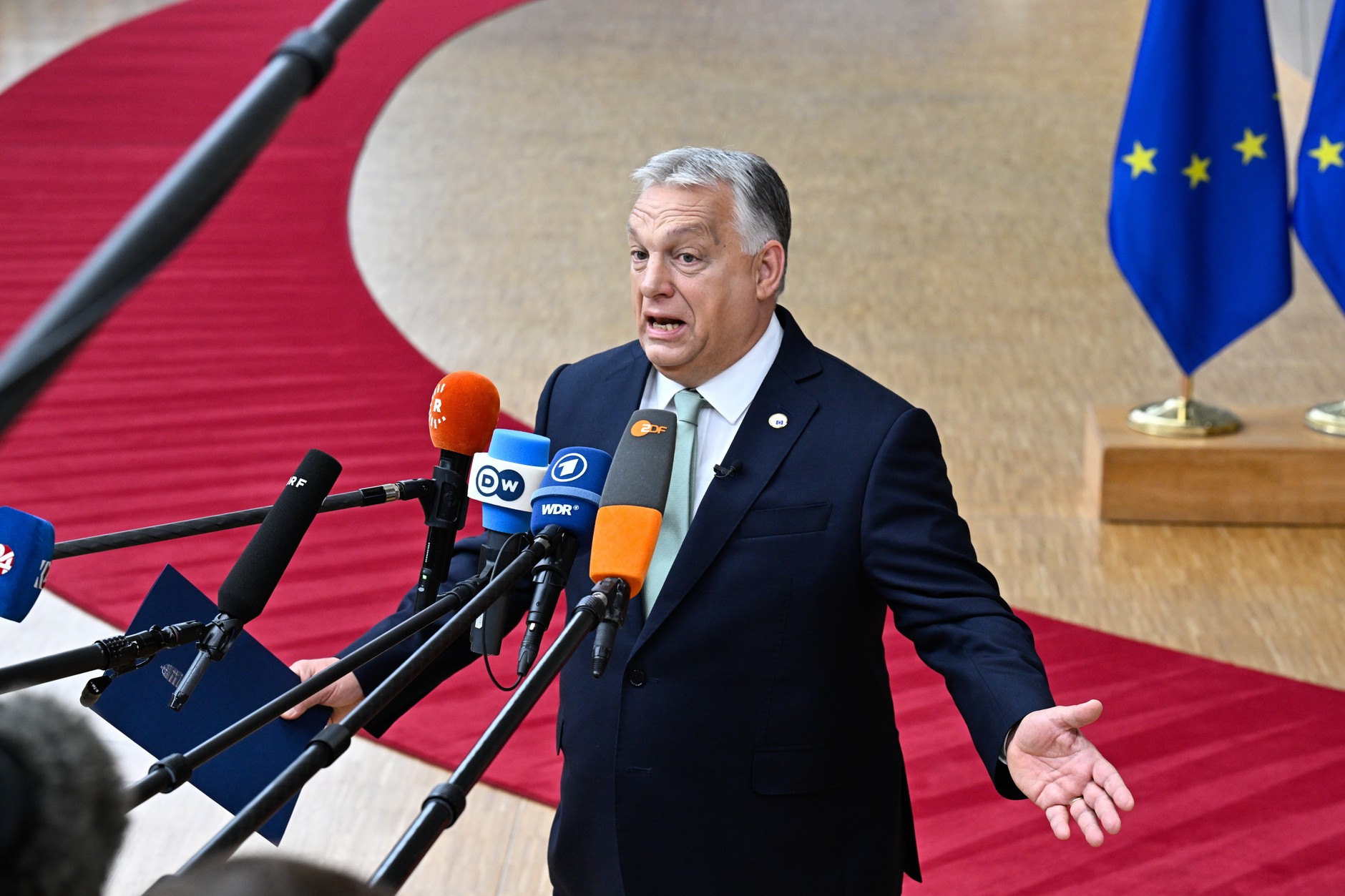
In addition, the governments themselves are often coalitions, which imposes some form of political transaction from the very beginning of their functioning. The parties are agreeing to divide their roles, although even this does not protect them from the risk of political collapse during the term. Therefore, Viktor Orbán, who has been ruling Hungary for 15 years, is the exception rather than the rule, at least in the European context. This can be seen in specific examples.
Viktor OrbánWiktor Dąbkowski / PAP
Nowhere else has a populist, anti-democratic government managed to change the rules of the game so much that its re-election is certain. Even in Poland – after all, the United Right ruled with a stable majority for eight years, always having a favorable president on its side, yet it did not destroy the remnants of the constitutional order and, above all, the independence of electoral institutions.
Babisz will not become Orbán
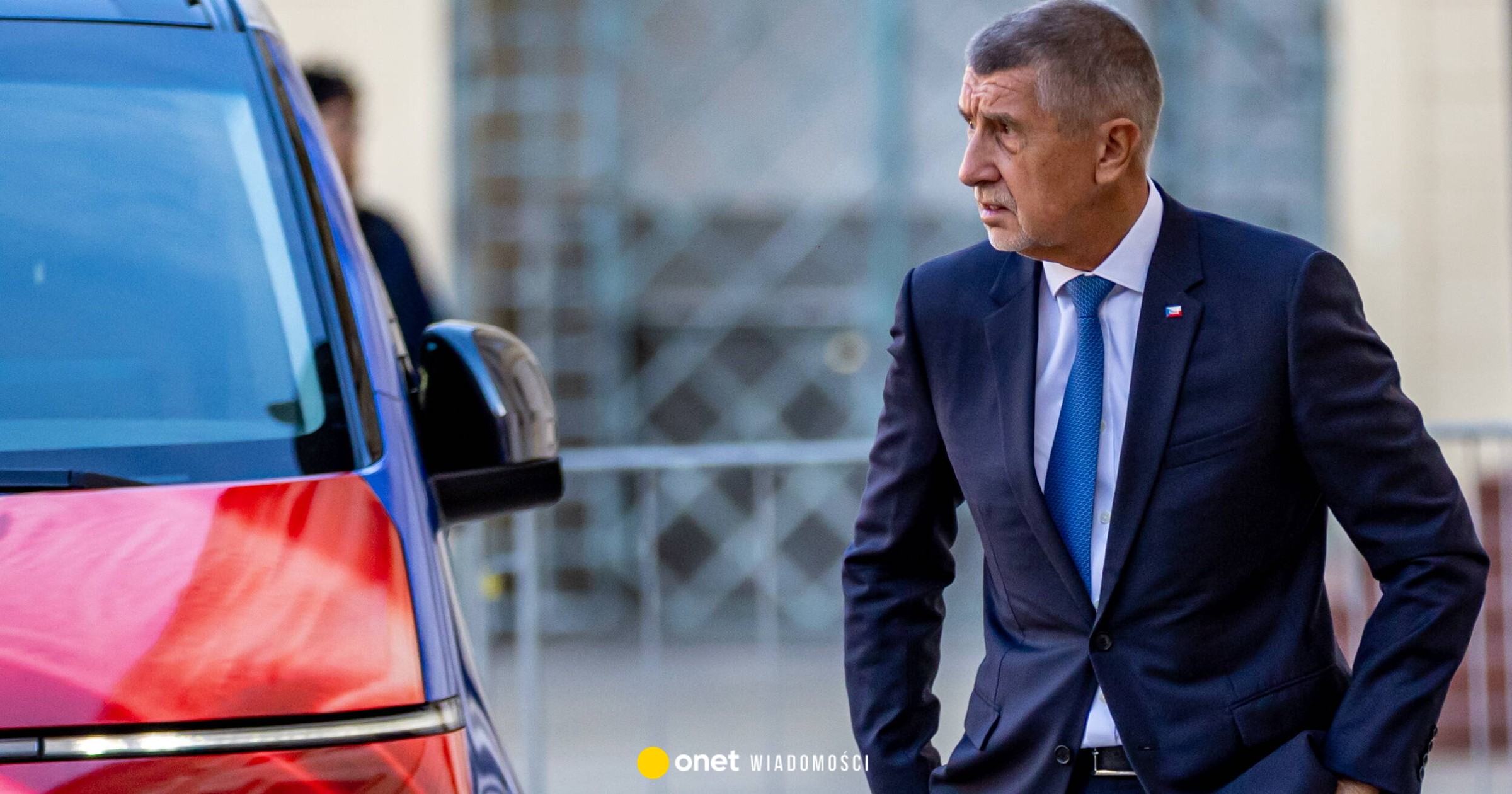
This methodological introduction is necessary to understand well what really happened in the Czech Republic on October 4 and 5, when 200 members of the Chamber of Deputies were elected. As expected, the populist ANO party, led by ex-prime minister and scandalist Andrej Babisz, won the vote, winning 34.5 percent. votes and 80 seats. In second place was the joint list of parties forming the outgoing coalition of Prime Minister Petro Fiala, or rather three-quarters of this coalition. The Christian Democrats, liberals and democrats, running together, obtained 23 percent. support, which translated into 52 seats, as many as 19 fewer than in the previous term. Third place was taken by the last element of the former coalition – local government officials and independent politicians associated in the STAN formation; they got 11 percent votes, i.e. 22 seats.
For now, let's put a full stop here. We will talk about the parties that took the remaining seats – especially since they are key to the possible coalition that Babisz must form to rule. However, the first three places say almost everything not only about the state of Czech democracy, but also about what European politics looks like today and what these elections mean for the EU.
The analysis of the Czech elections should begin by emphasizing that Babisz is not Orbán and will not become Orbán. He does not have a majority to rule on his own, and in the Czech system his counterweight will be the president, a former NATO general and a traditional Euro-Atlanticist of a bygone era, Petr Pavel. Although his constitutional competences are much smaller than those of, for example, the President of Poland, he is still responsible for nominations in courts and tribunals, the possibility of dissolving the Parliament, and especially the appointment of the Prime Minister.
Moreover, Pavel and Babisz are radically different politicians – both in terms of governing style and ideological orientation. This is good news for all those concerned about the fate of Czech democracy. With such a division of positions, the local system will not change as quickly as it happened in Turkey, Hungary or recently in the USA.
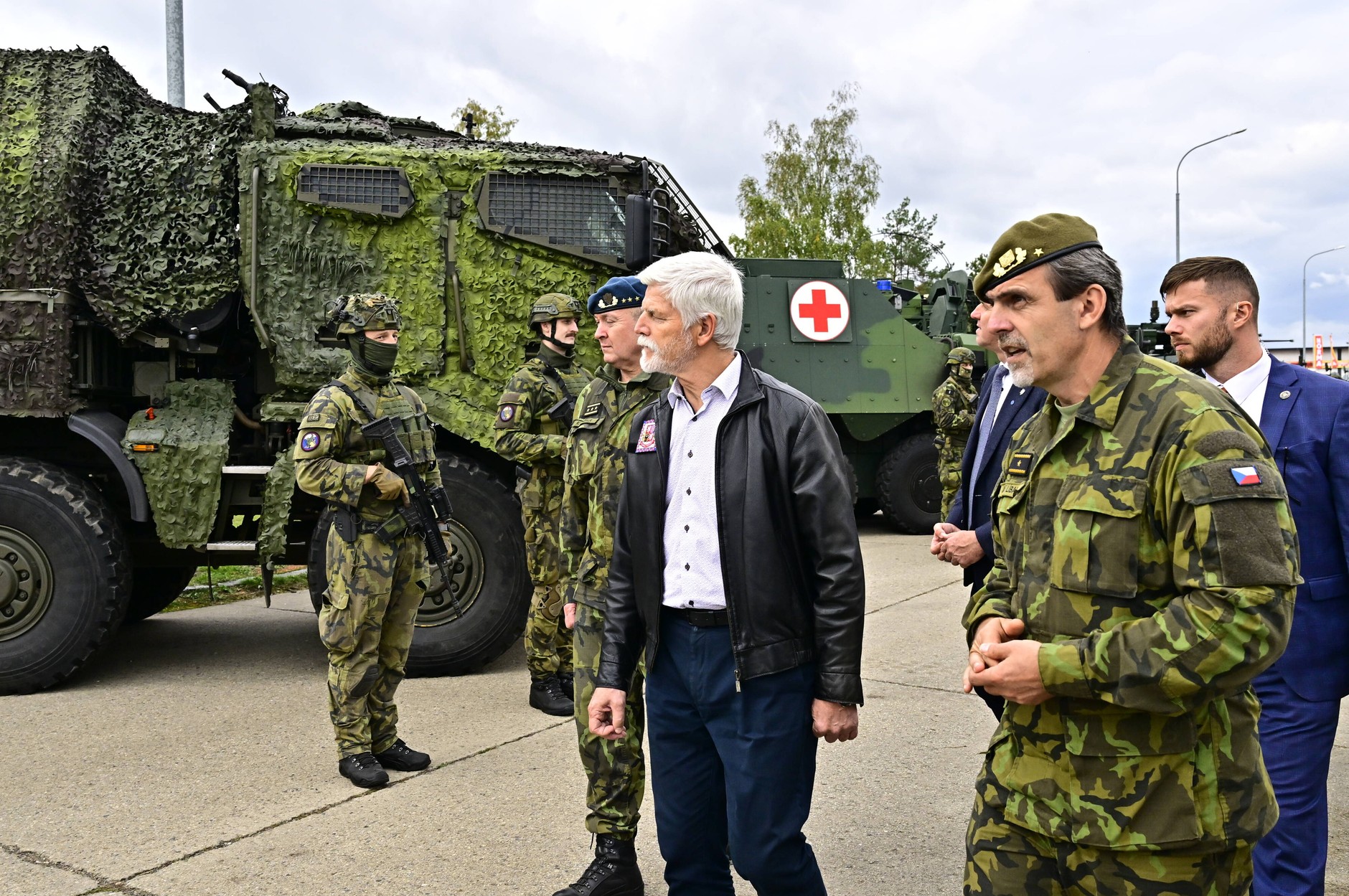
Czech President Petr Pavel (center) visits the 4th Rapid Reaction Brigade in Žatec, Czech Republic (October 15, 2025)Ondrej Hajek / PAP
Babisz is also not a copy of Orbán in terms of foreign or social policy, even if in July 2023 he participated in Vienna in the founding conference of Patriots for Europe, the far-right faction in the European Parliament created by the Hungarian prime minister. He remains skeptical about Prague's strong commitment to helping Ukraine, sometimes repeating Kremlin phrases that “it's not our war” and that “peace is the most important thing”, but he is not a pro-Russian politician – like Hungary or the head of the Slovak government, Robert Fico. He will not visit Moscow, also because he does not have to, because his country does not depend on Russian raw materials.
Before the elections, there was speculation in the mainstream European press that the government led by ANO would end the program of coordinated purchases of ammunition standardized within NATO and transferring it to Ukrainians, initiated by Fiala in early 2024 – but this is not certain either. It must be remembered that even Fico, who sympathizes with the Kremlin, still provides ammunition to Ukraine, but commercially. It is very likely that Babisz will decide to make a similar move.
Teflon populist
However, not Kiev, but the European Union will have a big problem with Babisz's prime ministership, because such a head of government is another headache in the decision-making process at EU summits. Although Babisz is not a pro-Russian politician, he can certainly be considered a Eurosceptic, who will not hesitate to use the veto at European Council meetings.
And this is where serious problems begin, because after the “summer of humiliation”, raising the white flag against Trump during the customs agreement and the complete lack of agency in the crises in the Middle East, the Community cannot afford further image failures or the suspension of internal reforms.
For years, the most important initiatives have been blocked by Orbán, who has to be repeatedly bribed into agreeing to sanctions against Russian oligarchs or the delivery of humanitarian aid to Ukrainian society. At the recent EU summit in Copenhagen, another, unknown attempt was made to circumvent this mechanism. It ended in failure. However, as Nicholas Vinocur, the platform's main commentator on foreign affairs, rightly noted in the European edition of Politico, it is not only the fault of the Hungarians.
In fact, everyone wants to stop the veto in the EU, even Friedrich Merz or Emmanuel Macron, each for their own particular reasons. Babisz, a politician who is deeply skeptical about, for example, the Green Deal, will certainly not hesitate to use the veto when it is to his advantage.
Another thread worth paying attention to is the fact that Babisz turned out to be another Teflon populist. Common knowledge about scandals involving him, including financial ones, did not harm his campaign in the slightest. A politician who had already served as prime minister and who, as Alberto Alemanno, a professor of law at the European business school HEC Paris, recalled on social media, had been accused of financial embezzlement since 2008, did not have to worry about his public image at all.
So the Bulgarian political scientist Ivan Krastev is right, who in an essay for “Prospect Magazine” proved that changes to the rules in today's politics are not completely normalized, but even desirable. Politics is no longer the art of what is real, but of what is necessary. Crossing unwritten normative boundaries falls into this category. Therefore, Babisz could completely ignore the European Commission's accusation of a conflict of interest against him when he was previously prime minister, and from the backseat he managed the trust fund that administered his Agrofert holding, one of the most important players in the agricultural fertilizer market in this part of the world. The Czech Ministry of Agriculture even ordered Babiš to return EUR 200 million in EU subsidies, to which the head of the ANO party simply replied that he would not do it.
Theoretically, due to this scandal, Petr Pavel could refuse to swear Babis in as prime minister. The problem is that such a solution would be a disaster for the democratic process and the credibility of Czech institutions. Let us imagine a situation in which a party wins the elections decisively, and its legitimacy to govern is more than one third of the votes, which is quite a lot (with a turnout of almost 70%). The head of this party has every right to run for the position of prime minister. If the president blocks it, it will not only increase the frustration of already angry anti-system ANO voters, but will also fuel speculation that the constitution and state institutions are being used to persecute political opponents.
However, it is not so clear – some constitutionalists say that Pavel could block Babisz, others say that he absolutely could not. If there was a legalistic conflict, JD Vance could calmly come to Prague and repeat his February speech from the Munich Security Conference about how undemocratic Europe is because it does not listen to its voters. It doesn't matter if he's right or wrong – and he's not. What is important is that the spirit of the times is on the side of people like him and Babisz.
Weekly Review
Reforms are needed like oxygen
However, there is also positive news from the Vltava. First of all, it is important that the Stačilo! formation, composed of communists and socialists openly supporting Putin's Russia, did not cross the electoral threshold. In addition, SPD, an extreme right-wing party that is strongly anti-EU and anti-immigrant, also performed below expectations, obtaining 7.78 percent. support, which resulted in 15 seats. Not much, considering that pre-election polls gave them even 12 percent. all votes.
It is with the SPD and the AUTO party acting in defense of drivers (6.8% of votes, 13 seats) that Babisz will put together an unstable coalition, susceptible to internal shocks. These will not be very effective governments, because the extremists will gain a small but decisive vote on many reforms, e.g. loosening fiscal discipline, a broader package of social benefits or limiting support for refugees from Ukraine, of whom per capita the Czechs accepted even more than the Poles.
Nothing says more about the state of Czech politics than a map of the results in individual constituencies. It is actually all blue, symbolizing ANO's triumph. Only three districts in Prague and two around Brno are lit green, in the colors of Fiala's coalition. It is difficult to find a better illustration of the current political division, not only in Europe. Rich, liberal, densely populated metropolitan areas believe liberals and progressives, and the rest of the country follows the populist voice. The result is more or less a draw.
This was also the case in the Czech Republic, where the former coalition lost to Babiš by only six seats, 3%. the entire chamber. In such conditions, elections increasingly resemble a coin flip, and it is difficult to talk about real representation and social legitimacy. The electorates are divided, the scene is fragmented, and in such conditions it is not easy to achieve serious reforms, which European democracies need like oxygen. Unfortunately, at the moment only right-wing ideologists are proposing bold changes. Unfortunately, these changes do not lead to the improvement of democracy, but rather to its significant limitation, and in extreme cases, as currently in the USA, to its annihilation.