It is too early for Viktor Orbán to declare himself the winner. Hungary and the US are at odds over the lifting of energy sanctions


Just hours after visiting the White House, the government in Budapest rushed to announce a major victory: “indefinite” relief from US sanctions on Russian oil and gas imports. The message was meant to reassure voters ahead of next year's parliamentary elections and strengthen Viktor Orbán in his sixteenth year in office.
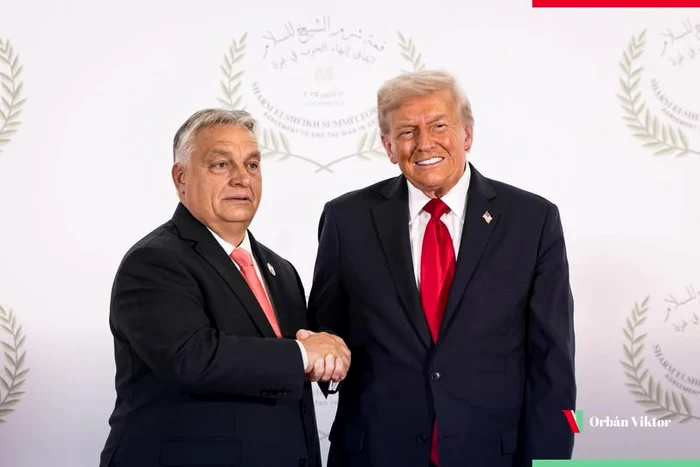
Viktor Orban and Donald Trump/PHOTO: Facebook
But behind the triumphalist declarations, the picture is much less clear. Washington and Budapest offer conflicting versions of the so-called “agreement”, which, in fact, exists only at the level of a verbal discussion between Orbán and Donald Trump, notes The Guardian. And the American administration avoids giving the Hungarian prime minister full support, at a time when the risk of a mobilization of the Hungarian opposition is becoming more and more real.
“Orbán hopes words will be enough to keep him afloat” says a diplomatic source in Washington. At the same time, Republicans close to Trump are becoming increasingly skeptical that the Budapest leader can retain power in the April election.
The dispute centers on the key question: Is it a limited one-year term or a permanent exemption from sanctions imposed on Russian energy giants Rosneft and Lukoil? Companies that continue to supply Hungary and Slovakia, to the outrage of other EU states.
No legislative action has been taken to formalize such an agreement
Budapest insists Trump has guaranteed it an unlimited exemption. The American administration claims the opposite: Hungary would have only received a temporary suspension, valid for a single year. Moreover, State Department and Congressional sources make it clear that no legislative action has been taken to formalize such an agreement.
“All we know is that there is a one-year delay. We should get a formal announcement from Congress, but we have nothing. Orbán's supporters will exaggerate the importance of these signals, whether we are talking about energy or weapons.”explains a congressional adviser.
The State Department points out that no official notification of the sanctions relief has been sent. Negotiations are ongoing, and the result could simply be refraining from applying secondary sanctions – an ambiguous formula, specific, the interlocutors of The Guardian note, to the agreements preferred by the Trump administration.
In Congress, Republicans view Orbán's close relationship with Moscow with mistrust. “Orbán remains very close to Putin and does not help Zelenski”says the same adviser.
In other words, the partnership that Budapest presents as already a success is far from stable. And the public spat between Washington and the Hungarian government shows how fragile the political calculus that Orbán is trying to rebuild his authority really is.