Beer like a Big Mac index? For the national average, we can buy over a thousand more beers than 20 years ago

2025-10-18 07:12, updated 2025-10-18 11:36
publication
2025-10-18 07:12
update
2025-10-18 11:36
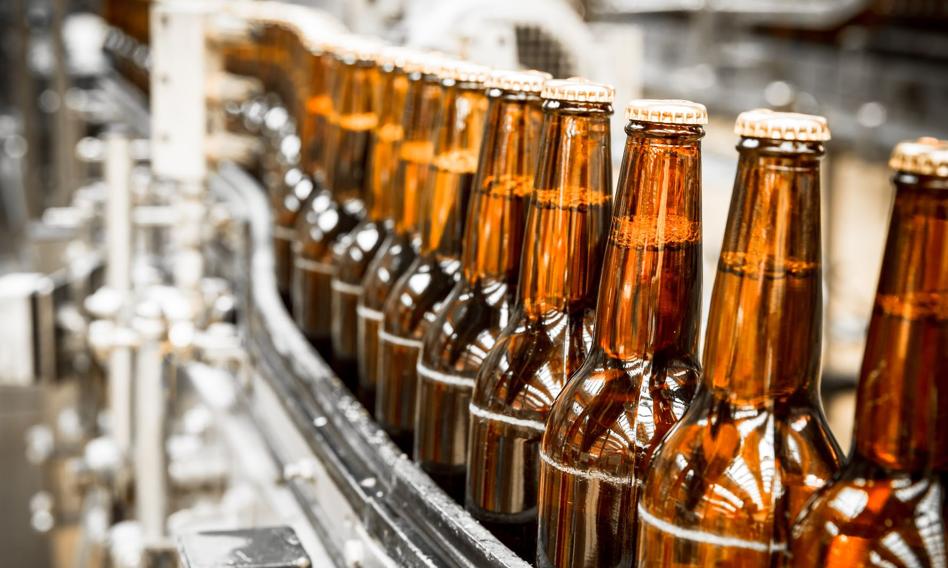
Over 2.1 thousand beers or 313 wines or nearly 250 bottles of vodka, according to Central Statistical Office data, an average Pole could buy for the average monthly salary in 2024. 20 years ago, we could buy over a thousand fewer beers. According to the WHO, in terms of alcohol affordability, Poland is in the middle of Europe.
According to the study of the National Center for Addiction Prevention, prepared on the basis of data from the Central Statistical Office, in 2024, for the average monthly salary, an average Pole could buy: 2,103 half-liter bottles of light beer (an increase of 13 percentage points compared to 2023) or 313 bottles (0.75 l) of white grape wine (an increase of 12 percentage points) or 238 half-liter bottles of vodka (an increase of 7 percentage points).
As average earnings rise faster than alcohol prices, it becomes more accessible. For comparison, in 2002 the average monthly salary could buy 796 bottles of beer, 231 bottles of wine and 90 bottles of vodka. 20 years ago, in 2005, it was: 909 beers, 278 bottles of wine or 121 vodka. 10 years ago, in 2015: 1,388 beers, 402 bottles of wine or 156 vodka.
When it comes to comparing data from 2002 and 2024, last year the average monthly salary could buy 1,307 more beers (an increase of over 160%) and 148 more bottles of vodka (an increase of over 160%). A much smaller increase concerns wine, because in 2024 it was possible to buy 82 bottles more per month than in 2002 (an increase of 35%).
During this period, the average gross salary increased from PLN 2.1 thousand. PLN in 2002 to 8.1 thousand PLN in 2024
According to the World Health Organization (WHO), pricing policy is one of the most effective tools for reducing harmful alcohol consumption, and in terms of alcohol affordability, Poland is in the middle of the pack of European countries. In this year's report (data for 2022), the organization analyzed the economic availability of alcohol in 2022, measured by the number of bottles that can be purchased for the annual household income per capita. According to WHO, in Poland in 2022 the availability of alcohol amounted to: 21.1 thousand. beer bottles (0.33 l), 1.9 thousand bottles of wine (0.75 l) and 1,028 bottles of strong alcohol (0.75 l).
Compared to other European countries, the highest availability of beer is in Germany (42,000 bottles), Spain (31,000 bottles) and the Czech Republic (30,000 bottles). The lowest availability of beer is in: Croatia (1.3 thousand bottles), Kyrgyzstan (2.1 thousand bottles) and Uzbekistan (3.4 thousand bottles).
The highest availability of wine is in: Spain (22,000 bottles), Italy (14,000) and Germany (10,000). At the opposite extreme are: Croatia (220 bottles), Uzbekistan (418 bottles) and Kyrgyzstan (434 bottles).
The highest availability of vodka and other strong alcohols is in: Germany (2.6 thousand bottles), Italy (2 thousand) and Spain (2.1 thousand bottles). The lowest availability is in: Croatia (159 bottles), Kyrgyzstan (232) and Turkey (287 bottles).
On October 10, a draft amendment to several acts prepared by the Ministry of Health was submitted for consultation, providing for the addition of gas stations to the list of places prohibited from selling alcohol. “The comparison of the 24-hour operation of gas stations with the basic function of these places, which is to supply vehicle drivers with fuel, clearly indicates that the possibility of purchasing alcoholic beverages there is not beneficial from the point of view of public health and may lead to risky purchase and consumption,” the ministry argues in its justification. (PAP)
jra/ mmu/ mhr/