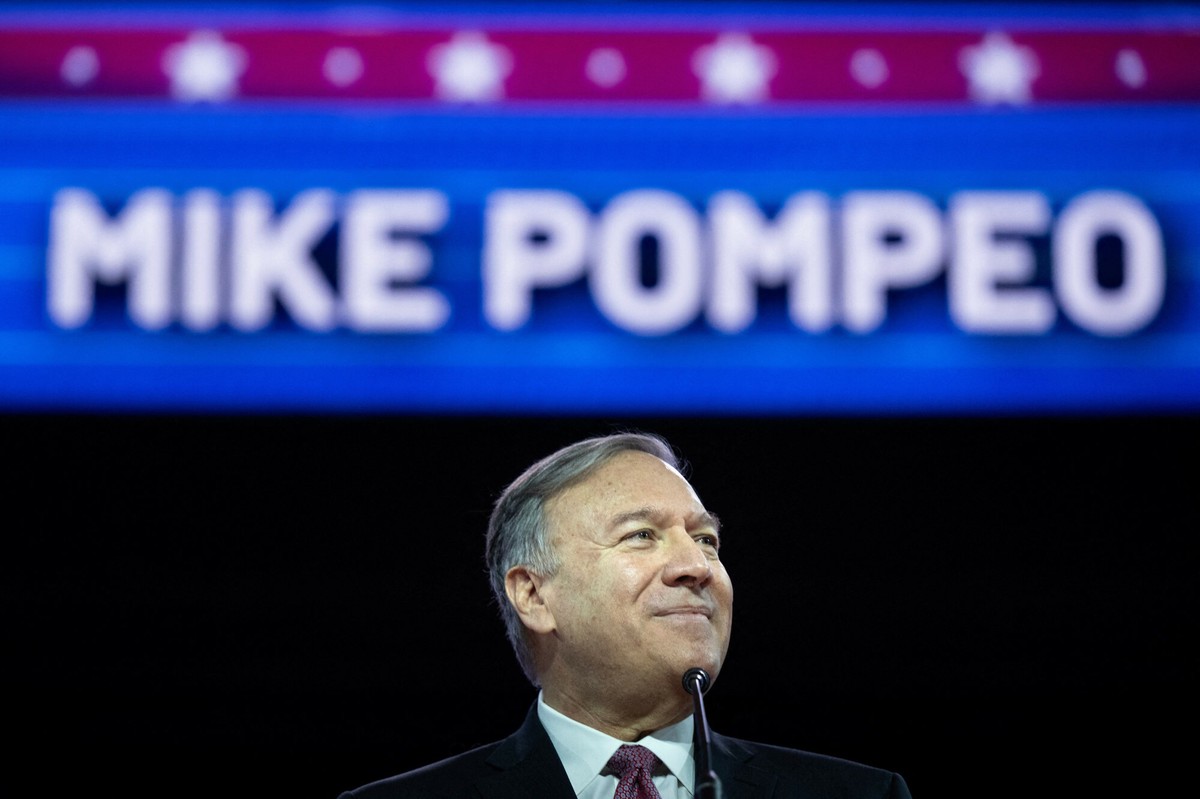
In the text published in the British Journal Mike Pompeo positively assesses Donald Trump's last diplomatic offensive in the form of a series of conversations with the presidents of Russia and Ukraine and with European leaders. According to the former head of the CIA, the purpose of these activities is to build a coalition that will secure the future of Ukraine and weaken Moscow's position. Pompeo combines this with pressure on NATO European allies to significantly increase defense expenses. He emphasizes that real financial declarations are more effective than “diplomatic courtesy” that do not change the Kremlin's calculation.
In the article at the Financial Times, the former head of American diplomacy warns that the vision of “Peace”, forced by Moscow, assuming the Kiev devotion to some of the Donetsk and Lugansk Districts would be a strategic disaster. Ukraine would lose an industrial heart and an important defense belt, for which she paid with thousands of lives.
More importantly, the rewarding of Putin's violence would give a signal to other authoritarian leaders that the force change of borders pays off. There is a warning in the text that the Western approval for Russian prey could also be read in Beijing as an encouragement to aggression on Taiwan.
Lesson from 1994
The author refers to the Budapest Memorandum when Ukraine gave up the nuclear arsenal in exchange for guarantees of its sovereignty. “Beautiful words are not synonymous with deeds,” he indicates, recalling Russian invasions from 2014 and 2022. In his opinion, the declarative safety guarantees will not stop the Kremlin.
Warranties that “teeth”
The condition for any sensible agreement are – according to Mike Pompeo – specific and verifiable mechanisms of protection of Ukraine. The former Secretary of State USA proposes deployed European troops at the borders of Ukraine and the “iron” commitment of the United States to support them. At the same time, he strongly rejects the idea that Russia has de facto veto's right to Kiev's future security systems. He considers such “security dependent on Moscow” as contrary to the logic of deterrence and proof of the Kremlin's bad faith.
Difficult compromises, but not surrender
The author does not idealize the situation: the war got stuck, the Ukrainian society is exhausted, and President Wołodymyr Zelnski faces the choice between further suffering and “imperfect solutions”. At the same time, he reserves that there is an impassable border – Ukraine cannot be forced to recognize any Russian territorial claims.
Risk of “bad contract”
Mike Pompeo warns that the agreement that would leave Russia real achievements without adequate deterrence would be only a pause between conflicts. Paraphrasing Churchill, he compares concessions to the dictator to “feeding a crocodile in the hope that he will eat us at the end.”