Transalpina for cyclists, the ghost track turned into a strange tourist attraction, without cyclists


Two villages hidden in the mountains with a combined population of less than 100 are linked by a bike path that would challenge even trained cyclists. For two years, the highest track in western Romania has been used as a road and has been awestruck by travelers.
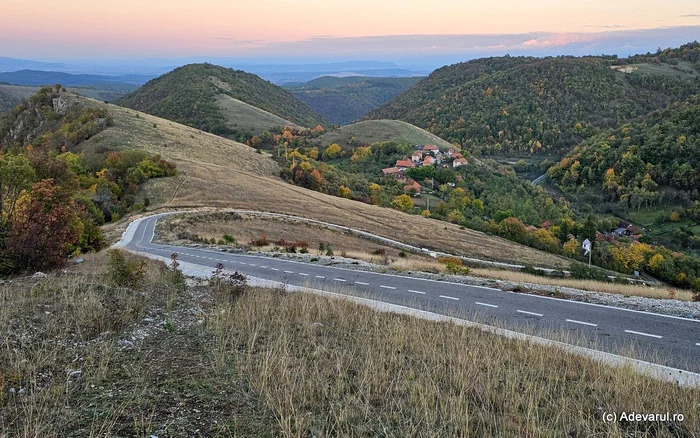
The bike path in the Poiana Ruscă Mountains. Photo: Daniel Guță
Less than ten families live in the village of Ulm in Hunedoara, one of the smallest towns in Romania. The difficult relief of the Poiana Ruscă Mountains, the little fertile land and the harsh climate made it difficult, over time, for the development of the settlement in the Forest Land.
Thus, the locals say, the village of Ulm has always been one of the smallest in the area, with no more than 20 households. The 30 houses and annexes in the village, together with the church, are crammed on the slightly gentler slopes of a hill hidden in the valley of the Zlasti river, a sign that Ulm was in the past a place of refuge rather than one conducive to ordinary life.
The settlement is surrounded by higher and steep ridges, some wooded, others with meadows and cliffs that retain traces of old stone quarries and iron mines.
For almost two years, the silence of the mountain village, usually broken only by the long echoes of barking dogs, is disturbed from time to time by tourists who come to see the new attraction in the area.
The bike lane, sought after by drivers
At the end of the village of Ulm, to the edge of Cerbăl, the first bicycle track in the Forest Land was built in the period 2023 – 2024.
The cycle path is about 2.5 kilometers long and climbs steeply from the church in Ulm to the church on the edge of the village of Cerbăl, located on another ridge, at about 900 meters above sea level. The investment was estimated at 1.4 million lei, from funds accessed by the Town Hall of Cerbăl commune through the National Recovery and Resilience Program, which finances projects for the development of bicycle paths in rural areas as well.
Due to the steepness of the slope, the ascent by bicycle on the part at the end of the village of Ulm is almost impossible for untrained travelers, and further the route is specific to cyclists specialized in “climbing”.
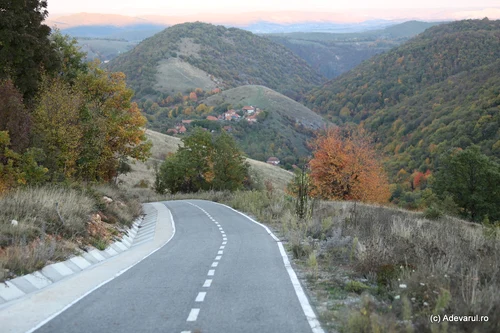
Image 1/14:
Transalpine cyclists from the Forest Land, Photo Daniel Guță, Truth (38) JPG
“Those who come to see the cycle path arrive here by car and go up or down it by car. It is, in fact, a road, a shortcut to Cerbăl, so that we don't have to detour on the main road from the Zlaști valley, which is also quite difficult to climb. In two years, I have not seen cyclists go up here so far”says a cattle herder from the edge of the village.
The “Bicyclists' Transalpina” was the first bicycle path of the Cerbăl commune, with eight villages and less than 400 inhabitants. The villages of Cerbăl and Ulm are located 15-20 kilometers from Hunedoara, so the investment in such a track could be useful for the residents of Hunedoara or for tourists who want to go on a bicycle trip, on the Zlaști valley, towards the Forest Land, the locals believe.
Autumn attraction in the Forest Land
In addition, the 2-3 kilometer road that goes up from Valea Zlaștiului to the village of Ulm was recently asphalted, so the settlement, which was difficult to access in the past, has become more lively.
The “Bicyclists' Transalpina”, which does not appear as a road on GPS maps, is currently traversed by a few cars a day, but those who reach its route, at the heights, enjoy a spectacular panorama. The forests are decorated with the colors of autumn, and the hills with the small villages of the forest dwellers. In the distance you can see Hunedoara and the ridges of the Retezat and Parâng mountains.
“Bicyclists' Transalpina” remained the only completed mountain track in the Forest Land. Another track entered the construction site at the edge of the village of Vadu Dobrii (Bunila commune), located about 60 kilometers from Hunedoara and inhabited by several families.
Vadu Dobrii is located at over 1,000 meters above sea level, in the Poiana Ruscă Mountains, and is accessible by forest roads. In a similar situation is the village of Batrâna, with about 50 inhabitants, located on another peak of the Poiana Ruscă Mountains, 900 – 1,000 meters away.
The isolated commune in the Forest Land has, in turn, accessed funds for the construction of a bicycle path, to the astonishment of the elderly families who live here. Budget restrictions have halted the momentum of new runway construction.
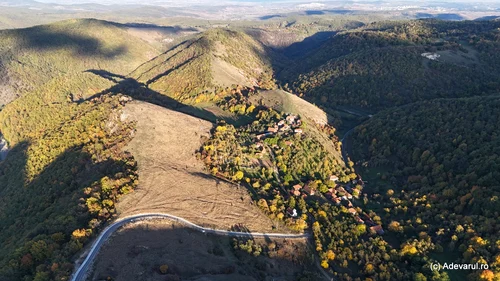
Image 1/19:
Transalpine cyclists from the Forest Land, Photo Daniel Guță, Truth (18) JPG
The local authorities in the three municipalities claimed that the PNRR projects represented an opportunity to attract European funds for road infrastructure, which they could not access for the construction of roads.