Romanians whose homes were destroyed or damaged as a result of the explosion in Rahova can benefit from material and moral compensation, emergency aid and free legal support.
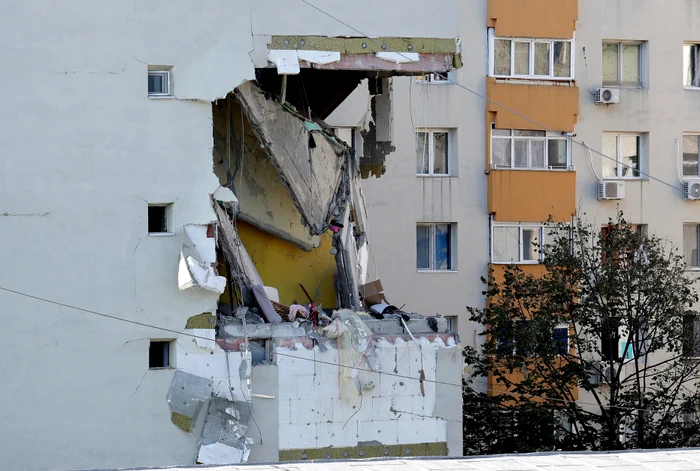
Tenants in the block that exploded can claim compensation. Photo Epa Efe
The event, which left several families without shelter and personal belongings, raises complex issues of liability for authorities, utility operators and insurers, the lawyers added.
According to the legislation in force, affected persons have the right to full reparation of the damages suffered, to the provision of temporary shelter and to access to immediate financial support. These measures are provided for by the legal framework on civil protection and emergency management, which obliges the authorities to intervene quickly to protect citizens in distress.
The rights of tenants after an explosion or destruction of the home
Affected Romanians have the right to temporary accommodation and emergency support. The district/locality municipality has the legal obligation to provide temporary shelter to people left without a home, according to Law 481/2004 on civil protection, art. 29–31 and GEO 21/2004 on the National Emergency Management System.
In practice, tenants can be accommodated in emergency spaces made available by the municipality (dormitory, hotel, gym) or emergency housing, if there are any available in the public housing stock.
Expenses for accommodation, food and basic necessities are met from the local authority's emergency funds.
Right to compensation and emergency relief
Affected persons can request full compensation for the damages suffered, depending on the causes that produced the explosion:
• if it was a technical fault attributable to a company (for example, gas supplier), its liability is objective and covers all material and moral damages;
• if the incident was caused by the negligence of the authorities or the property manager, civil actions or criminal complaints may be filed;
• if the home was insured, a claim for compensation is submitted to the insurer, accompanied by all supporting documents;
• in parallel, social and emergency aid can be requested from the town hall, according to the legislation on the support of people in disaster situations.
To prove their rights, victims must keep photos, videos, damage assessments, invoices and receipts related to the affected goods.
“Beyond the pain of such an event, it is time for the rights of those affected to be respected quickly, clearly, and the responsibilities of the authorities and insurers to be clearly established“, explained the lawyer Victor Buju.
According to it, there are three essential reaction structures:
• Immediate protection – local and government authorities must provide temporary accommodation, financial support, medical care and psychological support without delay.
• Transparency and rigorous investigation – the causes of the deflagration must be publicly and fully investigated, and any institutional or technical negligence punished exemplary.
• The right to full compensation – in case of establishing a fault, victims can request full compensation for material and moral damages, including from utility operators, who have objective responsibility regarding the safety of the services provided.
“The tragedy in Rahova is not only a lesson about the vulnerability of urban infrastructure, but also about the need for strict compliance with legal obligations regarding public safety. Every such event must lead to action, not resignation.” says lawyer Marius Stanciu, partner of the firm.
What tenants can do
According to the Lawren.ai app, which provides legal answers using artificial intelligence, here's what people affected by the resulting explosion can do:
1. General legal grounds and possible remedies
• Repair of damage caused by illegal acts: If the explosion was caused by an illegal action or inaction of an authority or a third party, the affected persons may be entitled to compensation.
◦ Criminal Procedure Code: Article 541 and Article 539^1 para. (1) of the Code of Criminal Procedure regulates the right to compensation for damages caused by judicial error, illegal deprivation of liberty or illegal technical surveillance measures. Although these articles refer to criminal proceedings, the principle of reparation of harm through the State is relevant.
◦ Law no. 101/2016: Article 53 para. (5) from Law no. 101/2016 on remedies and appeals in the matter of public procurement mentions that compensation can be granted for damages caused by an act of the contracting authority issued in violation of the law, but only after the annulment of that act or taking other remedial measures.
• Protection in case of disasters: Law no. 50/1991, by Article 13 para. (1) (although not fully detailed in the excerpt provided), mentions the possibility of land concessions without bidding for the displacement of disaster-affected households. It suggests a legal framework for supporting people affected by calamitous events.
• Civil rights: Depending on the cause of the explosion, the affected persons may have civil rights to request compensation from the person or entity responsible for the explosion, based on the provisions of the Civil Code regarding tortious civil liability (Art. 1.349 et seq., not included in the results).
2. Steps to follow
1. Identifying the cause of the explosion: It is essential to determine whether the explosion was an accident (caused by natural factors or unattributable technical faults) or the result of an illegal action/inaction (eg: failure to comply with safety regulations, another crime).
2. Documenting the damage: Gather all evidence of the home's destruction and damaged property (photos, videos, property lists, damage assessments).
3. Notifying the competent authorities:
◦ If the explosion had criminal causes or involved an authority, notify the Police or the Prosecutor's Office.
◦ If the explosion was caused by a technical fault attributable to a company (ex: gas supplier, condominium manager), contact that company.
4. Request for compensation:
◦ From the insurer: Check whether the home was insured against such events and submit a claim for compensation.
◦ From the person/entity responsible: If fault is established, file a civil action to recover damages.
◦ From the state: In specific cases of judicial error or illegal measures, it is possible to act in court against the state, according to the provisions of the Code of Criminal Procedure.
◦ Social/emergency aid: Inquire at your home town hall about the possibility of granting social or emergency aid to people affected by disasters or who are in vulnerable situations, according to specific legislation (eg: Law no. 226/2021, although it refers to energy consumption, there may be a general framework for emergency aid).
3. Notices and Terms
• Limitation periods: Civil actions for the recovery of damages have limitation periods. It is important to act in a timely manner.
• Cause of the explosion: The right to compensation largely depends on establishing the cause of the explosion and possible fault.
• Complete documentation: Keep all documents, invoices, receipts and correspondence related to the event and the steps taken.
In the absence of specific legal provisions for the compensation of houses destroyed by explosion, the affected persons must turn to the general mechanisms for repairing damages, either through civil actions against those responsible, or through the request for social or emergency aid, depending on the specific circumstances of the case and the causes of the explosion.