— One of the burning issues is the upcoming increase in VAT – by two percentage points, from 20 to 22 – says Gurkow. The increase is scheduled to take effect in January, right in the middle of the recession. Consequently, as the expert claims, “it will only deepen the crisis“.
The war costs billions, so now consumers must pay for it. – The increase in VAT means that every final consumer pays this tax – every time he visits a supermarket – explains Gurkow. “This increases prices and fuels inflation“.
Inflation is already around nine percent – with an interest rate of 17 percent. “You can't take out loans at this interest rate,” Gurkov says. In this way, Russia falls into a spiral of economic decay. The consequences of the Kremlin's actions are a lack of investment and economic stagnation – and this is only the beginning of the path Putin has embarked on.
Russia must import gasoline
– One thing is particularly absurd: Russia is increasing its imports of fuels – primarily gasoline – claims Gurkov. Russia imports gasoline from Belarus and Asia, especially China. “If Russia starts importing gasoline, something must be wrong.”
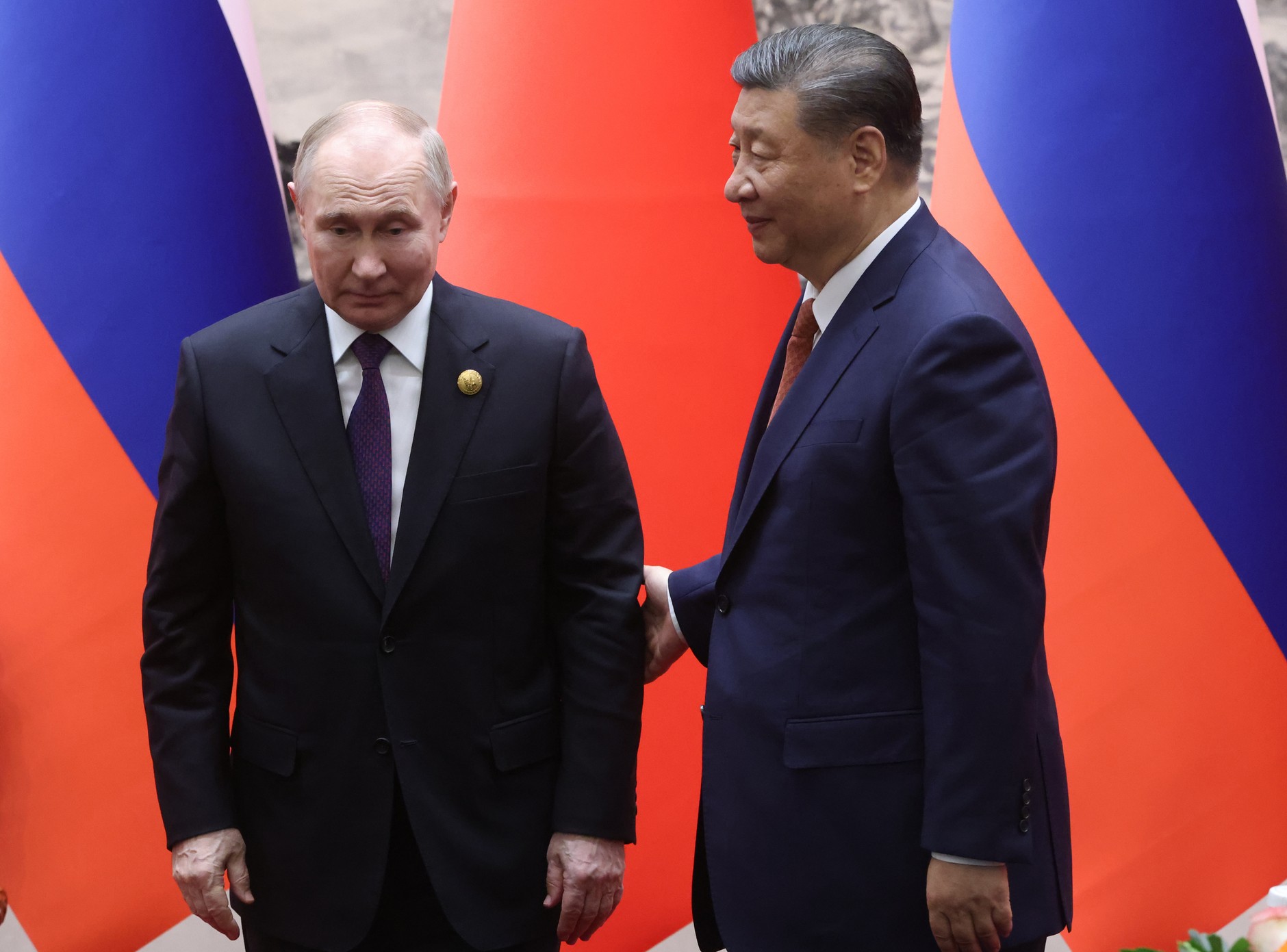
President of Russia Vladimir Putin and President of the People's Republic of China Xi JinpingContributor/Getty Images/Getty Images
The reason for this is massive Ukrainian drone attacks on refineries. — Apparently, Russia has a problem with air defense, and subsequent strikes contribute to a decline in processing capacity [ropy naftowej] says Gurkov.
For the first time in the history of Russia, the country's vast territory is not an advantage, but a disadvantage. According to Gurkov, Ukraine has hit at least ten refineries since August. A total of 28 attacks took place over two and a half months. There is a shortage of gasoline in 57 regions, and rationing has been introduced in the annexed Crimea.
In September 2025, Russia exported the lowest amount of fossil fuels since the beginning of a full-scale invasion of Ukraine. The decline is a direct result of the Ukrainian attacks.
According to data from the think tank Center for Research on Energy and Clean Air (CREA), in September Russia exported oil worth EUR 546 million (approx. PLN 2 billion, 316 million) per day, which is a decrease of 4%. compared to August 2025 and by 26 percent compared to September last year.
On October 2, Ukrainian President Volodymyr Zelensky said that “the most effective sanctions – the ones that work the fastest – are fires in Russian oil refineries, terminals, oil depots.”
“Russia's economic problems will be much greater”
Russian industry is also experiencing a downturn. Many large enterprises have introduced reduced working hours without wage compensation, especially in the automotive and cement industries. For example, the car manufacturer AvtoVAZ allows employees to work only four days a week.
The article continues below the video
In the case of the agricultural machinery manufacturer Rostsielmasz, production lasts even just three days. “Short working hours mean that these companies' products are not finding buyers, that there is excess production capacity and that demand is weak, so potential buyers have no money,” says Gurkow.
Gurkov believes that “Putin's system will survive the crisis for now.” — However, the direction is clear. To me it is completely obvious that In spring, Russia's economic problems will be much greater than now, in October – says the expert.
I’m Ashley Davis as an editor, I’m committed to upholding the highest standards of integrity and accuracy in every piece we publish. My work is driven by curiosity, a passion for truth, and a belief that journalism plays a crucial role in shaping public discourse. I strive to tell stories that not only inform but also inspire action and conversation.