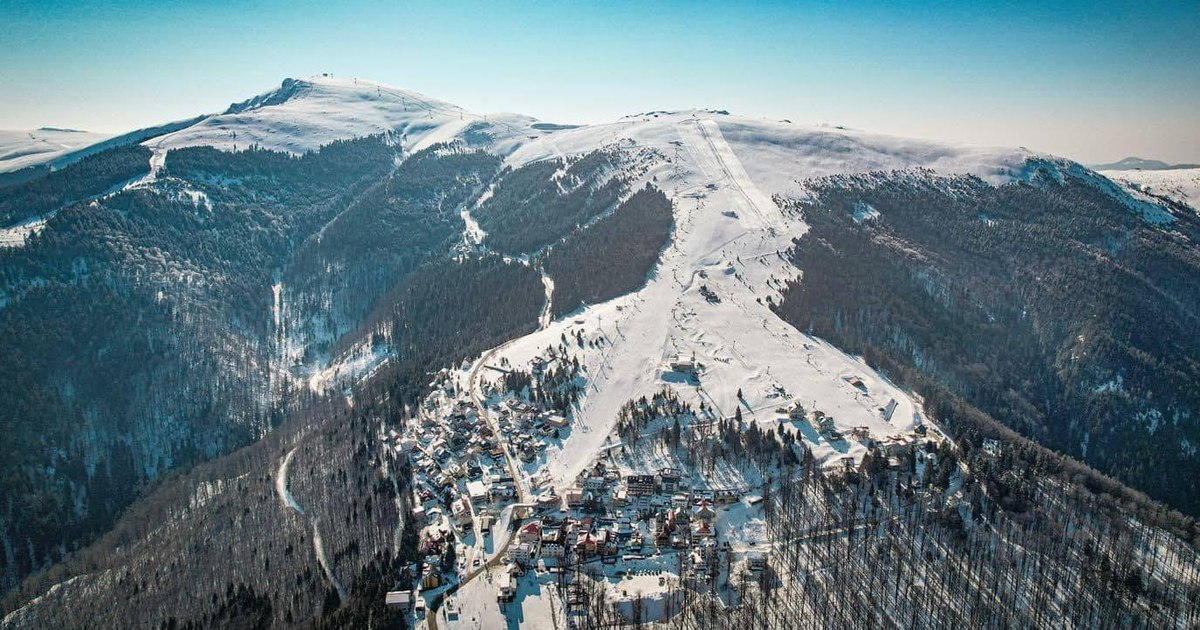
Who actually founded North Korea. How it turned from “Jerusalem of the East”, in the totalitarian state and what role the USA and the USSR played


North Korea, the only Stalinist state in the world was born about seven decades ago, being a creation of the Cold War. His first leader, Kim Il-Sung was the favorite man of the Soviet Union and the one who transformed the country into a communist state.
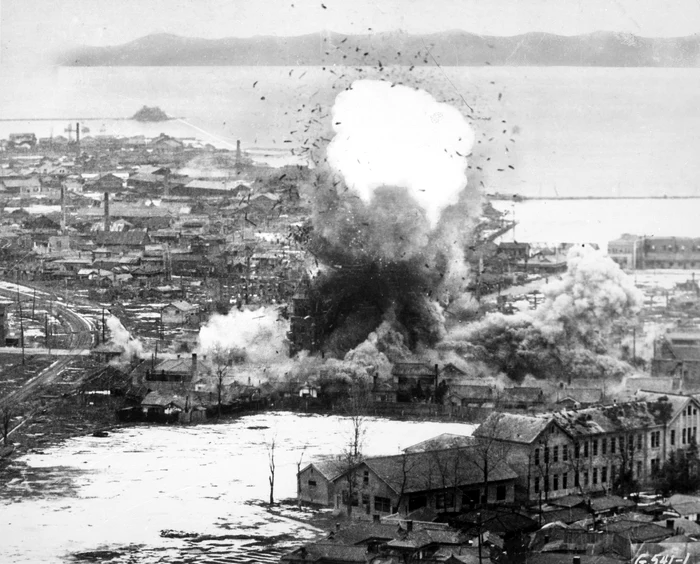
American bombardments in North Korea Photo Wikipedia
North Korea, Putin's ally in the Ukraine war, is one of the most controversial states on Earth. On the one hand, it arouses the curiosity, some even fascination, and on the other side it gives cold streams to the democratic world. And this is when North Korea is one of the last communist bills in the world, practicing a controlled isolationism, and a total control over citizens. Last but not least, North Korea is one of the states holding nuclear armament. According to armedrol.org, it is estimated that by January 2024, North Korea has assembled 50 nuclear focoa and holds fossil material for about 90 nuclear weapons, but also advanced programs of chemical and biological weapons. But all these are things known by almost everyone.
Little known to the general public is the genesis of this state. North Korea is a state conceived by the Cold War, a political and state construct created by the ambitions of those who fought for world domination. This is how, in a bizarre manner, half of the inhabitants of the Korean Peninsula live in isolation and totalitarianism.
The country at the end of Asia, between myth, prosperity and feeding neighbors
North Korea was born only in 1945, after World War II, as a result of the world's division into spheres of influence. Until this time, Korea was a rather unitary cultural and ethnic area. In fact, the population on the entire Korean peninsula had a common evolution, being part of the same state. The Korean peninsula has been inhabited since the Paleolithic. But today's Koreans are generally the descendants of the Neolithic tribes that have practiced agriculture in that area for 8000 years ago. Since 2333, Korea has been a cradle of civilization. His state beginnings are mythical and debut with the King of Gojoson, founded by his zeal king.
In the following centuries, three main kingdoms, Kogoryo, Paekche and Silla, were established in the peninsula. The year 688 D HR is the zero moment of the foundation of the Unit Korean state. That year, powerful monarchi in the Silla Kingdom were allied with the Chinese, to create the first unified state in the peninsula. The most glorious time for the Korean kingdom was that of the Joseon dynasty. Founded in 1392 by General Yi Seong-Gye after a coup against the Goryeo dynasty, the Joseon dynasty, especially through King Sejong the Great (1418-1450) implemented numerous administrative, social, scientific and economic reforms, established the royal authority and created the “hangar”, that is, the Korean alphabet. Even under these conditions, Korea's history was marked by repeated invasions and attempts to liquidate state autonomy. The Koreans, a capable and hard -working people, had the misfortune to be among the great empires becoming the target of the military and expansionist powers. The Mongol invasions from the 13th century brought the kingdom led by the Goryeo dynasty under the influence of the Mongol Empire and later of the Yuan dynasty.
Even after the establishment of the Joseon dynasty, Korea was coveted on the one hand by China, and on the other by Japan Shogunilor, an exceptional militarist power that became stronger in the Far East. Korea Joseon Dynasty was twice invaded by the Japanese, in 1592 and 1637. The Koreans were forced to ally with the Chinese to successfully reject these attacks. Frightened by the attacks of the Japanese, but also by the increasingly intrusive influence of China, the Joseon dynasty has become more and more isolationist and protectionist, implicitly leading to a stagnation of Korea's development. Without modernizing, in a changing world, Korea entered the influence of the European powers, ending disadvantaged treaties that opened the great Western powers to Korea resources.
After a number of internal disorders and the assassination of Empress Myeongseong, the Korean Empire was born, marked by social reforms and accelerated modernization according to the model of Japan in Meiji era. But it was too short. In 1910, Japan actually annexed the Korean Empire. All the treaties were canceled and Korea became a Japanese colony, de facto, from 1910 to 1945. Korean resistance, manifested mainly in the diaspora, with guerrilla, communist, cantoned factions in Manciuria.
“Jerusalem of East”, between ideological isolation and industrialization
How many of us could imagine that in today's North Korea there has ever been a city to be called “East Jerusalem.” Well this was the Phenian. It was part of the Kingdom of Korea (which was not at that time divided between the north and the south) and suffered the greatest influence on the part of the Christian missionaries. They arrived in northern Korea through Russia or China. Some have not descended to the south or simply struck the reluctance of the locals who preferred Buddhism. However, those in northern Korea were more open to Christianity, establishing important communities of converted Koreans. Phenian was the most important Christian religious center of the extreme East with a special missionary effervescence. Unlike the South Koreans, those in the North were exposed to Christianity, but not to modern Western ideas.
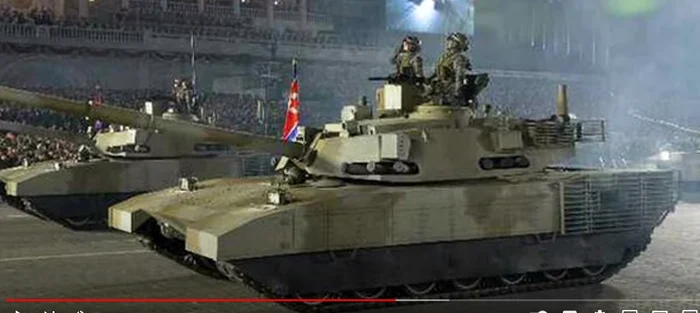
North Korea parade photo capture video
Precisely because they lived in a mountainous area, with a smaller opening than those in the south, in the port areas, of the great urban agglomerations, compared to the trade with the European powers. With the occupation of Korea by Japan, the country was strongly industrialized. Especially the north because there were plenty resources here. Almost 70% of Korea's heavy industry was located in the northern part. In contrast, due to the rough terrain in the north, the southern area was predominantly agrarian. In this context, a strong working class has developed in northern Korea. Some of the citizens, with the annexation of the itching by Japan, went to work beyond the borders. There they made contact with the communist ideas. These have spread like lightning among the workers in the northern areas of Korea. It was a fertile land marked by the pressure of the Japanese occupation, the idea that a foreign force exploited their resources.
North Korea, born of the power struggle between the US and the USSR
After the Pearl Harbor attack, the United States declared war on Japan and entered World War II against Axis states. At the Tehran Conference in November 1943 and at the Ialta Conference in February 1945, the Soviet Union promised to join its allies in the Pacific War, after the victory in Europe. It wasn't a free goodwill of Stalin. The Russians had interests in the Far East. They had laid eyes on Korea and hoped to turn it into satellite state in the coast of Japan, counterbalancing American interests in Asia.
Russian troops quickly advanced in Korea, releasing it by Japanese troops. The Americans scared that Stalin will occupy the whole Korea, proposed an agreement. More precisely, Korea should be divided into two, on parallel 38, as a demarcation line. The southern part, with the city of Seoul, where the Americans had landed to come under the influence of the US. The northern part, with the Phenian, that “Jerusalem of the East”, was left in the hands of the Russians, especially since they had already occupied the mountainous regions of the border with China. The Russians immediately accepted this division. This is how South Korea was born with 16 million inhabitants, and North Korea with nine million people. The agreement was incorporated in “General Order no. 1”, approved on August 17, 1945 for the capitulation of Japan.
The head of a guerrilla detachment and the beginning of the dictatorship
While in South Korea a democratic regime was installed, in North Korea, the Soviets were looking for a man to meet the ideological profile of the USSR. After the release of Korea, the communist groups in the country were organized and when the Soviet troops entered Phenian they have already found a local popular committee led by the nationalist-Christian Cho Man-Sik. This was the first option of the Soviets for the leadership of North Korea. Meanwhile, however, the communist groups have been reconstituted as a party under the leadership of Kim II Sung. He was known as the leader of anti-Japanese guerrilla troops. He came from a poor family attached to Presbyterian Christianity.
He ran to China, and at the age of only 17 became the youngest member of the Korean Communist Youth Association. After an intense activity with his guerrillas against the Japanese in Manciuria and China, in 1935, Kim takes his nickname Kim II Sung which means “Kim turns into the sun.” He was appointed commander of Division 6, in the Russian army, in 1937. He was only 24 years old and controlled several hundred people. So Kim II Sung becomes the option of Soviets as a leader of North Korea. Kim founded the Korean folk army, aligned to the Soviets and began to give more laws that turned North Korea into a Soviet state.
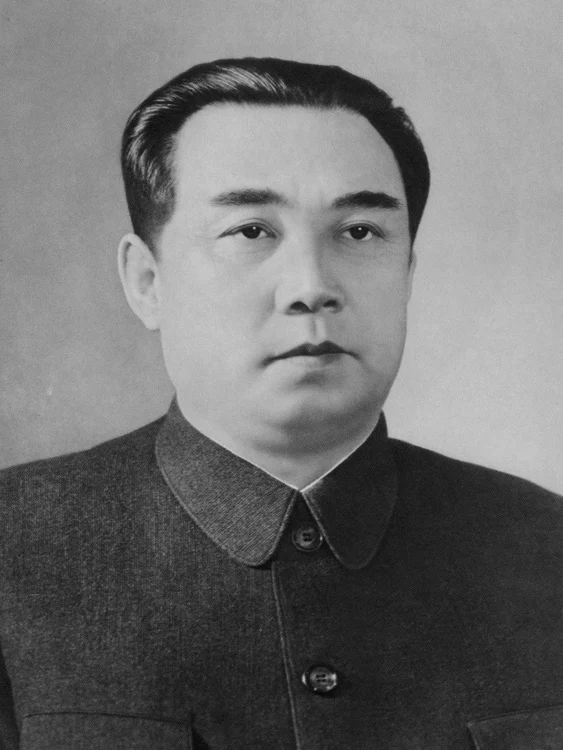
Kim II Sung photo wikipedia
It is an agricultural reform by which the lands were redeemed to the poor, the power of the landlords and the bourgeoisie being destroyed. At the same time, the entire economy has been nationalized. The Russians equipped Koreans with tanks, trucks, artillery and light weapons. In addition, Korean pilots were sent to the Soviet Union and China to be trained on MIG-15 reaction planes. In 1950, Kim Il-Sung tried to unify Korea under his leadership by military force, triggering the Korean war. Obviously, everything with Stalin's blessing. North Korea with a much more experienced army and equipped with the help of the Soviets has managed to temporarily conquer South Korea. With the acceptance of the United Nations, the American army intervened and the south is released. And even temporarily he managed to conquer a good part of North Korea.
It was a terrible war with many victims, who changed the life of every Korean. Some historians claim that the American army has thrown more Napalm on the urban centers in Korea than on Vietnam. Bombardment campaigns turned the Phenian into a sea of ruins, and the population of North Korea was reduced by 10%. The war ended in 1953, the status quo being maintained. In North Korea, Kim II Sung's communist regime had consolidated.
Juche and Songun
From 1953 to the 1970s, North Korea was considered by some external observers a successful state. During this period, many North Koreans were actually better than their southern brothers. Kim Il-Sung has remodeled the North Korean society on the Juhe line-the radical nationalist ideology of North Korea that promoted autonomy and sovereignism. The state has taken control over all private properties and organizations. Officially, everything in the country belonged to the North Korean state. The regime rebuilt the Phenian as a socialist capital and raised numerous monuments in the memory of Kim Il-Sung. A strong cult of personality was born that influenced many other totalitarian leaders, including Nicolae Ceausescu.
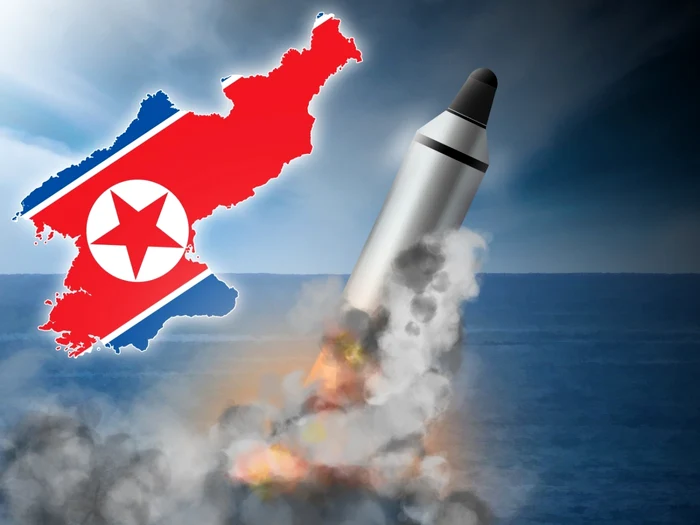
North Korea holds nuclear power photo shutterstock
The state has taken control over all means of mass information and restricted international travel. Kim Il-Sung also worked constantly to centralize the power in the hands of the workers' party under its leadership and implemented a perpetual treatment to escape the country of potential internal opponents of the regime. At the same time, Kim II Sung's regime has introduced the Songbbun system, which is still in force today. In short, it is a system of population division, in social classes, depending on the loyalty perceived towards socialism and regime. This classification determines the course of people's lives. A person's songun dictates the schools he can attend, the occupations in which he can be placed and even the place where he can live. Although, officially, it is a socialist state with communist roots, North Korea has come to function as a totalitarian dictatorship, with a hereditary, militaristic and sovereign -conducting family.