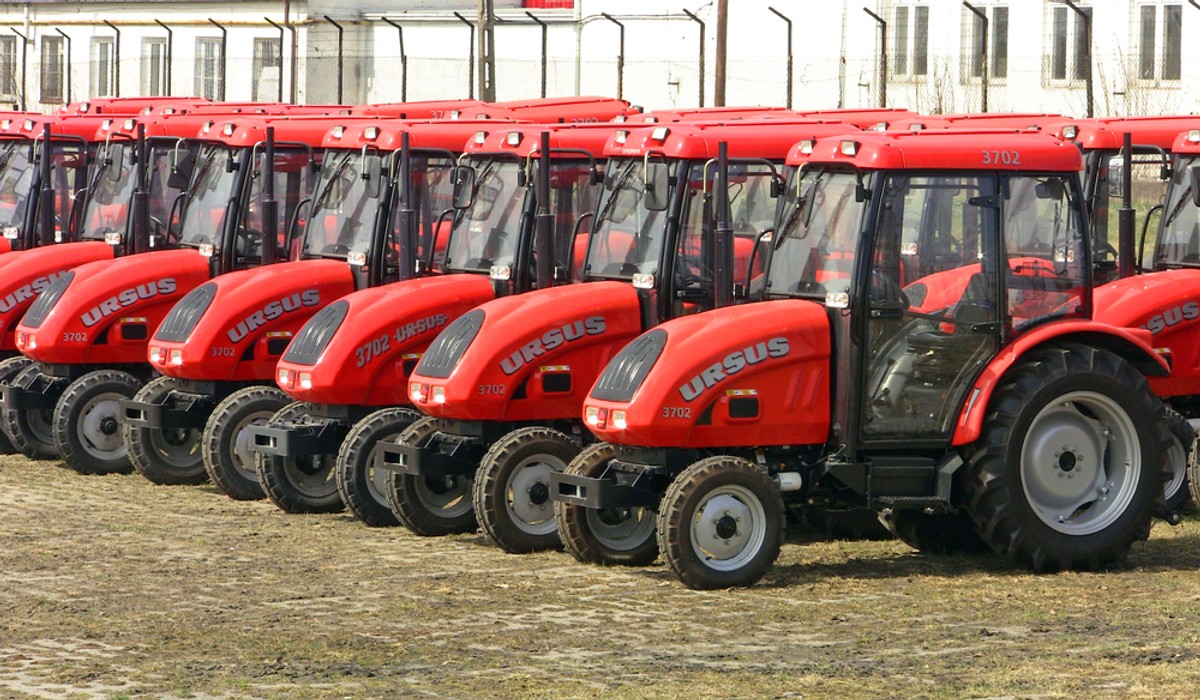
Prime Minister Donald Tusk spoke on Friday in Sopot about the need for re-Polonization and support for Polish companies. Meanwhile, there was a lot of talk on social media about the legendary Polish manufacturer of agricultural machinery, Ursus, which some time ago had such financial problems that only foreign capital came to the rescue.
PIS MEP Bogdan Rzońca wrote on platform X that from 2024, Ursus is in the hands of capital from Ukraine, because – as he pointed out – “it is not profitable to maintain Donald Tusk's company in Poland”.
“The effect? production continues, factories employ specialists, the brand enters the dealer market and grows. Bravo for “repolonization”, Mr. Tusk” – wrote Bogdan Rzońca.
Although the Prime Minister was called to the board, another member of the government defended him. Energy Minister Miłosz Motyka called the PiS MEP a liar. He recalled that the bankruptcy of Ursus was announced on July 12, 2021, i.e. during the PiS government.
A Ukrainian company took over a legendary Polish company
We announced that Ursus has a new owner at the end of October 2024. The legendary plant that has been producing agricultural tractors for years was sold by tender to MI Crow, owned by Oleg Krot, member of the management board and co-owner of the Ukrainian holding Techiia. This was the third tender in a row, and the starting price was reduced to PLN 74 million.
The new owner received production plants and real estate, as well as project documentation, machines, warehouse supplies and the right to the Ursus brand. He announced a thorough modernization, which is a condition for the plant's continued existence.
According to the new owner, the company was in terrible condition at the time of takeover – most of the machines were outdated, and some facilities (including the one in Dobre Miasto) were neglected and underheated, requiring investment in renovations and thermal modernization.
The Ukrainian company wanted primarily to increase the plant's production capacity, introduce modern technologies and increase the number of employees, which at that time amounted to only about 80 people.