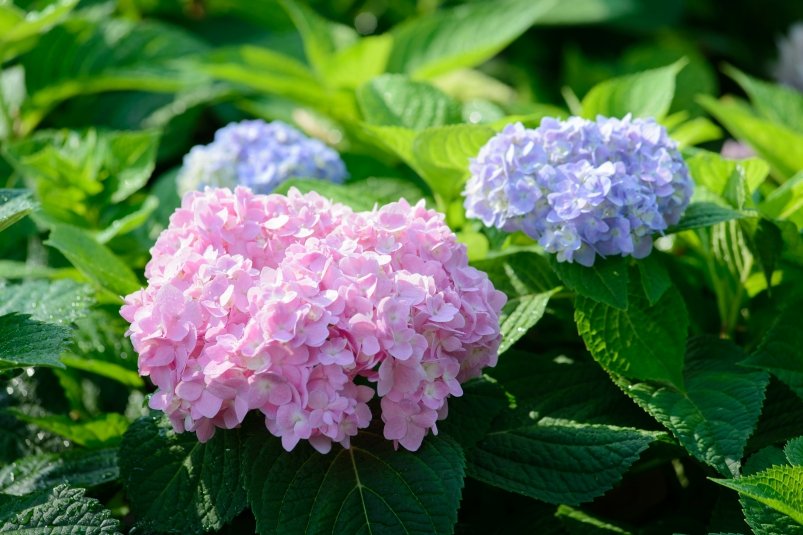
Many gardeners wonder why their hydrangeas do not bloom, although the bushes look healthy. The reason often lies not in the soil or light, but in improper preparation for winter. Pruning in September, covering with film or leaving inflorescences – all this deprives the plant of flower buds that were laid in the summer. But you can save the flowering, and three simple steps in October are enough.
1. Do not cut flower stalks, leave them until spring
Large-leaved and paniculate hydrangeas bloom on last year's shoots. If you cut off old inflorescences in the fall, you will also remove flower buds. Leave the dried “caps”; they protect the tops of the shoots from freezing and serve as a guide for spring pruning.
2. Remove the leaves, but leave the shoots alone
Collect and burn all fallen leaves; they may carry fungal spores. But do not prune young shoots, even if they seem weak. It is on them that the flowers will bloom. Gently bend them to the ground if the bush is spreading.
3. Cover correctly, but only after stable frosts
Wait until the temperature remains stable at -5°C. Then carefully bend the shoots to the ground, secure them with staples and cover them using the air-dry method: a layer of spruce branches or dry leaves + spunbond or burlap. Do not use polyethylene, the hydrangeas will dry out and die under it.
With proper preparation, hydrangeas easily tolerate frosts down to –20°C, and in the spring they produce new shoots with living flower buds. And already in July you will again admire the lush inflorescences.