The failure of a generation » 75 footballers disappeared as soon as they left the “protection” of the FRF!


Article by Liviu Manolache – Published on Wednesday, 15 October 2025 22:57 / Updated on Wednesday, 15 October 2025 23:42
The U21 rule introduced in the Superliga at the start of the 2016-2017 edition continues to generate discussions for and against. The first footballers included were those born after January 1, 1994, being beneficiaries only in the first season. Starting from the summer of 2025, it moved to the sixth age group, the threshold being set on January 1, 2004.
Gazeta Sporturilor presents a detailed analysis of the evolutions of players who entered the group of those born after January 1, 2000, beneficiaries until the 2022-2023 season.
They had two championships without a rule, reasonable time to demonstrate that the experience gained during the period in which they were protected was useful to them.
GSP analysis: who confirmed, who is mediocre and who failed
So we mean those born in 2000 and 2001, footballers over 24 and under 26those closest to the age at which maximum potential is reached. The final analysis divided them into three categories:
-
they confirmed: are included those who established themselves at the level of the first league, reached the national team and/were the subject of an important transfer;
-
mediocre: they did not establish themselves as basic players in the Super League, but also those who alternated between the first and second league;
-
they failed: those who have disappeared from the radar of the main domestic competition.
The first player from the analyzed group was Vladimir Screciu, debutant in the Super League at 16 years, eight months and 19 days (October 2, 2016, FCSB – Universitatea Craiova 2-1), in the very season in which the U21 rule was implemented.
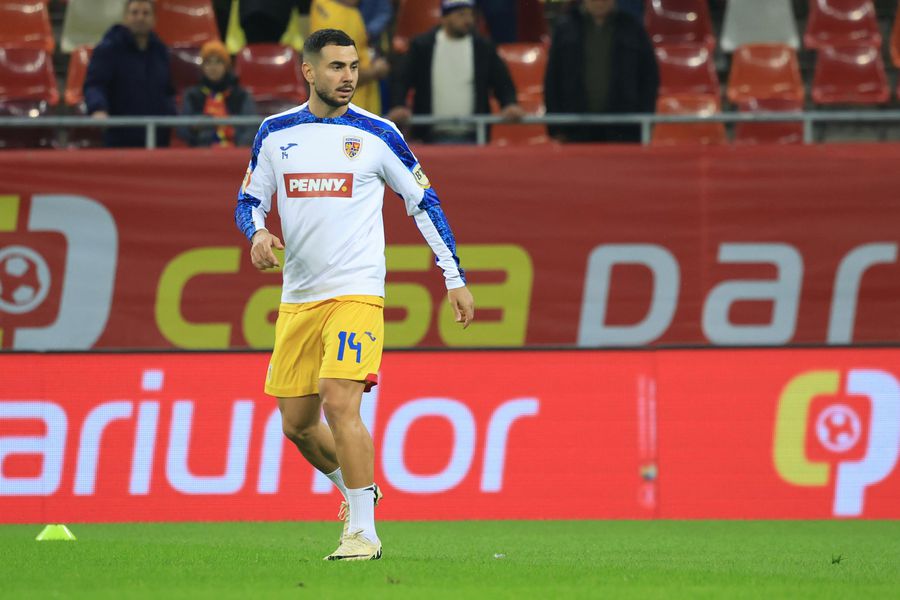
Vladimir Screciu, before Romania – Moldova / Photo: Ionuț Iordache (GSP)
In the same championship, also in the shirt of Olten, the first footballer born in 2001 would make his debut, this was Jovan Markovic (16 years and 9 days, on April 1, 2017, U Craiova-CFR Cluj 1-4).
In total, 106 eligible U21 natives ticked off at least one appearance, 64 born in 2000 and 42 in 2001.
20.1%of all U21 debutants in the 10 regular seasons are born in 2000 and 2001.
15 confirmed, of which nine reached the grand national.
Of the 106, only 15 meet at least one condition to be included in the “confirmed” category, which means a percentage of only 14.2%. Here is some information / explanations related to them and the teams that launched them, respectively the beneficiaries:
-
FCSB was the one that invested the most in their acquisition, the red-blues transferring Târnovanu from Poli Iași, Miculescu from UTA and Bîrligea from CFR Cluj
-
Parma paid approximately nine million euros for Valentin Mihăilă, a record for Craiova University. The performances in the championship secured transfers abroad for V. Screciu, B. Racovițan, A. Dumitrescu, M. Popa or A. Sefer.
-
Mihai Lixandru: raised by FCSB, he was loaned by Bucharest to Gaz Metan 2021/'22 and CS Mioveni 2022/'23, with each falling to B. He returned to the red-blues and, after two consecutive relegations, two titles in a row followed.
-
Valentin Țicu went through the steps from ball boy to the captain of Petrol. Although he has been injured for a long time, he established himself in the shirt of Prahoven, becoming one of the leaders of Ploiešte.
-
Alin Fică and a question with a difficult answer: did he really benefit from the U21 rule? The period in which he was eligible turned out to be a real pain, 10 games in three seasons and only 447 minutes! Instead, when he no longer had protection, he became one of Dan Petrescu's favorites, who used him in 35 matches in the previous edition (2,383 minutes).
-
The last two years for Jovan Markovic have been very weak, being plagued by medical problems and often accused of a lack of professionalism. However, although he could be included on the list of mediocre ones, the fact that he produced over 40 goals and played 164 matches only in the Super League, but also the three selections for the national team are enough reasons to be included in the first value category.
Here is the list with the 15 who have confirmed and the teams where they debuted in the main domestic competition:
-
CFR Cluj 3 (Daniel Bîrligea, Claudiu Petrila, Alin Fică);
-
University of Craiova Craiova 3 (Vladimir Screciu, Valentin Mihăilă, Jovan Markovic);
-
FC Botoșani 2 (Bogdan Racovițan, Victor Dican);
-
Sepsis 1 (Andres Dumitrescu); Astra 1 (Mihai Popa);
-
Gas Methane 1 (Mihai Lixandru); Petrolul 1 (Valentin Țicu);
-
Poli Iași 1 (Ștefan Târnovanu);
-
Rapid 1 (Antonio Sefer);
-
UTA Arad 1 (David Miculescu).
Nine of the 15 reached the national team: D. Bîrligea, Cl. Petrila, B. Racovitan, Vl. Screciu, V. Mihăilă, J. Markovic, Șt. Târnovanu, A. Sefer and D. Miculescu. Comparatively, the last group that did not benefit from the rule, the one with players born in 1992 and 1993, had 11 “tricolors” who also played in the Super League as being eligible for the U21 national team.
Next comes the category of those who had mediocre performances in the two seasons after coming out from under the protection of the U21 rule, did not reach the level of confidence received or “shuttled” between the first two divisions.
There are 16 players (15.1%), nine of whom are present in the current Super League season: Răzvan Ducan (Farul), Robert Neacșu (Metaloglobus), Vlad Pop (Unirea Slobozia), Alexandru Ișfan (Farul), Dragoș Albu (FC Hermannstadt), Andrei Gorcea (UTA), Alexandru Oroian (FC Hermannstadt), Alexandru Cîmpanu (FC Botoșani) and Denis Hrezdac (UTA).
What happened to the rest?
15 confirmations and 16 where we still have our hopes up. The rest represent the failure of the generation: 75 footballers completely disappeared from the Superliga radar even while they were eligible or immediately after they came out of the protection of the rule imposed by the FRF! A huge percentage: 70.8% of the total! What's more, 56 of them are no longer even at the level of the second league, 3.7 times more than those who confirmed!
So, 52.8% of those who benefited from the U 21 rule ended up, in the most fortunate case, as players in Division C or regional leagues in Italy or Germany. Thus, among the formations that chose former eligible players are names such as Crișul Sântandrei, FC Rovine, FC Pucioasa, Vulturii Fărcășești, Unirea Braniștea, SCM Zalău, Viitorul Ianca, Teleajenul Vălenii de Munte, OSC Bremerhaven or CfR Pforzheim.
And a few names: Aurelian Păun, Andrei Joca, Andrei Paliu, Emanuel Dat, Costin Ciucureanu, Salvatore Marrone, Alexandru Ilie, Gabriel Răducan, Cătălin Măgureanu, Răzvan Andronic, Adrian Moescu, Ionuț Zanfir, Ștefan Cană, Luis Nițu, Denis Rusu.
Surprise the Future / Lighthouse!
Looking over the list of teams that promoted players from the analyzed category and whose performances were included among the failures, the presence of the team from the Black Sea shore, the one that was the main supplier for Romania U 21 at Euro 2019, when the “tricolors” were semi-finalists, surprises us.
Three footballers from Dobrogean made their debuts, Marius Sebastian Leca, Alex Georgescu and Florian Haită, without even one of them establishing himself in the Super League.
How much did the players born in 2000 and 2001 mean in the last two seasons in which they fell under the rule (2021/'22, 2022/'23), but also in the next two without the rule?
A final analysis shows us how the local players in the studied group “evaporated”. Thus, if in the penultimate season in which they were eligible, 60 Romanians born between January 1, 2000 and December 31, 2001 performed, their number decreased three times in the second edition in which they were no longer protected by the rule, being surpassed by that of foreign footballers of the same age, among them names that became important such as Tiago Goncalves, Kader Keita, Baba Alhassan, Tobias Christensen, Albion Rrahmani, Carlos Mora, Anzor Mekvabishvili or Marinos Tzionis.
-
'21/'22: 60 domestic U21s born in 2000-2001;
-
'22/'23: 45 domestic U21s born in 2000-2001;
-
'23/'24: 25 former domestic U21 players born in 2000-2001;
-
'23/'24: 23 foreigners born in 2000-2001;
-
''24/'25: 21 former domestic U21 players born in 2000-2001;
-
'24/'25: 31 foreigners born in 2000-2001
The up-to-date ranking from the Superliga