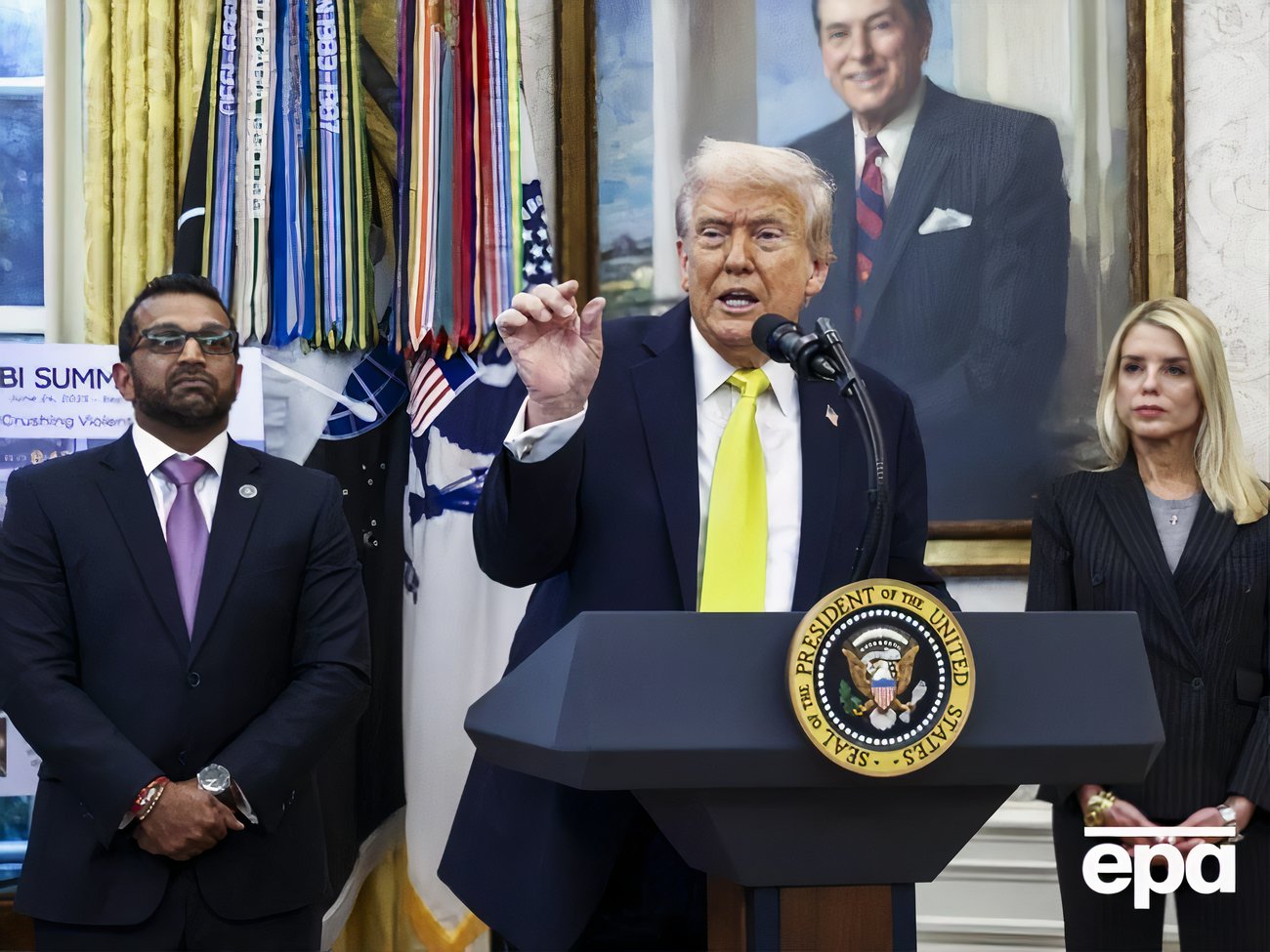
According to him, Israeli troops can resume hostilities in Gaza “as soon as I say the word,” and “what happens with Hamas will be quickly resolved.”
Trump's comments come as Israel accuses Hamas of failing to comply with agreements to hand over hostages, live and dead, as part of an agreement that was supposed to end fighting in Gaza, the article said. This has sparked increasing outrage in Israel, where authorities have told the UN that humanitarian supplies planned to be allowed into Gaza will be reduced or delayed due to the low number of bodies of dead hostages handed over by the group, the TV channel writes.
Trump emphasized that the release of living hostages in itself is of great importance.
Two senior advisers in Washington said after Trump's call with CNN that the United States does not believe Hamas is violating the ceasefire by not handing over the remaining bodies. They said the group had assured the United States through intermediaries that it was doing everything possible to find and return the remains. The American side, they say, is actively helping the mediators, providing intelligence and logistical support to the search for bodies that may likely remain under the rubble after two years of war.
The White House acknowledges that the future of Gaza has yet to be determined and that the current agreement, which made it possible to free the hostages, is only the first phase.
Trump told CNN that Hamas is now “cleaning up gangs, violent gangs.”
When asked whether it was possible that Hamas would execute innocent Palestinians, the American president replied that he was looking into the matter.
Trump also admitted that he had to personally restrain Israeli Prime Minister Benjamin Netanyahu from taking tougher actions, and added that he even had a “serious conversation” with him about this. However, the president expressed confidence in the long-term prospects for peace, given the support from other countries in the region.
The American president said that peace in the Middle East is possible, because 59 countries supporting the Trump Peace Agreement and the Abraham Accords have joined the process.
Trump also said that he continues to work to end the war of the aggressor country Russia against Ukraine, and added that the conflict in the Middle East has historically been more difficult to end because “one lasts three years, the other lasts 3 thousand years.”
Context
On September 29, during a meeting at the White House, Trump and Israeli Prime Minister Benjamin Netanyahu were presented with an American plan of action after the end of Israel's war against Hamas.
On October 9, it became known about preparations for the implementation of an agreement on the future of the Gaza Strip. The ceasefire agreement came into force on October 10. On October 12, Trump announced the end of the war in the Gaza Strip. On October 13, Hamas released all of the remaining 20 living Israeli hostages.
On the same day, at a peace summit in Sharm el-Sheikh, a ceasefire agreement was concluded in the Gaza Strip. It was signed by the presidents of the United States, Egypt, Turkey and the emir of Qatar. Netanyahu said the IDF would remain in Gaza until Hamas disarmed.
On October 13 and 14, Hamas militants tightened their control over the Gaza Strip, including public executions.
On October 14, Netanyahu recalled that the demilitarization of Hamas is a basic condition for the continuation of the truce in the Gaza Strip. The Israeli prime minister said that he hopes for the next stage of negotiations, but if the Islamists do not disarm, then, according to Netanyahu, “hell” will begin for them. Trump noted the day before that the group promised him to do this, and if not, they would do it by force.