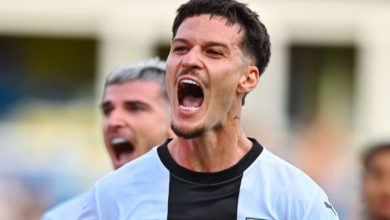
A breach in NATO. One country incurs Trump's wrath and destroys the alliance. “I find it incredibly disrespectful.”


Spanish Prime Minister Sanchez has become NATO's most unreliable ally. Many EU diplomats agree with Trump that low military spending and weak support for Ukraine make it worse Spain has become a bad member of the North Atlantic Alliance.
“I find it incredibly disrespectful,” Trump said on Tuesday, October 14. “And I think they should be punished for it.” Meanwhile, Europe's economic leader does not bow to America's threats — Madrid has its own goals to justify breaking ranks.
When leaders meet in Brussels next week for a summit on deepening defense cooperation, Spanish Prime Minister Pedro Sanchez is expected to align himself with NATO's official line of conduct. — If he doesn't do this, he will face confrontation with other leaders — said one diplomat involved in preparations for the summit, who chose to remain anonymous, in an interview with POLITICO.
Another diplomat said southern European countries such as Italy and Portugal must show a commitment to northern Europe, especially if they want help in the fight against migration from Africa and the Middle East.
— We now hope that NATO's commitment to allocate 5 percent GDP on defense spending will really accelerate because we are running against time, said Finnish Defense Minister Antti Hakkanen, whose country shares a 1,000-meter border with Russia. 300 km. “This is what we emphasize as a potential frontline country – that other countries must do their part and do it quickly.”
Where things get more complicated is the commitment that NATO members have made.
“Unbelievably disrespectful”
During the June 2025 summit, NATO leaders agreed to increase defense and security spending to 5%. GDP per year over the next decade, from the current 2 percent.
Some northern European officials believe this new target, set for 2035, is too modest and too slow, given Putin's ongoing war with Ukraine and increasing violations of European airspace by Russian drones and planes. They also believe that Europe must increase its defense spending because the United States will not be able to help it indefinitely.
The article continues below the video
However, Sanchez refused to accept the new goal. This angered the US president, who this week threatened to impose new tariffs to punish the disobedient NATO member.
Spain's spending on NATO before this year was only 1.28 percent. GDP, which constituted the lowest level among all NATO member states. Sanchez argued that Spain does not need to spend large amounts of money to meet its obligations.
Trump's criticism was met with approval from Sweden, NATO's newest member. “I think Spain and other allies realize that now is really the time to make defense investments,” said the country's defense minister, Pal Jonson. “It is very important that all our allies keep the commitments that we have all agreed… including Spain.”
NATO Secretary General Mark Rutte tried to downplay the spat during a recent meeting of alliance defense ministers in Brussels. “It is always up to individual allies to ensure that they contribute everything they can to the overall effort,” he said.
“No one can doubt Spain's commitment to NATO,” Spanish Defense Minister Margarita Robles said during the same meeting. “We have been a reliable partner for 40 years.”
However, questions about how countries should share the burden of responsibility for Europe's security and resilience will remain one of the priorities for EU leaders in the coming days.
On Thursday, October 16, the European Commission will publish the final plan to prepare the EU for combat, i.e. the timetable for ensuring defense readiness. Officials will present the plan at a press conference with the EU's top diplomat, Kaja Kallas.
Then, next week, at a summit in Brussels on October 23, European leaders will discuss details of how to finance Ukraine's defense against a Russian invasion.
At first glance, some EU officials say, Spain is in a good position to help Ukraine. Madrid can enjoy extremely good economic performance. The country's economic growth in 2024 was 3.2%. Gross Domestic Product (GDP), and according to data from the European Commission, this year an increase of 2.6% is forecast.
According to data from the German Economic Institute Kiel, in the period from January 2022 to August 2025, Spain allocated only EUR 790 million (over PLN 3 billion 360 million at the current exchange rate) for military aid to Ukraine and provided tanks and air defense systems.
For comparison, Germany provided military aid to Kiev worth EUR 17,700 million (approx. PLN 75,290 million), and Great Britain – EUR 13,300 million (approx. PLN 56,570 million). In general, Mediterranean countries lag behind in transferring weapons to Ukraine compared to the northern and Baltic countries – military aid from Italy amounts to EUR 1 billion 700 million (approx. PLN 7 billion 230 million), and to Greece – EUR 150 million (over PLN 638 million).
“Sanchez's position is popular”
As for Trump's threats to impose punitive tariffs on Spain, EU officials were surprised. Legally, the United States cannot impose specific tariffs on one EU member state because the European Union deals with trade matters collectively. However, Trump may target Spanish exports, such as pork or sherry.
“Trade is the exclusive competence of the European Commission, which acts on behalf of all EU member states,” said Commission spokesman Olof Gill. “As always, we will respond appropriately to any measures taken against one or more of our Member States. I also recall that there is currently an EU-US trade agreement in force. This provides a platform for resolving any further trade or trade-related issues.”
Spanish Prime Minister Sanchez may not be too concerned, however. The ongoing fight with Trump may worsen relations between Madrid and Washington, however these tensions have a positive impact on the position of the head of government in the country.
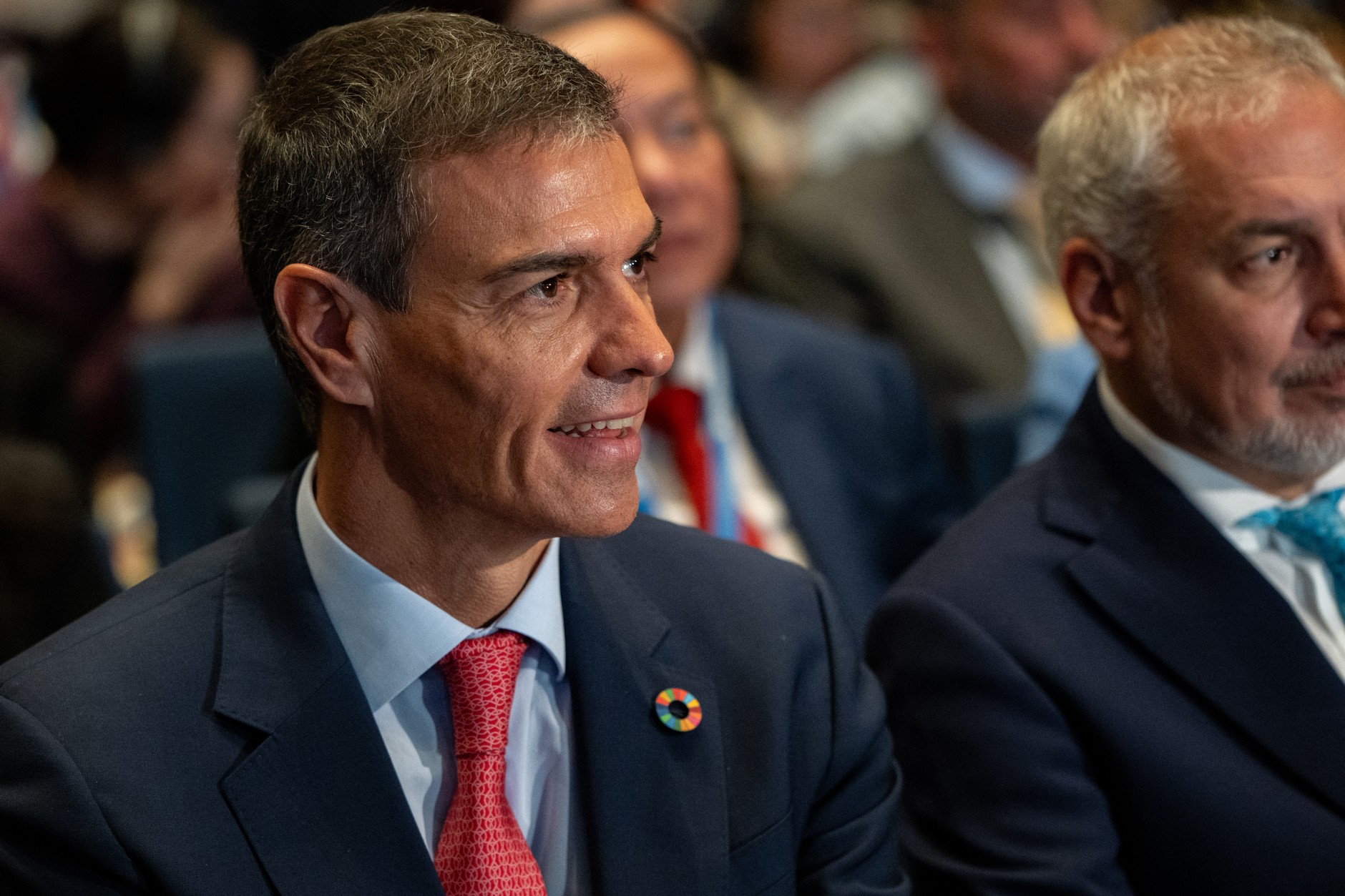
Prime Minister of Spain Pedro SanchezLorena Sopena/Europa Press News via Getty Images / Contributor / Getty Images
According to the latest polls, Sanchez is an unpopular figure, favored by 67 percent. society considers “untrustworthy”. However, polls show that most Spaniards support him in refusing to significantly increase Spain's military spending.
Pablo Simon, a political scientist at the Carlos III University of Madrid, said Spain has traditionally been reluctant to get involved in international security policy and remained neutral in global conflicts. The country's decision to join NATO in 1982 was extremely controversial, and millions of people participated in protests against the Spanish government when it supported the United States' invasion of Iraq in 2003.
“Sanchez's position is popular because it reflects Spain's cautious approach to defense, and Donald Trump is an unpopular figure in Spain,” Simon said. “From a purely domestic political perspective, as long as Spaniards feel they are fulfilling their obligations as a country, this is a winning strategy.”
According to Simon, even if Sanchez were willing to bow to Trump's demands, he lacks the political support to oblige the country to significantly increase defense spending.
The Sumar Bloc, the far-left smaller partner in the coalition government, opposes any action that could weaken funding for social programs. Meanwhile, the center-right opposition is unlikely to support a new budget, which would be needed to significantly increase military spending.