“The propaganda is terrifying.” Russians are cracking. “I don't want to kill”


Even though the front line is hundreds of kilometers away, drones occasionally fly over St. Petersburg, airports are closed without warning, and bus stops are covered with military recruitment notices.
The Moscow Times spoke to five residents of Russia's second-largest city about how the war changed their everyday lives. The names of the individuals have been withheld to protect their identities.
Maria is 32 years old and runs a dance school in the center of Saint Petersburg. “Everything comes in waves,” he says, describing fluctuations in student enrollment since the war began. — The first wave of departures occurred immediately after February 24, 2022. Many of our regular students left the country. Then the second wave came during the mobilization in September – that really hit us hard.
The international connections that once enriched the school have largely disappeared. — Foreign instructors used to regularly come to us to conduct seminars. Now if someone comes once a year, it's amazing, says Maria. Private travel has become too expensive. — It's not that I can't get a visa – it's generally still possible – but the cost of flights is just so expensive now impossible to cover.
Maria tries to improve her mood in everyday reality. — I keep thinking about how it would be much better if men came to dance instead of taking up arms and killing people in a neighboring country. I even thought about making it our school's social media slogan, but I fully understand that I would be arrested immediately, she says.
The article continues below the video
Despite the difficulties, dance classes continue. — Men are actually coming back to dancing now. Maybe that means something. We keep dancing and hope for a better future, explains the Russian.
“I choose silence”
38-year-old Tatiana works in a photography studio. She was divorced in September 2022, when the Kremlin announced “partial” mobilization for war. “Bad moment,” he jokes, though there's nothing funny about it.
“When you live in normal, peaceful times, personal problems hit you hard, but your mind is free from worries about the future of the country,” he says.
Here you are forced to wonder whether it is even safe to live and stay here with your child. It puts a lot of strain on your daily life.
Tatiana's daughter returns from school with the task of writing an essay on “our heroes of a special military operation” and memorizing poems about defending the homeland. Parents' WhatsApp groups have become “a constant stream propaganda posts” celebrating military victories and sharing fundraising appeals for soldiers.
– When your opinion does not coincide with the opinion of the majority, you must either remain silent because you are afraid to speak up, or… – Tatiana stops. — I choose silence. If I openly oppose it, there is a risk that someone among the 35 students' parents will report it.
Monthly salary of PLN 80,000. rubles (according to the current kyrs. PLN 3.6 thousand), once considered a decent income, now barely enough for a woman to pay her rent and basic needsas prices have skyrocketed.
—Three to five years ago it was good money. You could save money, pay for holidays and activities for children. Now it is impossible. You can't plan anything. There is no money, and every day there are new regulations, new restrictions. You never know what will be banned tomorrow or what will become too expensive, says Tatiana.
“If we had the opportunity, we would leave”
Artyom is 47 years old and a trauma surgeon who made a radical decision six months ago: he stopped reading the news completely.
— I unsubscribed from all news because I couldn't stand it anymore. It made my life much easier, he says. However, he cannot escape recruitment advertisements at bus stops that promise contract soldiers a salary of PLN 200,000. rubles (PLN 9,000), which is more than three times more than most doctors earn.
— The remuneration for signing the contract is 3 million rubles (PLN 138,000). At my salary, I would have to work for over four years to earn that much. And military personnel receive this amount simply for signing the contract, Artyom says bitterly.
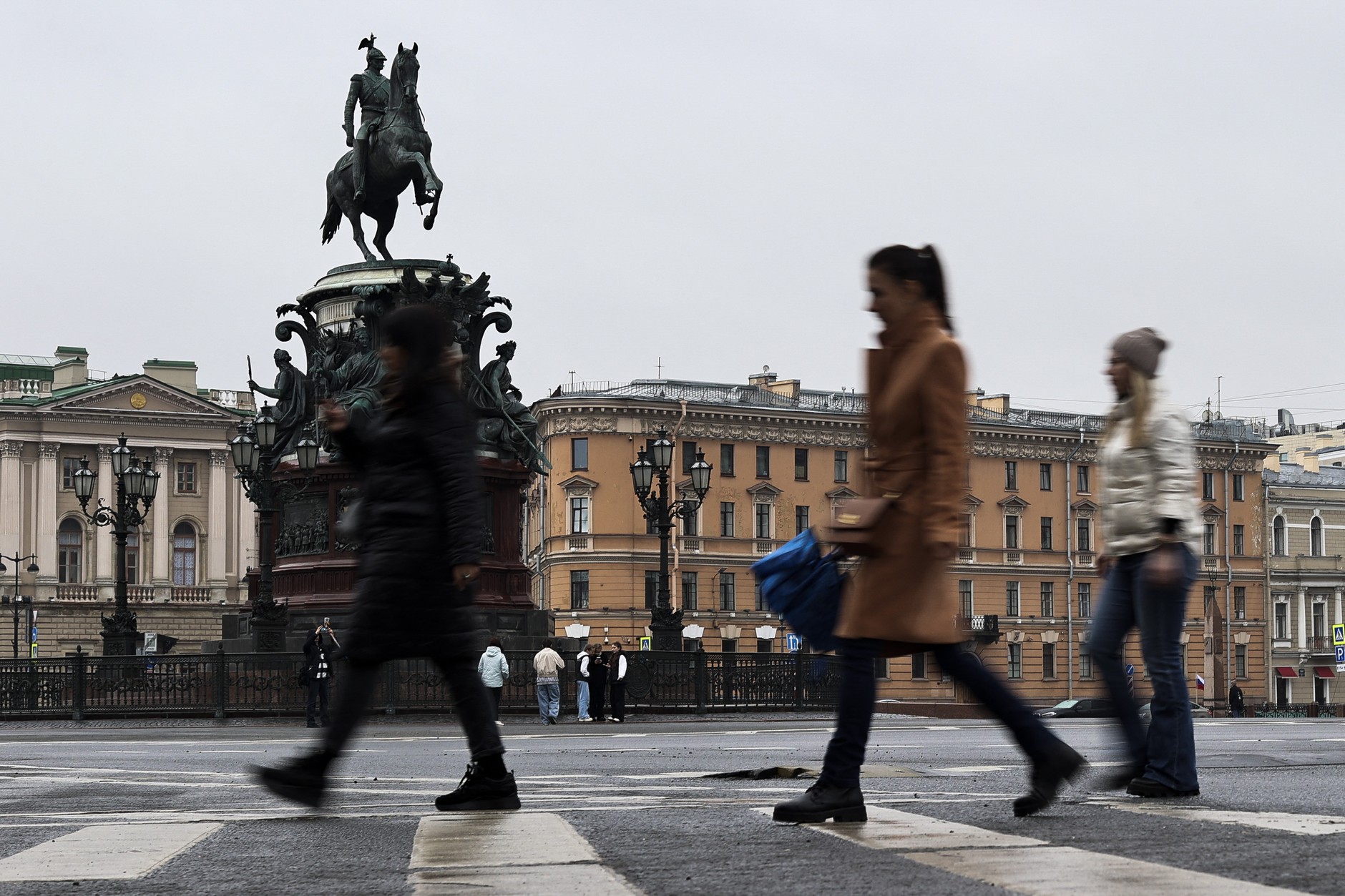
Everyday life in Saint Petersburg, April 2025 (stock photo)Arife Karakum / Anadolu Agency / AFP
His work puts him in direct contact with the consequences of war. — Soldiers often come to me after finishing their service. This is the most stressful for me because we don't know what kind of person is standing in front of us and what their mental state is, he explains. Many of them military come with a certain attitude. — Usually these are men with a rather aggressive attitude who think: “I am a hero, everyone owes me something,” Artem explains.
He lives with his wife and 12-year-old daughter. — If we had the opportunity, we would leave. But with the salary of a government hospital doctor, this is impossible, he says. The family is looking for information about European university scholarships, hoping they will eventually be able to send their daughter to study abroad. — We want to give her a chance to study in a country free from dictatorship, adds the Russian.
The atmosphere at work has become toxic. – My colleagues don't support me – everyone is quite “patriotic” orientedthey keep talking about NATO and how the whole world wants to destroy Russia, says Artyom. It doesn't make sense to him. — You are a doctor, you should be pro-life, pro-every life. But for most people, apparently, only the lives of Russians matter, while Ukrainians can be killed – sums up the man.
“Propaganda is terrifying”
Oksana, now 42, founded her private primary school with a simple vision: treating every child with respect and understanding, supporting individual development and creating a safe learning environment. The woman explains that these policies are “unfortunately everything that free public education cannot offer.”
The war made her mission both more urgent and more dangerous. In state schools, children now draw greeting cards on the occasion of “Annexation Day of Crimea” and create art works on military themes. Teachers are obliged to include “patriotic education” in every subject. Even math problems now include soldiers and weapons.
— Military propaganda in ordinary schools is terrifying, says Oksana. — Not everyone can afford private education, and many of our clients have left the country, he adds. Yet her school continues to serve families who share its values. — We have wonderful children, wonderful parents – that's the only reason I believe that all is not lost, he says.
Oksana lives in constant fear that her country will follow in the footsteps of Belarus, where private schools are systematically closed or forced to adopt state curricula. — For almost four years I have been living in fear that what happened in Belarus will also happen here – that private education will have almost no chance of survival – he adds.
Every day Oksana tries to create a normal space for her students. However, each new restrictive law makes this task more difficult.
You try to believe in this bright future that we all dreamed of for our children. However, with each passing day, each new law, each terrible news about another bombing and dead Ukrainians, this faith becomes more and more difficult.
“Journalism doesn't exist here anymore”
Nikita, now 22, studied journalism for four years. Today he delivers parcels, moving through the streets of St. Petersburg with other people's purchases, instead of looking for sensational news.
— Honestly, I'm just tired of studying. I didn't get much out of them, he says. But that's not all. Nikita had enough propagandawhich took over the campus – from mandatory “information security” courses that were actually about identifying “fake news” coming from Western sources, to professors who taught students how to write patriotic articles about local military families.
What would he do now with a journalism degree? — All media where you could work as a real journalist are either blocked, marked as foreign agencies, or their journalists have fled the country. What's left? Russia Today? Channel first? I prefer delivering parcels, says Nikita.
He's saving money, but he doesn't know for what. – Maybe for a trip? Maybe waiting for something to change? “I don't know,” he adds.
His elderly neighbor keeps asking why he didn't join the army – it pays well, better than any civilian job for someone his age. – I don't want to kill people, neither for free nor for money – replies Nikita.
— I spent four years learning how to be a journalist, and now journalism as I know it no longer exists here. That's why I deliver other people's groceries and try not to think about what I should be doing with my life, he sums up.