

Germany boasts that it has launched the “world's first” floating solar power plant, which was installed on an inland water body. An additional novelty is the vertical method of mounting the panels. An investment in Bavaria may be of great importance for the development of new forms of energy production inland.
See also: The government's energy balance. Nuclear is a plus, renewable energy needs to be improved
As explained by the website “Offshore Energy”, German developer of floating renewable energy platforms SINN Power has launched the world's first vertical floating photovoltaic (PV) system in the Jais gravel pit in the Starnberg district of Bavaria.
With an installed capacity of 1.87 MW and an expected annual production of approximately 2 GWh, the new floating photovoltaic power plant occupies only 4.65 percent. lake surface. The developer explained that during its initial operation, the gravel pit reduced its energy consumption from the grid by almost 60 percent, and it is expected to reach even 70 percent.
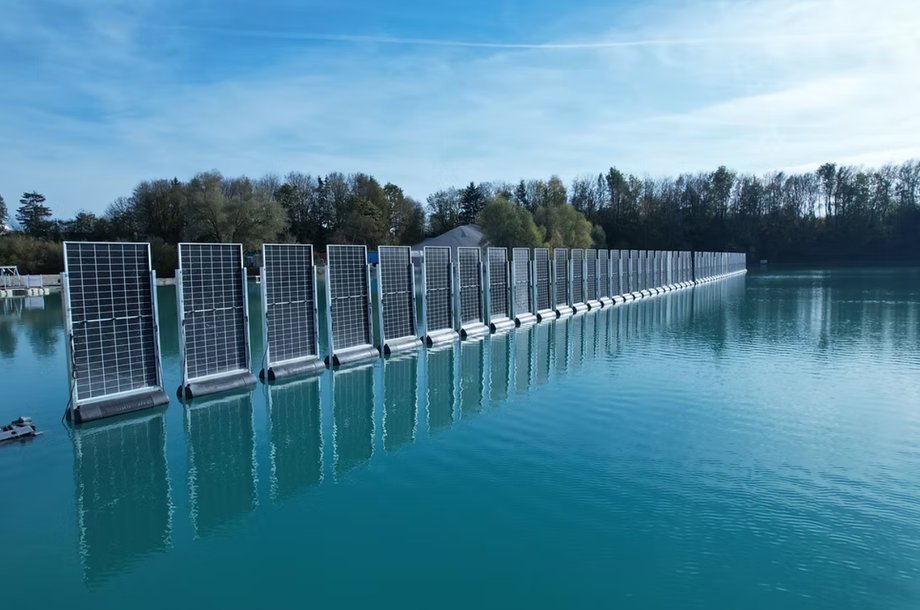
The system installed on the lake is also ready for use at sea
|
Sinn Power / Sinn power
The patented SKipp system developed by SINN Power introduces a vertical east-west orientation of the modules, separated by open water corridors at least four meters wide. This cell configuration is designed to ensure stable energy production throughout the day and increases efficiency in the morning and evening hours when conventional photovoltaic systems generate less electricity.
This has never happened before. The Germans showed a new power plant
As explained by the “Offshore Energy” website, the project complies with the German Federal Water Resources Act (WHG), remaining well below the 15% limit. surface coverage while maintaining high power density. A second phase with a capacity of 1.7 MW is already planned, which will keep the total coverage below 10%.
According to environmental monitoring, the power plant did not show any negative effects. Early data shows improvements in water quality, while the system has also created new habitats, with breeding waterfowl and fish seen around the floating features, SINN Power said.
See also: USD 467 billion in savings thanks to renewable energy? In the Global South, prices will fall the fastest
The patented technology is to be – according to the developer's intention – suitable for artificial water reservoirs with a depth of more than 1.6 meters, such as lakes in quarries and gravel pits. It targets users with high energy consumption and provides a grid-friendly production profile that supports regional grid stability. The system is also ready for use at sea and meets the technical requirements for maritime operations.


