Over half of the Romanians make stocks of food for fear of increases. The economy has entered the “One Battle After Another” phase, I draw the expert's attention

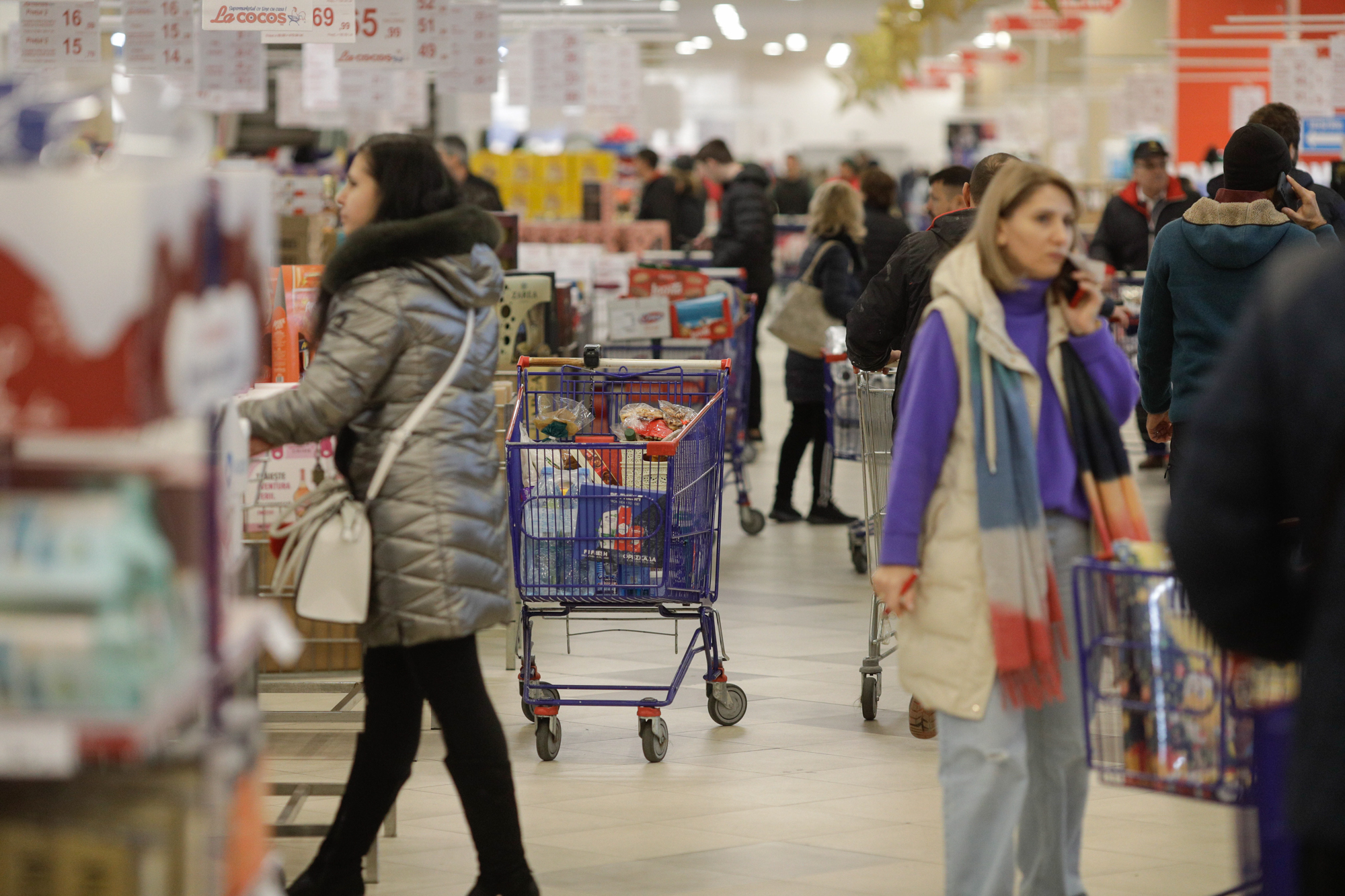
Supermarket in Romania. Inquam Photos / George Călin
Inflation or decrease in money has led to a significant adjustment of the buying behavior among Romanians. Recent data, collected in the third quarter of 2025, underlines a growing caution of consumers and signals a notable slowdown in the economy.
In the face of significant increases -foods increased by almost 9%, non -food products with over 10%, and services by almost 10%compared to last year -, VAT increase being a main cause, Romanians adjust their expenses.
Over half of the respondents of an ISense survey say they have reduced the budget allocated to the essential acquisitions, an increasing percentage compared to the previous quarter.
Consumers continue to be cautious: they avoid impulsive purchases and carefully analyze the price/benefit ratio of the product.
An increasingly accentuated tendency is the storage of products: 55% of ISense survey respondents say they have bought stock or discount products, the highest percentage of the last three years. This strategy shows a concern for optimizing expenses and taking advantage of advantageous offers (promotional packages or type 1 promotions).
Pesimism among the population on the ability to save is increasing. According to August 2025 data: 44% of respondents anticipate a decrease in personal economies.
These figures indicate a worsening of the perception of August 2024, when only 34% anticipated a decrease.
Macroeconomic indicators confirm the difficulties felt by consumers, suggesting a braking of the economy
The economy of Romania almost stagnated in the first half of 2025, registering a real GDP increase of only 0.3%. The purchasing power decreases, because the salaries increase very little or even decrease, while the prices and rates of loans erode the income, shows an analysis of the BRD published on Friday.
Unemployment increased to almost 6%, the employment stagnated, and the real salaries decreased.
The retail trade has registered two months of consecutive decrease, and the expectations in the industry and services are in historical minimums.
Economic activity – “One Battle After Another”
The state is facing financial problems: the budget deficit objective was increased from 7% to 8.4% of GDP, and the public debt is dangerous to the threshold of 60% of GDP.
The economy could record a recoil this year, and the chances of a quick return are small. The purchasing power decreases, the restructuring in the companies are increasing, and the fiscal environment becomes harder.
The NBR estimates that inflation will reach a peak at the end of autumn and will decrease very slowly towards the end of the year.
Although difficult, measures to reduce expenses and tax increase are considered to be the only way to stabilize the long -term economy, BRD analysis shows. Inflation will remain high and approach 11%. And the economy will depend crucially on the state's ability to manage the budget and the international context.