The US is adapting hypersonic weapons for mobile launchers. What it means for global security


Defense company Castelion announced Friday that it has won contracts to integrate its “Blackbeard” hypersonic attack missile with current US Army systems — the first step toward being able to deploy these powerful and difficult-to-intercept weapons globally.
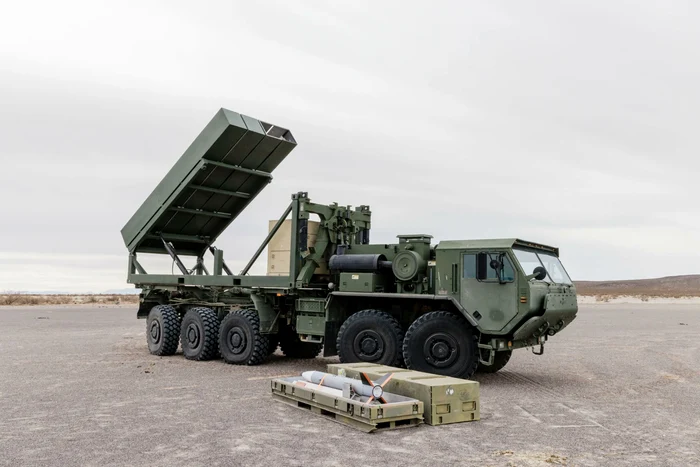
HIMARS launchers will launch “Blackbeard” hypersonic missiles/FOTO:X
The United States and China are in a race to develop hypersonic weapons, which fly in the upper atmosphere at speeds of at least five times the speed of sound and are designed to bypass conventional defenses.
Integration on existing platforms
Castelion will collaborate with the Army to integrate the Blackbeard system on operational platforms such as HIMARS (High Mobility Artillery Rocket System). HIMARS became a household name after images of launchers used in the Ukraine war.
Other American companies, including Stratolaunch, RTX's Raytheon unit and Lockheed Martin, are also developing hypersonic capabilities, and the success of these programs could lead to major contracts. The terms of the integration contracts with the Army and Navy were not made public by Castelion. The administration's proposed 2026 budget allocated $25 million for similar future integrations, but remains subject to congressional approval.
An arsenal designed for mass production
Blackbeard, Castelion's first hypersonic missile, was designed for mass production and rapid fielding at a much lower cost than traditional hypersonic weapons. The company aims to produce thousands of units annually at full capacity, with a target cost of hundreds of thousands of dollars per unit. The contracts represent an important step in diversifying the Pentagon's options as it seeks more affordable strike capabilities.
What does the Army say and what is the role of the HX3 project
Army budget documents for fiscal year 2026 — not yet finalized by Congress — mention plans for a future variant of the Precision Strike Missile (PrSM), called the HX3, which could “double the range” of the base PrSM 1 variant at a lower cost. The budget indicates testing the Blackbeard hypersonic missile's ability to engage “time-sensitive moving targets” and consolidated targets at “a cost per missile greatly reduced compared to the Army's current inventory.”
However, the documents emphasize that the Blackbeard GL (the ground-launched version) “is not a replacement for Long Range Hypersonic Weapons (LRHW)”, in the sense that it will not achieve the same speeds or ranges, but aims to provide about 80% of the PrSM Increment 4 capability at a significantly reduced cost.
Calendar and testing stages
The request for Blackbeard was approved in May 2025 after Army leaders instructed the Rapid Capabilities and Critical Technologies Office to advance the Common Autonomous Multi-Domain Launcher (CAML) program, which includes medium and heavy variants. CAML could, in the future, replace the basic HIMARS platform and other launchers.
The Army's budget for 2026 foresees two phases: the first, the delivery of a “prototype proof-of-concept” for a demonstration scheduled between January and March 2026; second phase, production of at least ten minimum viable product prototypes for flight testing on an M142 HIMARS by the end of fiscal year 2026, if the initial demonstration is successful.
A Castelion executive said cross-platform integration validates the role of accessibility and speed in modern deterrence. The company previously won a contract with the Office of Naval Research for an initial study on a potential air-launched weapon for anti-surface missions, but has not yet disclosed which naval platform Blackbeard would integrate.
All US military services have invested heavily in hypersonic weapons in recent years, amid strategic competition with China and Russia. In 2023, the Army assigned competing teams led by Lockheed Martin, respectively Raytheon Technologies–Northrop Grumman, to develop PrSM Inc 4 variants, and in 2024 and 2025 the programs sought to expand the portfolio to launch from autonomous and mobile platforms.