How does feta cheese mature? The secrets of the taste and consistency of this Greek delicacy

Feta cheese is made from a mixture of sheep's and goat's milk, which gives it a creamy texture and extra flavor compared to cow's milk cheeses. However, depending on where you are in Greece, you will receive feta with different flavors – from soft and buttery to hard and spicy. It all depends on the combination of two types of milk and their proportions. We are in the Peloponnese to find out what other secrets lie behind the production of feta cheese.
You can get feta cheese made entirely from sheep's milk or one that contains 30%. consists of goat's milk. Other types of milk, such as cow's milk, cannot be used. We make feta with 90 percent. sheep's milk and 10 percent goat milk
– explains Georgios Petropoulos, president and production manager at Messini Cheesemaking.
— Why do you use a combination of these two ingredients? How does this change the taste? – I'm asking.
— This gives the cheese a creamy consistency, but is also a bit spicy. Using only sheep's milk would give us creaminess, but we would lose the spiciness, he replies.
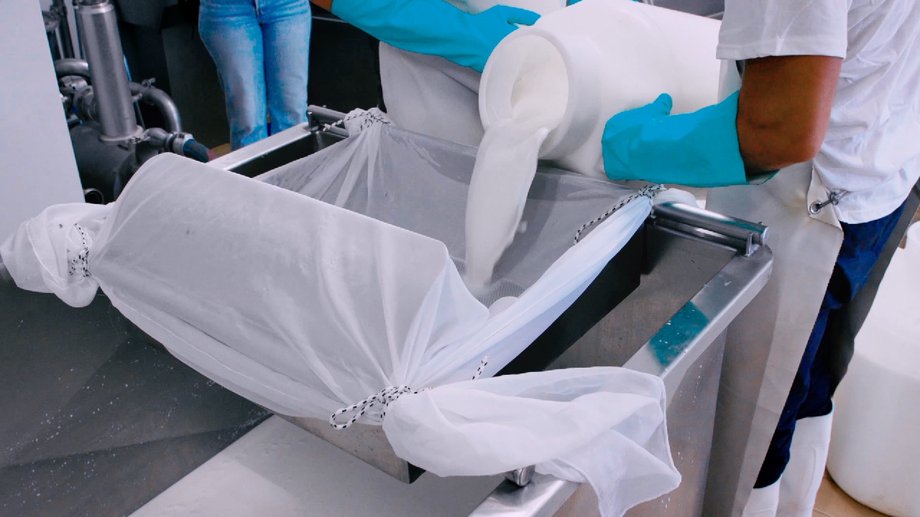
The milk you see in these vats was aged for one day at low temperatures and pasteurized. It is now ready to be made into cheese. Once each batch has cooled to 35 degrees Celsius, Georgios' dad, Athanasios, adds the bacterial culture to the milk to start fermentation.
– This is my father. He was born in 1948. The original recipe was created by my grandfather in 1950, and my father perfected it as he grew up, explains Georgios.
Making feta is more complicated than you might think
|
Business Insider
How is feta cheese produced?
After 20 minutes of maturation of the bacterial cultures, Athanasios adds rennet. The rennet used also comes from two types of milk. This time it is a mixture of cow and goat milk, which gives extra spiciness. Each batch matures for 55 minutes and then is cut into curds.
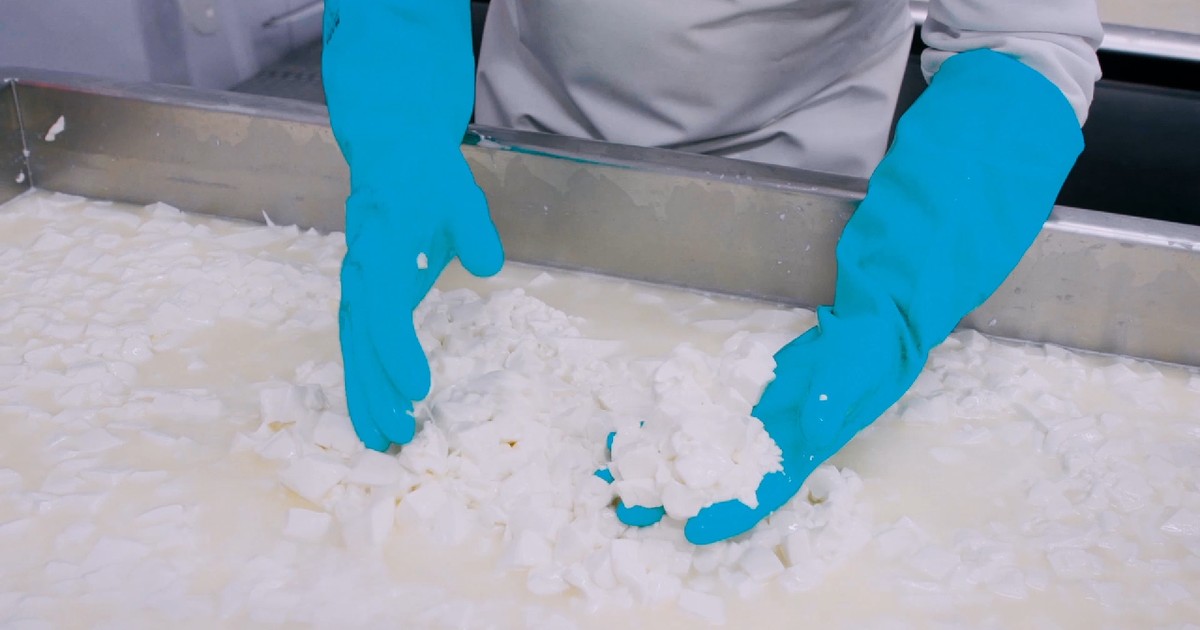
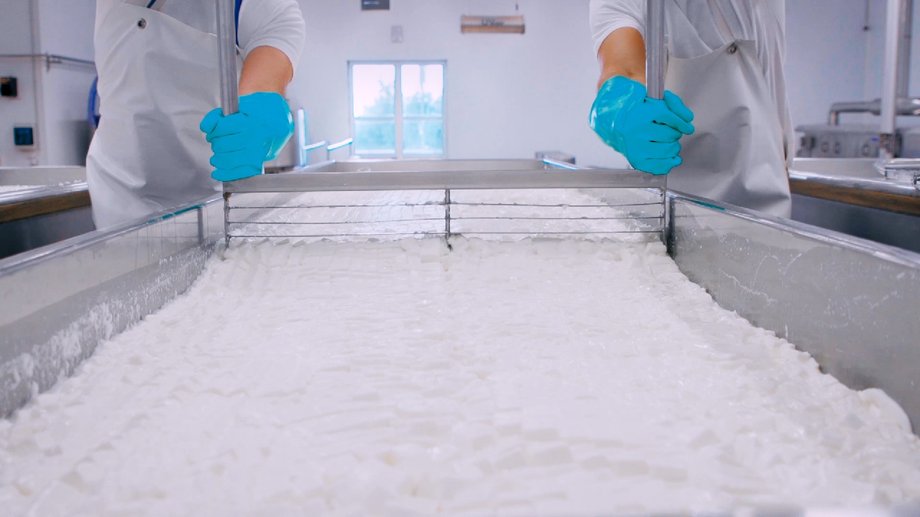
The curds are first cut vertically and then horizontally to obtain perfect cubes. You just really enjoy slicing things up. After cutting, the clots are transferred to molds, which are, of course, in the shape of cubes. Other cheeses go into molds and all the whey is squeezed out, but feta molds have several holes to gently drain the whey without losing all of it. We'll soon find out why.
Each cube contains 8 kg of curds and whey, but in the end it will only weigh 6 kg. After a two-hour break, each cube is cut into one-kilogram blocks and salted. Athanasios places salt under and over the blocks to evenly coat the cheese.
The Greeks have a simple trick that makes feta taste amazing
|
Business Insider
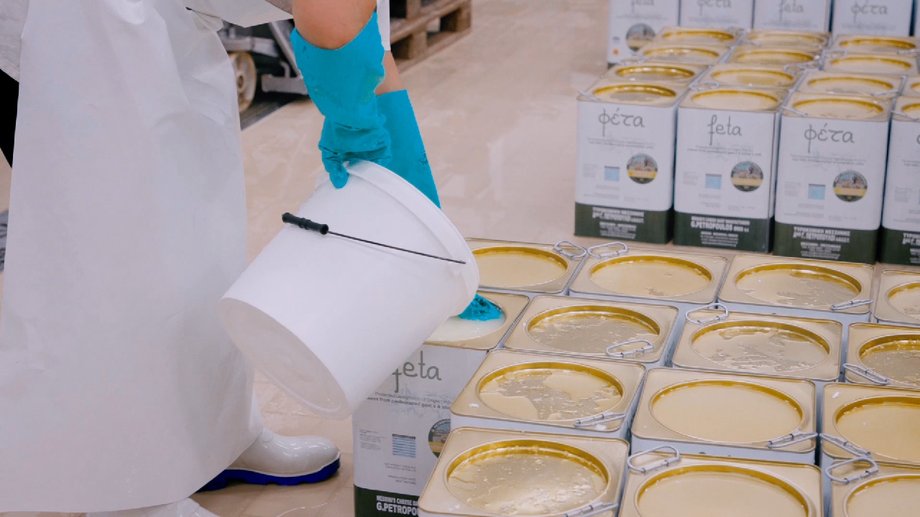
The cheese will mature for 24 hours. You may have noticed these plastic separators. They are used to gently drain the whey from the feta cheese curd. This liquid whey mixed with drained salt creates a natural brine. Once the package is closed, the feta will release even more liquid, which will go into the brine.
The feta matures for 15 days at a temperature of 18 to 20 degrees Celsius. Temperature and ripening time influence the intensity of flavor. The longer it matures, the more acidity it gains.
Real feta is never made from cow's milk
|
Business Insider
The taste of cheese is the key to success
— We prefer the cheese to mature longer to give it a stronger flavor. If the cheese is not ripe, its taste will be very bland. It won't taste tart and will taste like grass. To make sure the cheese is ripe, we look at the color of the brine – whether it is yellow – and the color of the cheese. Then we check whether the cheese can be pressed easily and whether it returns to its original shape. The more mature he is, the faster he returns to it. Then we watch as spaces start to form between the pieces, which means the cheese has started to ripen and thicken, Georgios explains the process.
– There's a buttery taste. It's sour but buttery at the same time, right? After three or four days it will still have that flavor, but it will also harden a bit. Then it will be perfect – he boasts.
— Feta cheese was once matured in barrels. I read that the barrels added a little spice to the rennet, making it bitter, I say.
-It's a myth. The barrel affects the taste, but it doesn't mean the cheese tastes better, replies Georgios.
After 15 days of maturation at a mild temperature, the feta is stored at a low temperature for 45 days to develop its full flavor and aroma.
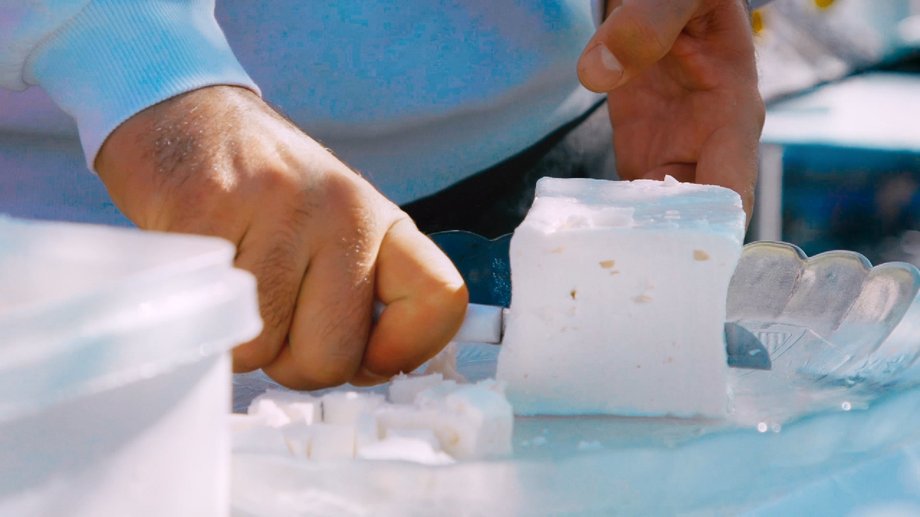
The taste of feta should be peppery
|
Business Insider
— You can feel goat's milk and a bit of spice. It tastes similar to the one we ate before, but you can feel the crunchiness in its consistency. It's a nice balance of flavor. There's an interesting aftertaste, I say.
— The taste should be peppery so that you can feel the goat's milk. The taste is buttery, slightly sour and peppery. It is a medium-hard cheese. My grandmother made much harder cheeses. They had the same taste but were very thick. My father changed that and makes medium-hard cheeses, which makes them creamier. Thanks to this, he achieved success. Now I'm going to eat all the cheese because it tastes so good, laughs Georgios.
Author: Claudia Romeo, Insider journalist