Almost forgotten crafts are brought back to the attention of children. “Between braid and tissue the rush is a big difference”

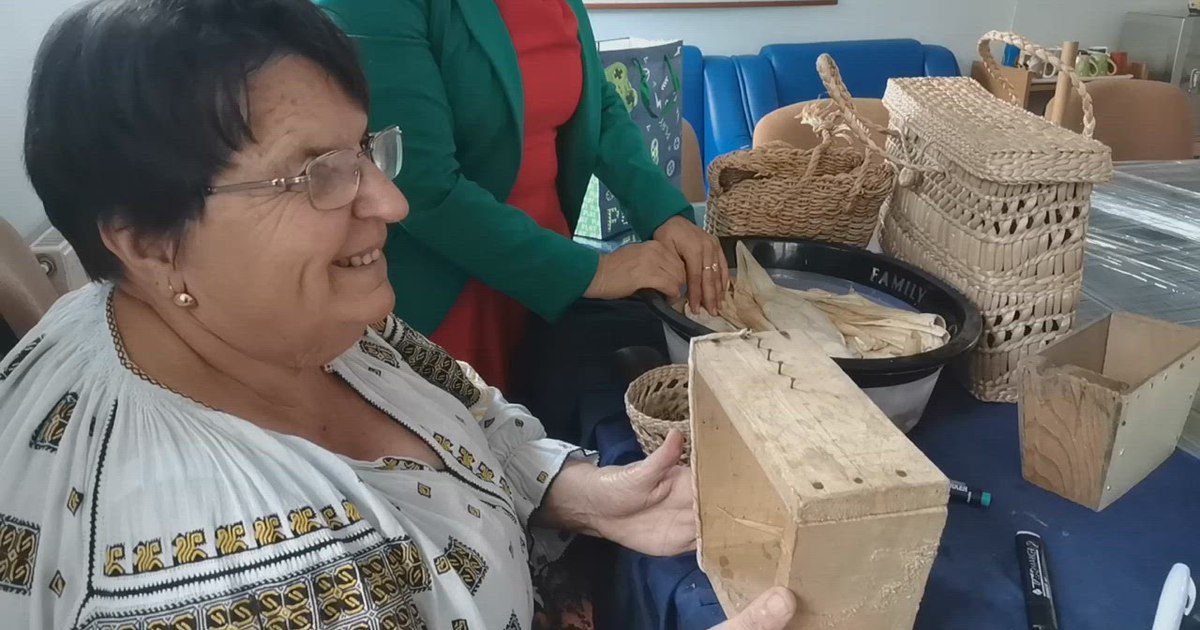
Two relatively easy to learn crafts, almost lost today, were presented to children much better to handle electronic devices. The objects made by the crafts still have a good market.
The braid of the papus and corn peaches and the tissue of the papus are two almost forgotten crafts today. Dozens of students from Slatina had the chance to see two famous folk craftsmen at work and thus find out what wonders you can do with your hands still handy. The occasion was created by the County Center for Culture and Art Olt, which set up a pilot project, “The traditional culture of Olt”, meant to bring the children closer to the crafts and folk art.
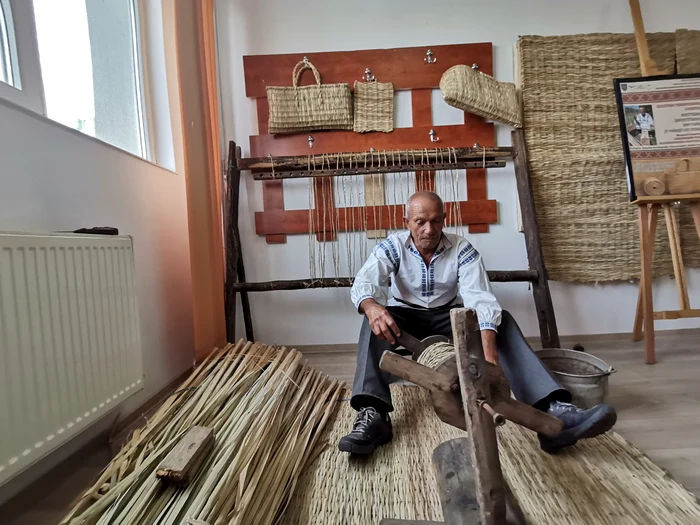
Master Gheorghe Neagoe is still making porn and photo panels today: Alina Mitran
Two popular craftsmen known in Oltenia – Olga Alexandrina Filip, craftsman in folk seams and fabrics, living human treasure, and Gheorghe Neagoe, craftsman in the tissue of the papus – explained to the children how the corn and the rush can turn into objects for which today there are buyers to pay for things.
The Creator of Pornita: “I can't stay”
In a village in Olt where, decades ago, the tissue of the papus had the extent of a true industry there is only one craftsman today. Gheorghe Neagoe, from Călui, Olt, does not give up, the 77 years, to the craft who in his childhood fed the family and who saved him and when the factory of axles and bogies did not work.
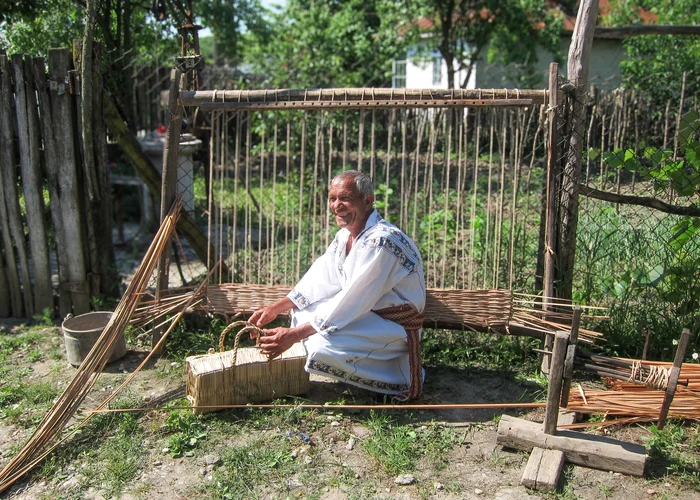
Master Gheorghe Neagoe in his household in the mouth of Călu PHOTO: Valeru Ciurea
Summer weaves the rush in the yard, in the house in the house. It is almost no work, it's a way of being, it's what keeps it in shape. “I can't stay,” explains Gheorghe Neagoe.
The objects they make in the war of tissue – rogojini (the old “carpets” in the village houses) and panelets – still look through the craftsmen. Nea Gheorghe does not even need fairs, because he receives orders over the phone. He does not worry that he has no place to sell, his great care is where he gathers his rush, an increasingly difficult raw material. He works for her in the middle of summer, when others are quiet in the shade, and even puts their health to the end, because the rush is cut from the marshes. But these are not the thoughts that often knead him, but that he has no one to leave what he has learned from his parents and grandparents, because young people, neither family nor community are interested. It is one of the reasons why the craftsmen are invited to young people to talk about what they can do with their hands and how they can win.
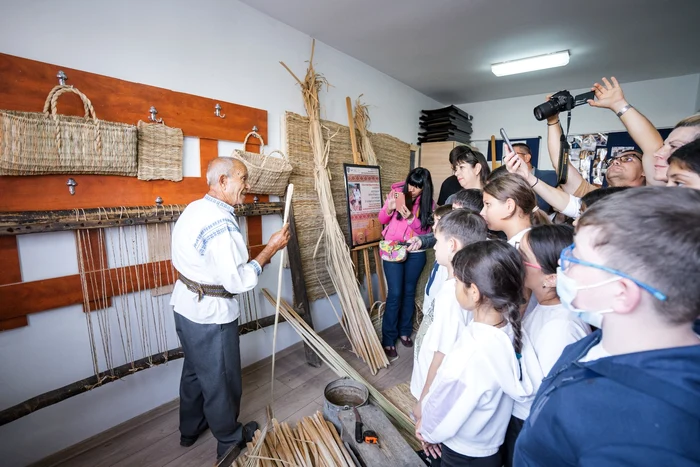
Children are curious to find out from the mysteries of old crafts photo: FB/Culture and Art Center
The mats, which today no longer have the former uses, but are still sought, are made in the war of tissue, as well as the famous parsnites that all Romanians know from the comedy “Nea Mărin billionaire”. The rush is left to soak, to be easier to handle. With the panels the job goes harder, they are more migraine, it can only do two or three.
Poices that can compete with those of the big fashion houses
Olga Alexandrina Filip is known for the unparalleled she sews, receiving the title of living human treasure as a recognition of her skill. Tanti Olga, however, make objects at least as beautiful from the rush and corn. The technique is quite different from the one used by Nea Gheorghe Neagoe. “Between braid and tissue the rush is a big difference,” says Tanti Olga. By the objects braided from corn peaks probably many parents and grandparents remember, because they were done even at workshop or manual work hours. What the craftsman Olga Filip does can instead rival the objects made by large fashion houses.
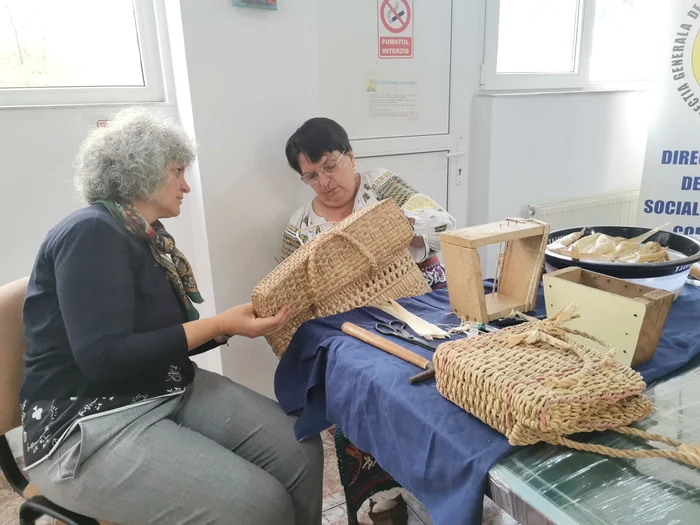
The objects braided by Olga Filip were long researched and admired: Alian Mitran
For braided bags, for example, it needs a pattern. Prepare the thread first, which you will later interweave.
He learned the craft within the Cezieni Cape, one of the most modern in the country.
“During the head, we were the wicked braid section in Cezieni. At one point, the president of the CAP, Mr. Dănacu, decided to reap the corn with ponds. We were sent to a locality near Târgu-Mureș and we learned to work braids. From the wicker we also made furniture, and baskets, all kinds of objects. We got to qualify there, we came to the head and next to the wicked braid section, a small section of peacocks and rush was set up. But the braided rush does not work as woven, as Gheorghe works. Nea Gheorghe uses all the rush. They, for the braided one, only goes the core of the rush, which has flexibility. The sheet of rush, if you twist it a little, burst. Not having a rush around our commune, we had to give up the rush and remained to work with these corn leaves. We had different forms, to make bags, the backpacks, all kinds of baskets – larger, smaller, like this, all kinds of objects – flowers, dolls, Christmas ornaments. But I left them, because they were not very sought after, and I went into sewing. But the love for these objects has remained. And when I found some peacocks, I gathered a bag and said to try. Today no one wants to do that. I say you have nothing to do with them anymore ”, says the master Olga Filip.
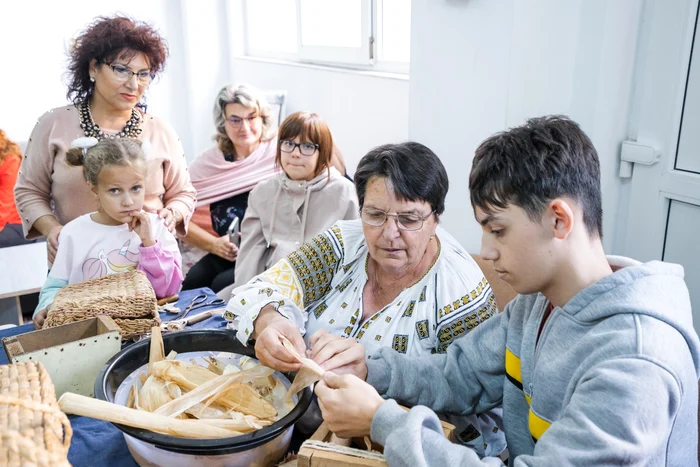
Children do not seem to be a complicated craft photo: FB/County Center for Cullement and Art Olt
Children, on the other hand, seems interesting and not very difficult to work, although, I admit, it takes a lot of exercise. The bags in the rush and braided pans that have drawn all eyes to the demonstration of the two craftsmen are worked by Olga Filip many years ago. One of them made it in the mid-1980s, while leaving the village to work on the site, where the wages were considerably higher than at the head. As in the locality where he had chosen to work he was abundant, with the right material and skill managed to make an object today admired.
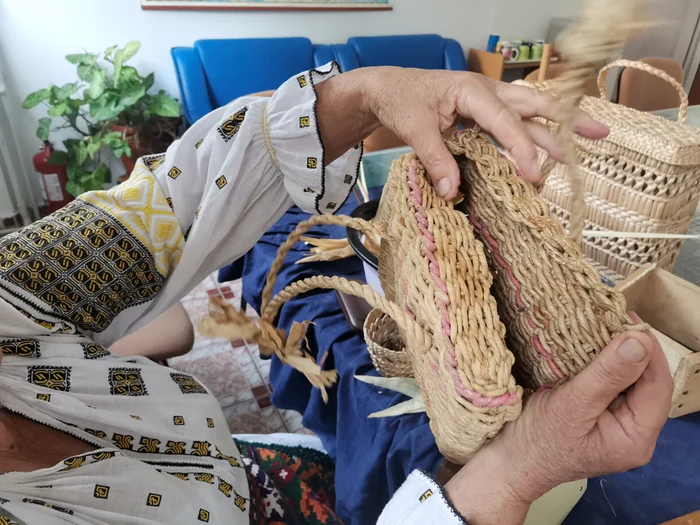
The wire used for braids is first twisted photo: Alina Mitran
Aunt Olga also told that in her childhood, the toys made them from corn. Thus, dolls worked. “With these we were playing, we were making dolls. I had chemically and on the leaf I put in front I made his eyes, nose, mouth … and in front, a sheet was the sting and wrapped it and wrapped it. From here I had removed half, I tied it below, I was doing his feet. Or corn with silk, so, I was making a doll, I was doing the hair, I was making tails … “, Tanti Olga told.
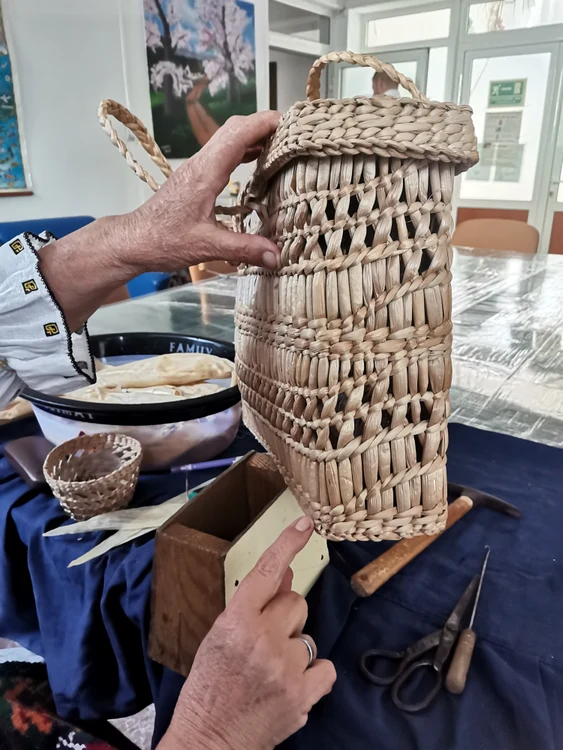
In the braid workshop at the head each craftsman made a few such objects a day: I have
The approach of the County Center for Creation and Art Olt will continue in the coming months with similar demonstrations of other popular crafts. If there will be an increased interest from the children-the pilot workshops participated in various forms of care in the General Directorate of Social Assistance and Child Protection (DGASPC) Olt-, the occasional workshops could be transformed into more frequent meetings, so that the old crafts can be taken.