The BNR beats the interest rates at 6.5% and clicks on the break button to see how the economy will evolve


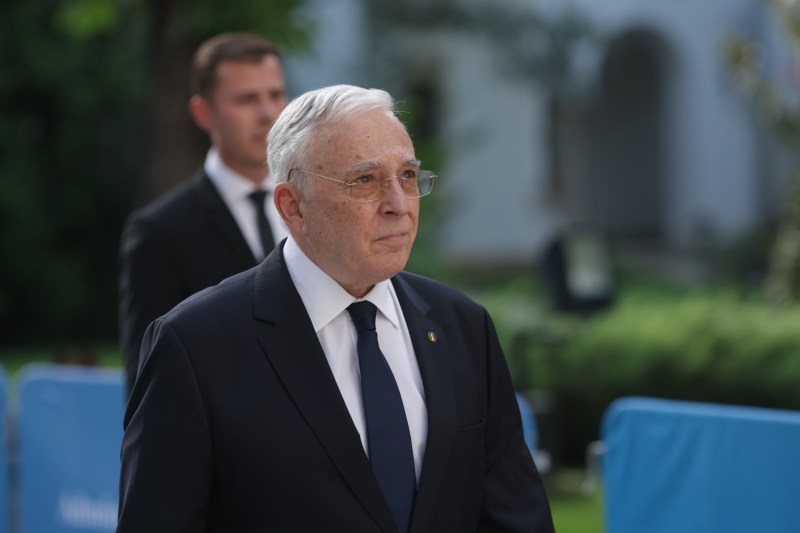
Mugur Isarescu Photo Inquam_Photos_George_calin
The National Bank of Romania decided on Wednesday to keep the key interest at 6.5% per year, as expected, despite an inflation that exploded at almost 10% in August. The decision was expected, but the reasons behind it show an economy blocked between increasing inflation and the risk of recession.
Basically, the BNR decided:
- Maintaining the rate of monetary policy interest at the level of 6.50 percent per year;
- Maintaining the interest rate for the lending facility (Lombard) at 7.50 percent per year and the interest rate at the deposit facility at 5.50 percent per year;
- Maintaining the current levels of the minimum reserves compulsory for liabilities in lei and currency of credit institutions.
In other words, the NBR chose to press the “Pause” button and wait to see what happens in the next month, when the board will meet again (November 12).
Inflation: The issue number one
The main reason why the NBR cannot reduce interest is simple and painful: Inflation has grown over expectations
The figures are worrying:
- In June 2025inflation was at 5.66%
- In Julyjumped to 7.84%
- In Augustreached 9.85% – far beyond the expectations of the BNR
Why this explosion? Two explanations, both in the Government's “yard”:
- From July 1 It ended the capping of the electricity price – the invoices increased
- From August 1 VAT and excise duties increased due to the package of fiscal measures adopted by the Government in July
The result? Prices jumped up immediately. Electricity was the most affected, but also food and services have become more expensive.
What does the “adjusted core2 inflation” mean to the NBR?
The adjusted Core2 inflation is an indicator calculated by the National Bank of Romania (BNR) and represents a measure of the basic inflation, that is, the increase of the prices in the economy, eliminating those elements that are considered volatile or that do not respond as quickly to the monetary policies.
Inflation Core2 adjusted excludes from calculation: The prices administered (electricity, gases, water, etc.), Price prices with high volatility (fruits, vegetables, eggs, fuels) and Tobacco prices and alcoholic beverages
This indicator reflects more faithfully the persistent inflationary pressures in the economy, without being affected by temporary factors, external shocks or administrative decisions.
Economy: contradictory signs
The situation of the Romanian economy is like a chaotic blinking panel:
Relatively good news:
- The economy increased by 1.2% in the second quarter 2025 (compared to the previous quarter)
- Exports go better than imports
- Commercial and current account deficit have improved slightly
The bad news:
- Romanians buy less and less – slow retail sales
- Jobs are reduced – companies give out people
- Unemployment is kept at 6%
- Investments have declined again
Basically, the economy is in place-the NBR speaks of “quasi-stagnation” in the second half of the year.
Why not reduce the NBR interest if the economy stagnates?
Here is the BNR dilemma: on the one hand, the economy suffers and would need smaller interest to breathe easier. On the other hand, 9.85% inflation is far too high to let go of a monetary relaxation.
If BNR would now reduce interest:
- Would stimulate the economy ✓
- But would risk accelerating inflation even more
- Would weaken the lion and increase even more imports
So the BNR chooses to stay in place and wait for the future evolution of the economy.
What will happen in the coming months?
According to the Central Bank's calculations:
- Inflation will remain on a High “platter” By the end of September
- Then it will fall Very slow In the last part of the year
- Government tax measures will possibly help lower inflation but not immediately
A positive thing: the austerity measures of the Government (expenditure cuts, tax increases) will reduce the demand in the economy and, implicitly, the inflationary pressures.
But that comes with a price: and fewer jobs and an even weaker economy.
The risks that the BNR sees
Central Bank draws attention to several dangers:
External:
- The war in Ukraine
- Tensions in the Middle East
- Global commercial wars
- Huge defense expenses in the EU
Internal:
- Fiscal uncertainty: Not knowing exactly what other tax measures will come
- The absorption of European funds: Romania must use the EU money urgently to compensate for austerity
What does this mean to the ordinary Romanian?
In short:
- Interest will remain high for months from now on. Don't expect to fall in the coming months
- Deposits will continue to provide real negative interest for a period. With an inflation of 10% money loses their purchasing power faster than the reward that the banks pay by interest
- Prices will remain high and decreases we will not see too soon
- Wages do not keep up with inflation
conclusion
The NBR is caught in a trap: it cannot reduce interest due to inflation, but it cannot increase them because the economy is already weak. So choose to wait – to see if the measures of the government works and if the inflation is starting to descend.
For Romanians, this means that The hard times will continue at least until the end of the year. The prices remain high, the rates remain high, and the hope is that 2026 will be better – but that depends more on the government than on the NBR.
The next BNR meeting will be on November 12 -Then we will see if things have improved or, on the contrary, have worsened.