Last Friday, shortly before half to nine, unknown perpetrators took advantage of the opportunity to make all politicians dealing with internal matters and safety in Germany, as urgent the issue of defending drones against critical infrastructure is. For the second time within 48 hours they were flying over the airport in Munichand air operations were immediately interrupted. On both evenings about 10,000 Travelers were sticed, flights were translated, and the effects on air traffic over Germany were felt until Monday.
Alexander Dobrindt, the Minister of the Interior, reacted immediately and announced a new law on aviation security. The current legislation already offers many possibilities to combat unmanned aerial vehicles. What's more, the Bundeswehr is already authorized to shoot down all a foreign military aircraft – manned or not – over Germany, which is one of the tasks of its own air force.
However, the problem lies rather in the possibilities, as explained by Hans-Peter Stuch, a researcher for defense against drones at the Fraunhofer Institute at Bonn. Supervision over such a large object as, for example, an airport in Munich, is simply technically impossible using funds currently available to the police and the Bundeswehr.
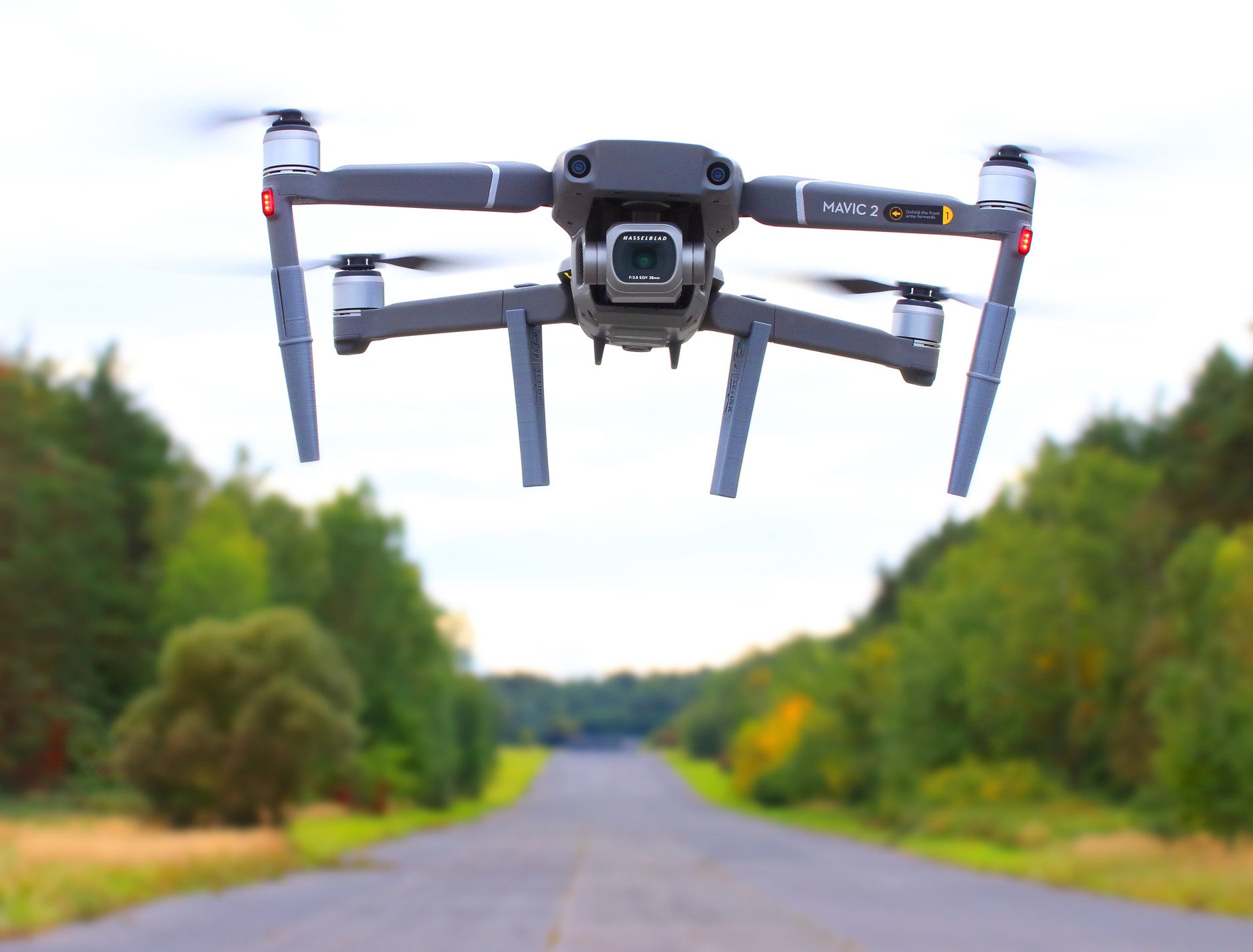
This is because Conventional aircraft supervision radars usually do not detect slow and low -flying drones – They are covered by trees or tall buildings. To detect drones in a quadcopter size, such as DJI Mavic, often used in Ukraine, special radar sensors with a relatively short range must be connected to optical sensors, infrared cameras and radio direction locators.
Darkness favors drone pilots
– A difficult thing in protecting an object such as the Munich airport is its size, especially the length. Sensors have only certain ranges in which they can detect at all – says Stuch. – Radar and radio detectors see the furthest. Cameras can reach a good kilometer, and radars over five kilometers – he calculates. Only by combining several sensor locations is it possible to fully monitor the airport.
Continued article under video material
According to the expert, the method of unknown pilots consisted in the fact that they always flew their drones at night. – Current drone observations almost always take place in the dark. This is no accident. At night, the level of uncertainty increases to maximum – explains Stuch. – Based on the thermal imaging image from the infrared camera, it cannot be determined whether there may be an explosive load under the drone – he adds. To minimize the risk, the authorities must therefore always react as in an emergency, stop air traffic and start defensive means – Even if it is only a harmless mini drone from an electronic discount store.
The reaction time is also a serious problem. If a person has to decide if the drone is dangerous or not, In a decisive case, too much time may pass. – Considering the current reaction times, the time needed to cooperate between the police and the Bundeswehra in an emergency, the pilot of the drone will be able to exhaust the battery twice before anything happens – says Stuch.
What's more, no man is able to follow the masses of the data from the sensors himself, so Artificial intelligence must take over the image analysis, and the algorithms must combine data. The fusion of sensors is a technical term used by experts in the field of military technology. It is considered the peak of digital recognition, but there is still no perfect way that would simplify making the decision about the reaction. – Radar, camera, radiolocator … The trick is to combine all this into a network. The fusion of sensors is something that many have already tried their hand at, but no one has a perfect solution yet – says Stuch.
Artificial intelligence has an advantage. People are too free
Stuch is the head of development in a joint research project of the Federal Criminal Police Office, Fraunhofer Institute and various universities and defense producers. For several years, they have been cooperating on developing a solution to defend against drones. Sensors should automatically recognize when the quadkopter is approaching.
The goal is to track and locate the drone, and – if possible – a pilot by triangulation of radio signals. Computers are to turn on the alarm, distract the drone with radio jammeters, and if necessary even lead your own drones to capture the target. Operators should be involved as little as possible, and only agree to use defense equipment. The reason is simple: people react too slowly.
At the end of July, the involved scientists and companies successfully demonstrated the use of a system prototype in Mosbach in Baden-Württemberg. Stuch is convinced that “the effects will soon be used as products.” But this is not so far away – and it will not be cheap either. Scientists have not valued their product, but the price will probably oscillate within the seven -digit number.
Throughout the country, start-ups from the defense industry and traditional defense equipment manufacturers feel a great opportunity. If the entire critical infrastructure in Germany is to be protected against unmanned aerial vehicles, you will have to invest billions. Even a single radar sensor – and at the airport or port you need several – it costs from several hundred thousand to several million euros, depending on the model.
Technology and right barely keep up with the threat
In any case, it is doubtful whether the armament will have any deterrent effect. So far in the arms race, the pilots of the drone have an advantage. Their task becomes rather easier with the further development of drone technology than the war in Ukraine. They don't even need military equipment for this.
Mavic drone, so -called Quadkopter. Illustrative photoKleter / Shutterstock
DRON MAVIC of the Chinese manufacturer DJI are already flying up to 28 km from the pilot. From 2024, commercial drones weighing 250 grams or more have to send a signal called “Remote ID” to report their position in the aircraft. However, even unprofessionalists can make drones from individual parts that do not emit this signal.
Drone start-ups sell transmitters and receivers for drone control systems over 30 km for only $ 30. [ok. 110 zł]. Even flights over 100 km are not a technical problem: Remote control signals can simply be sent via mobile telephony.
The resulting range makes it It is extremely difficult to track the drone pilot and determine its exact position. In fact, disturbing aviation traffic with drones will remain a relatively free undertaking, at least in the foreseeable future, unless the pilots simply do not comply with the regulations.
Jammers? This is also not an ideal solution
It is true that modern drone defense systems can detect unmanned aerial vehicles over German airports, port terminals or armed forces. But if the aerial traffic must be stopped every time so that the captivating drones can start, then Unknown traffic members have already achieved their goal of maximizing uncertainty. The cost is only a few hundred euros.
A quick alternative to capture drones, the use of which must first be authorized, can be jammers that disturb the connection between the drone and its remote control.
However, in this case, drone technology is a step ahead. – The problem with the jammer is that The drone does not fall, only the connection with the remote control is interrupted. How the drone reacts depends on how it was programmed – explains Stuch. If the control signal is disturbed, modern drones simply automatically fly to the programmed route points, send reconnaissance data via a mobile radio modem or fly away exactly to the pilot to divert attention from the pilot position.
The incidents in Munich show how defenseless Germans remain in the airspace above its most important infrastructure. Technology and right barely keep up with the threat. As long as the drone pilots can escape undetected, the sky over airports, refineries and power plants will remain a gate, which even a technically excellent drone defense system can only close to a limited extent.
I’m Ashley Davis as an editor, I’m committed to upholding the highest standards of integrity and accuracy in every piece we publish. My work is driven by curiosity, a passion for truth, and a belief that journalism plays a crucial role in shaping public discourse. I strive to tell stories that not only inform but also inspire action and conversation.