Gabriel Zucman, the ignored economist: “The French government refused to listen to the appeal for a fair taxation of the great wealth”


While France sinks into a deep political and economic crisis, economist Gabriel Zucman accuses the lack of political courage and the refusal of governments to respond to the public demand for fiscal justice.
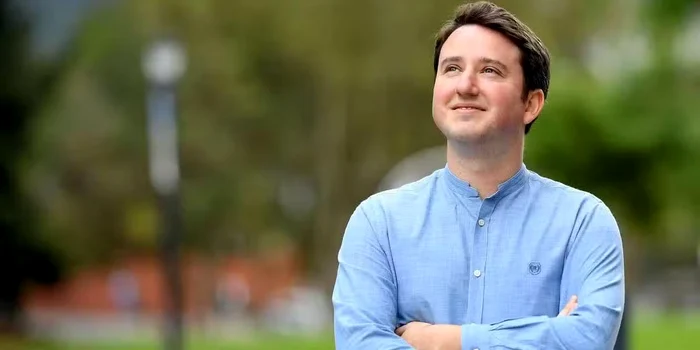
French economist Gabriel Zucman/Photo: AFP
Gabriel Zucman, one of the most famous French economists internationally, harshly criticizes the Political leadership in Paris for the repeated rejection of his proposal to introduce a progressive tax on the big assets. At a time when France is confronted with government instability, increased loan costs and increased social pressures, the refusal of the authorities to directly address the problem of fiscal inequalities becomes, in its vision, a gesture of irresponsibility.
“The executive power remained completely deaf to both the parliamentary effort and the democratic claims expressed by the society,” “ Zucman states in an interview with the Political Publication. “The lack of a real dialogue with the opposition on the taxation of the great wealth has blocked the country and consumed precious time.”
Zucman's tax, supported by most French
His proposal – informally known as “Zucman tax” – aims to impose an annual tax of at least 2% on net assets that exceed 100 million euros. The measure, supported by the Socialist Party and by the part of the parliamentary left, enjoys an overwhelming public support: according to a recently ordered survey, 86% of the respondents are declared in its favor.
“There is a deep demand among the population for more fiscal equity and for a correct taxation of the very rich,” “ Explains the economist, who teaches both Paris School of Economics and University of California, Berkeley.
But despite the popular support, the project was kept hostility by the economic and political elites. Former Prime Minister Sébastien Lecornu told Le Parisien that he did not support the taxation, invoking that it would also apply to professional assets, which could discourage investments. Also, the conservative partners from the coalition – especially Les Républicins – have conditioned the support of the government to exclude such a fiscal instrument.
A struggle between elites and society
The rejection of a fiscal reform supported by a large majority raises question marks on the ability of French democracy to respond to social pressure without giving up the influence of interest groups. Zucman emphasizes that the opposition to the tax on the big assets was supplied by billionaires with media influence, such as Bernard Arnault. “Those affected by this measure – and the media that control – have had extremely virulent reactions, in an attempt to prevent any form of reflection or debate at government level,” says the economist.
And yet, Gabriel Zucman remains optimistic. Even though his initiative was not transposed into the legislation, the public debate contributed, in his opinion, to a “better understanding of fiscal mechanisms and inequities in the system.”
“The level of public debate has increased, and this is a gain in itself,” “ he says.
France is not at the hand of creditors
The resignation of the Lecornu government and the uncertainties that are planning on the future political future have caused an immediate reaction on the financial markets: the euro has been depreciated, and the loan costs have increased. However, Zucman warns against excessive dramatization.
“France is not in the hands of international creditors,“He says, indicating the high level of private economies in the country and the total value of the assets held by the population. Instead of austerity or reduction of public services, he proposes a redirection of the budgetary effort to the equitable taxation of the richest.
“We are dealing with a financial problem that has a solution-and this solution is in the hands of the French,” concludes Zucman.