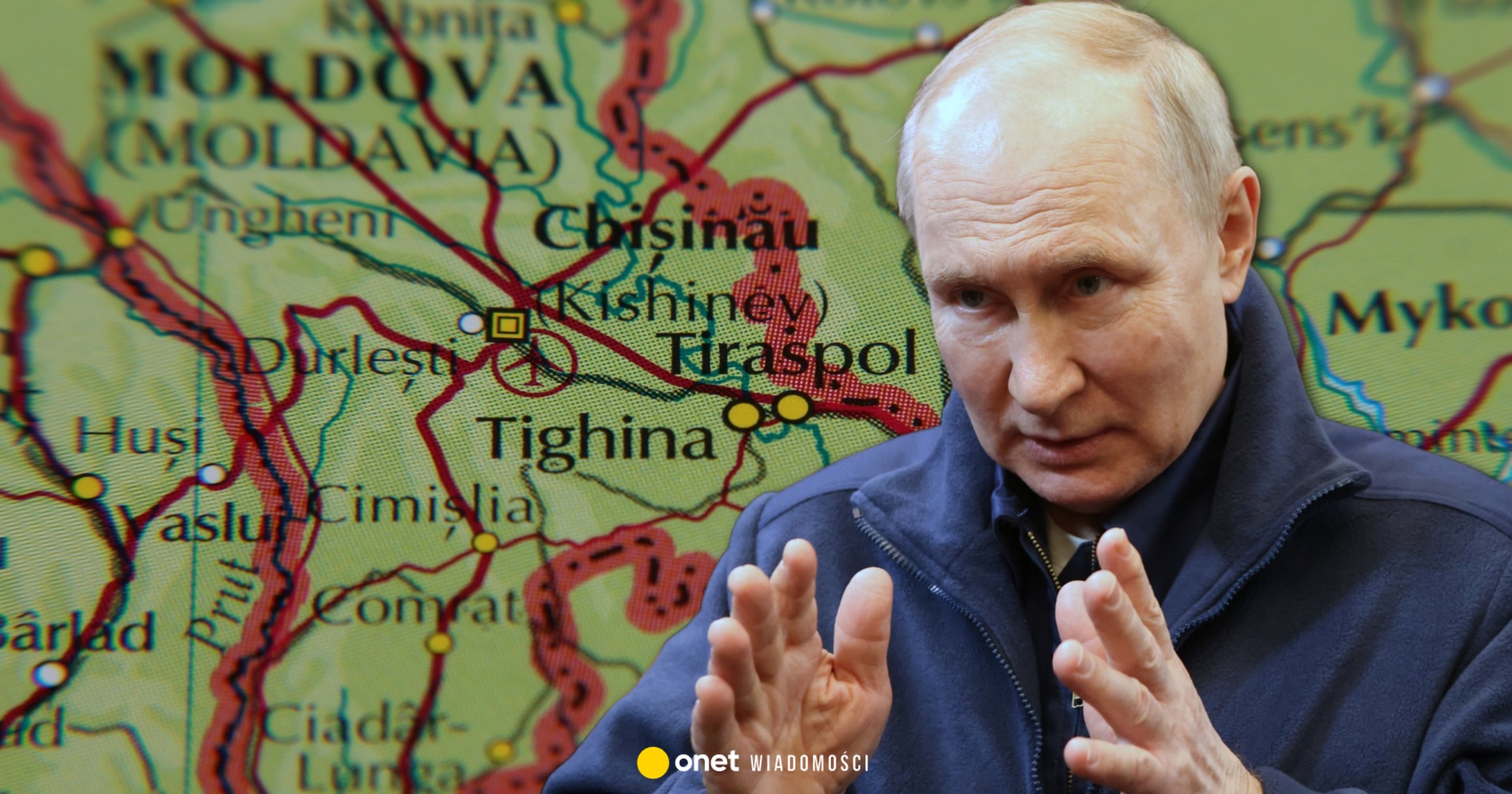
The narrow strip of separatist territory wedged between Moldova and Ukraine has long been in geopolitical limbo — formally part of Moldova, but in fact controlled by pro-Russian authorities and protected by the constant presence of Russian troops since the early 1990s.
For years, the conflict in the region was viewed by much of Europe as unstable, unresolved but largely dormant. Vladimir Putin turned the tables with his May 15 decree, which simplifies access to Russian citizenship for residents of Transnistria.
With Putin's move, there are renewed concerns that Moscow may exploit this small enclave in Moldova. Two scenarios are possible. One of them is particularly disturbing.
Putin may use the decree to increase unrest in Transnistria, which could be a bargaining chip and a means of pressure in peace talks with the West. This may also be a convenient way to consolidate power before the September Duma elections.
Russia's passport policy has long functioned as a geopolitical instrument. Now Putin's decision abolishes the requirements for the inhabitants of Transnistria: long-term stay in Russia, language exams and tests on Russian history and legislation.
The article continues below the video
Moscow issues passports in territories it considers part of its sphere of influence and then cites the need to “protect Russian citizens.” In some cases this was a pretext for invasion.
Russia used this model in Abkhazia and South Ossetia before the war with Georgia in 2008. It repeated this strategy in the occupied Donbas after 2019. After the invasion of Ukraine in 2022, Russian citizenship became virtually mandatory in all occupied territories. Residents of these areas often cannot work, use health care, study or even exercise parental rights without Russian documents.
Transnistria is different in one important respect: most residents who wanted to obtain Russian passports already have them. Estimates indicate that between half and two-thirds of the region's population have Russian citizenship.
This means that the decree is not primarily about acquiring new citizens, and both Moldova's President Maia Sandu and Ukrainian President Volodymyr Zelensky interpret the move as part of Moscow's broader strategic message.
Sandu described it as a potential tool to replenish Russia's mobilization reserves in the face of mounting war losses in Ukraine. Zelensky put it differently. In his opinion, this is a sign that Moscow's ambitions reach much further than Donbas.
“This is a very specific step. It not only means that Russia is looking for new soldiers in this way, because citizenship is associated with military duties. It also means that Russia recognizes the territory of Transnistria as its own,” he said.
Transnistria: fears of destabilization
Since 2022, Transnistria has been a security problem for Ukraine. Ukrainian intelligence services have repeatedly warned that Russia has increased its activity in the region, including allegedly investing in drone infrastructure and training centers.
The concerns in Kiev are not necessarily that Transnistria could become a full-fledged second front. Russia's military potential in this region remains limited and geographically isolated.
Rather, the concern is that the region could serve as a mechanism of destabilization—political, psychological, economic, or through hybrid operations—aiming at southern Ukraine and neighboring Moldova.
Transnistria lies close to Ukraine's Odessa Oblast and the Danube Corridor, a strategic export artery through which Ukraine has transported hundreds of millions of tons of goods since the beginning of the war.
Moldova also began to change its approach to the separatist region. For decades, negotiations have centered around some version of “special status” for Transnistria within Moldova. Recently, however, Chisinau has begun to move away from this framework.
I’m Ashley Davis as an editor, I’m committed to upholding the highest standards of integrity and accuracy in every piece we publish. My work is driven by curiosity, a passion for truth, and a belief that journalism plays a crucial role in shaping public discourse. I strive to tell stories that not only inform but also inspire action and conversation.