Bacteria can withstand launch in space. Why is it important for expeditions with human crews


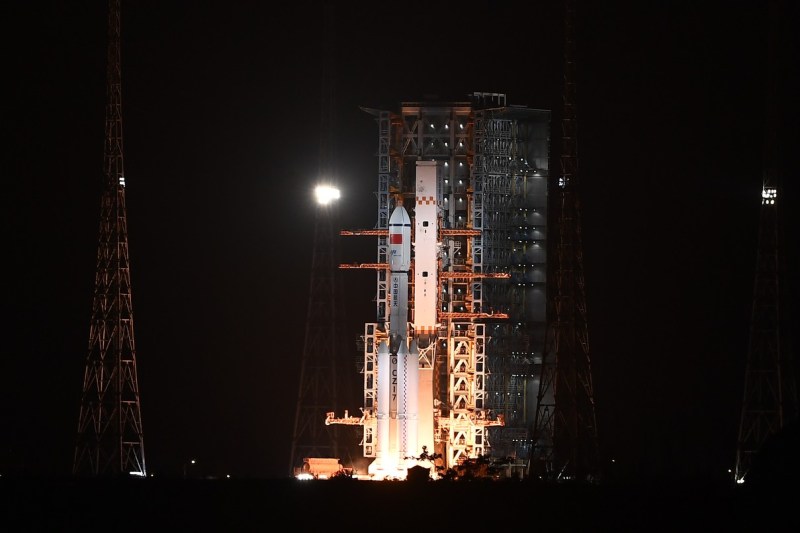
Chinese spacecraft Tianzhou 9 Photo: Yang Guanyu / Xinhua News / Profimedia
Testing a missile, coordinated by researchers in Australia, has shown that crucial bacteria for human health can survive the extreme forces that exist during the launch in space and re -enter the Earth's atmosphere, thus providing hopes for future missions to the planet Mars, Xinhua informs on Monday.
Space agencies are planning to send astronaut crews in the following decades, but supporting life on “Red Planet” would become much more difficult if a series of important bacteria would die during flight.
Scientists sent spores by Bacillus subtilis, a microbe that supports immunity, intestinal health and blood circulation, to the outskirts of the terrestrial atmosphere with the space on a missile launched in Sweden, according to a press release published by the Royal Technology Institute in Melbourne (RMIT), which coordinated this study.
The load on board the rocket supported an acceleration of up to 13 g (gravitational force), for over six minutes in microgravity and, when re -entering the atmosphere, forces of 30 g, while rotating 220 times per second, the statement said.
After they were recovered, the spores did not show changes in their ability to grow, and their structure remained the same, thus indicating that an essential microbe for human health can survive the journey to space.
“This means that we can design better life support systems for astronauts, to keep them healthy during long missions,” said Elena Ivanova, professor-Emeritus at RMIT and co-authors published in NPJ Microgravity magazine.
Gail Iles, a teacher-associated teacher and expert in space sciences, added: “This study improves our understanding of how life can withstand in harsh conditions, providing valuable information for future missions to Planet Mars and beyond it.”
The study, conducted in collaboration with the ResearchSat Space Technology Company and the Drug Distribution Company namedico Technologies, has potential applications in biotechnology and in combating antibiotic resistant bacteria.